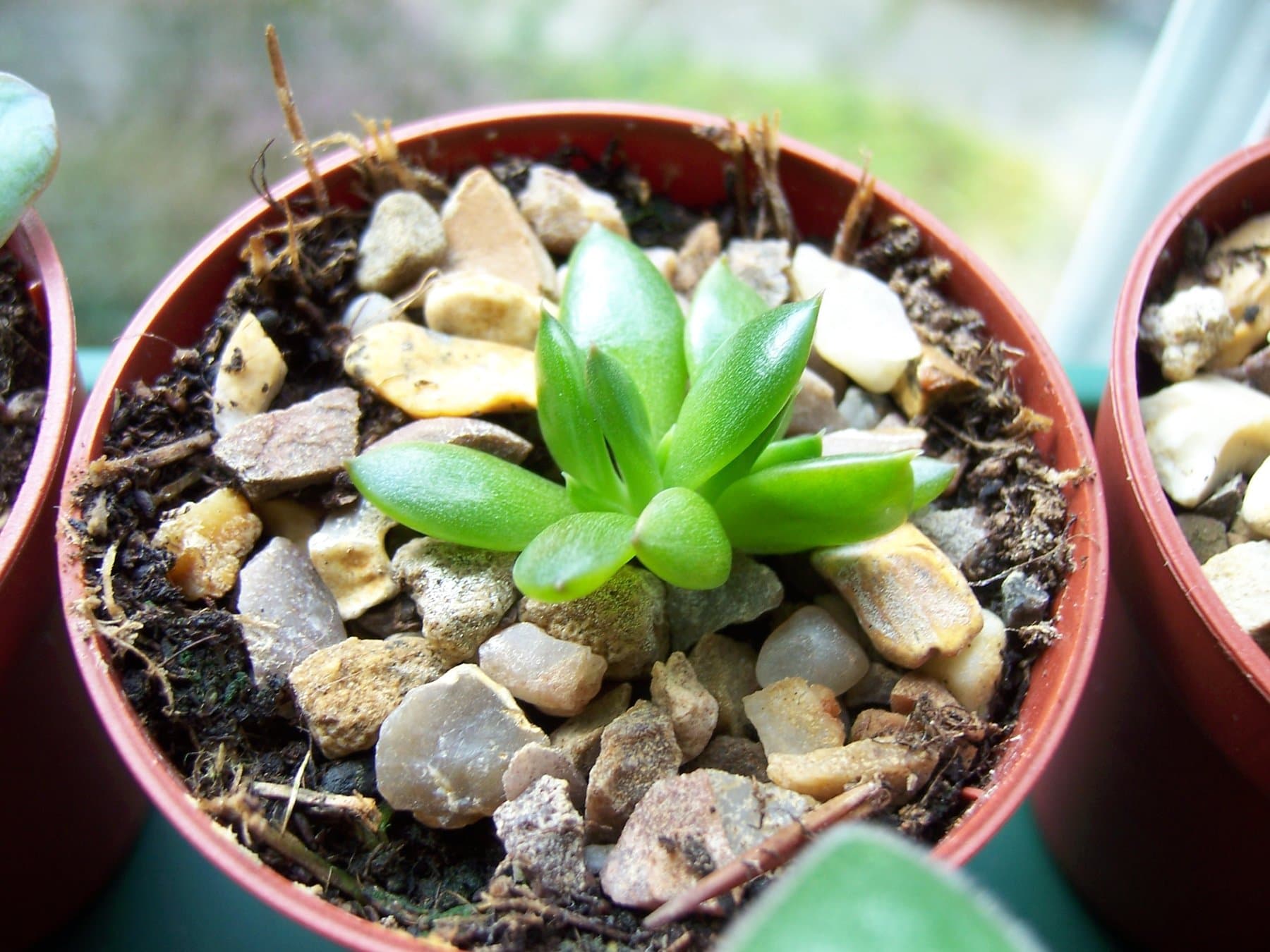
Succulents are plants with thick, water-storing leaves or stems. Iowa State Growing Succulents Indoors: they span families including Crassulaceae, Euphorbiaceae, and Cactaceae; while all cacti are succulents, not all succulents are cacti. This guide is an overview of common indoor leaf, stem, and offset methods. Named species (christmas cactus, aloe, string of pearls, string of hearts, string of bananas, string of dolphins, jade plant, burro’s tail, haworthia) keep their own flat how-tos.
Iowa State How to Propagate Succulents: most succulents propagate vegetatively by offsets, stem cuttings, or leaf cuttings; the best method depends on species and growth habit. RHS How to grow cacti and succulents: branching types from stem cuttings; clump or rosette types from offsets; fleshy leaves of some succulents such as echeveria or crassula from leaf cuttings. Illinois Extension: stem cuttings are the fastest path to a good-sized plant; leaf cuttings yield many starts but take longer.
For gritty, fast-draining mix context, see soil propagation. Jar rooting of soft vines lives on water propagation; Iowa State states most succulents do not root well in a glass of water. Bright light failure modes and meters: propagation light DLI tool and best grow lights for indoor propagation.
Best way
The growth habit picks the method. There is no single succulent recipe.
| Method | Best when | Source support |
|---|---|---|
| Leaf cuttings | Intact leaves that root from the attachment end (Echeveria, Crassula, Kalanchoe, Sedum, Graptopetalum, Pachyphytum on Iowa State, RHS, and UCANR lists) | Iowa State wants the entire leaf with meristem tissue at the base. RHS Leaf cuttings names those genera as very successful. Illinois notes many starts, slower than stems |
| Stem cuttings | Branching types when a good-sized plant is the goal | RHS starts branching types from stem cuttings. Illinois calls stem cuttings the fastest path. Callus first. UNL, Illinois, Iowa State, RHS, and UCANR each print their own day range |
| Offsets or division | Clump or rosette types that throw pups | RHS starts clump or rosette types from offsets. Iowa State uses offsets when the habit produces them |
| Water jar | Usually not the path | Iowa State notes that most succulents do not root well in a glass of water. Soft-vine jars stay on water propagation |
Leaf cuttings fit when the genus is on those leaf lists and many starts are the goal. Stem cuttings fit when size matters sooner. Offsets fit when pups are ready. Jade, aloe, christmas cactus, burro’s tail, haworthia, and the string-of plants each keep their own clocks. The growth habit still picks the method.
Leaf cuttings
Use this path when the genus roots from intact leaves. Iowa State: works well for Graptopetalum, Pachyphytum, Sedum, Crassula, and Kalanchoe. RHS Leaf cuttings: Kalanchoe, Echeveria, and Crassula (including Crassula ovata, jade) are very successful from leaf cuttings; tender sedums including Sedum morganianum also listed. UCANR Butte County Real Dirt: Sedum, Crassula, and Graptopetalum are best by leaf. Leaf cuttings on non-succulent houseplants (African violet, peperomia, snake plant, rex begonia) are covered on leaf cuttings.
Iowa State: remove the entire leaf cleanly so the cells that attach the leaf to the stem stay on the leaf; those cells hold meristem tissue needed for new growth; partial leaves will not root. UCANR Real Dirt: pull the leaf off neatly; if clippers are used, do not cut off the leaf end; healthy dropped leaves can be used if plump.
Callus before the leaf meets moist mix. UCANR Real Dirt: let the leaf end dry 1 to 3 days; do not water during that seal. RHS Leaf cuttings: leave Kalanchoe, Echeveria, and Crassula leaf cuttings a day or two to callus before potting. Illinois Extension: leaf cuttings callus 4 to 7 days, same window that page uses for stem cuttings. UNL G1853: succulent or cactus cuttings dry 1 to 7 days depending on species and size so cut edges callous and do not take up excess moisture that leads to rot. UCANR Placer Master Gardener handout: allow leaf callus from 1 to 2 days to 1 week. No single callus time fits every leaf or stem.
After callus, Iowa State: lay leaves flat on slightly damp, well-drained media such as cactus potting soil; settle so the stem-attachment end sits at the soil surface but is not covered; keep the surface damp, not wet; a spray bottle helps. RHS Leaf cuttings: pots filled to three-quarters with two parts cactus compost to one part fine grit, topped with fine grit; do not cover; warm position and good light; compost just slightly moist. UCANR Real Dirt: place leaves on top of dry cactus soil; do not bury or semi-bury; spray sparingly every one to two days for four to six weeks; do not soak. Illinois: place into moist growing media after callus.
Timing varies. Iowa State caption and body: new roots and leaves or rosettes in several weeks. UCANR Real Dirt: after a few weeks, pink roots then tiny plants; that page’s spray window is four to six weeks. Illinois: over a month or two a small plant forms at the leaf base; the original leaf eventually dies off. UCANR Placer: rooting can take weeks to months; the mother leaf often withers. Timing depends on the source and the plant.
Not every leaf works. Iowa State’s leaf list does not include Aloe or Haworthia; that page routes those genera to offsets and division. UNL table: Aloe by division; jade (Crassula) by tip and stem cuttings; Christmas cactus by tip cuttings. Species recipes stay on their flat URLs.
Stem cuttings
Illinois Extension: taking a stem cutting is the fastest way to get a good-sized new plant; find an active growing point; take a 3 to 4 inch cutting; remove lower foliage, leaving a few leaves at the top; callus 4 to 7 days on the counter; insert into moist potting mix; at least one or two node sets (where leaves were removed) need to sit in the media for adventitious roots. Iowa State: stem section 3 to 6 inches; remove leaves from the lower half; dry and callus several days on a tray, plate, or suspended in an empty pot; stick in well-drained media such as cactus potting soil or perlite. RHS How to grow cacti and succulents: after removal, leave the cut end to dry and callus from a day to a week depending on the plant; insert into 2 parts peat-free John Innes No. 1 compost and 1 part horticultural grit by volume; keep compost only slightly moist while rooting to prevent rot. UNL: tip cuttings generally 3 to 5 inches, cut just below a leaf (table names jade tip and stem; Christmas cactus tip).
Iowa State stem list includes Aeonium, Cotyledon, Echeveria, Graptopetalum, Pachyphytum, Sedum, Euphorbia, Crassula, Senecio, Kalanchoe, Adenium, Epiphyllum (Disocactus), and Schlumbergera. Clemson HGIC Kalanchoe: terminal cuttings 2 to 3 inches with two pairs of leaves; remove bottom leaves; no rooting hormone needed; callus several days; bright indirect light; plastic bag humidity on that page’s kalanchoe recipe; transplant in 14 to 21 days. Clemson Thanksgiving and Christmas cacti: pinch sections with 3 to 5 stem segments; callus outdoors in shade a day or two; well-drained mix; roots in three to eight weeks under a clear bag in bright indirect light. Holiday and orchid cactus culture differs from arid desert cacti (Clemson Indoor Cacti; RHS notes rainforest types need more shade and water than desert types). Use the christmas cactus page for Schlumbergera detail.
Iowa State also names "beheading" for rosettes that rarely offset: cut the rosette with an inch or two of stem, callus, root like a stem cutting; side rosettes may form on the remaining stalk over several months. Works often for Aeonium and Echeveria on that page.
Rooting hormone: Iowa State: can sometimes speed adventitious roots, but most succulents root quickly and easily without it. Illinois: may be used but is not necessary for most cacti or succulents. Clemson kalanchoe: no hormone needed. UCANR Placer handout lists a light dust of hormone or fungicide as optional on leaf ends.
Offsets and division
Iowa State: cluster, pup, or runner types; gently pull or cut so leaves or stems and roots stay attached; sharp clean pruners if needed; pot in well-drained media such as cactus potting soil in a container with a drainage hole; lightly water; after a few weeks the new plant establishes. Genera named on that page for offsets: Sempervivum, Agave, Aloe, Lithops, Gasteria, Haworthia, Manfreda, Sansevieria (Dracaena), Bryophyllum, and all of the cactus (Cactaceae). Illinois: Aloe as a clear offset example. UCANR Real Dirt: Aloe, Echeveria, and Sempervivum produce offsets; place in cactus mix or sand and perlite; spray gently and sparingly daily without soaking; wait three to four weeks for strong roots on that page. RHS: once well rooted, detach offsets to make new plants.
Aloe and haworthia detail live on their species pages. True arid cactus pads and columns are Cactaceae; Clemson Indoor Cacti names seeds, cuttings, grafting, or offsets without a full leaf-tray protocol on that factsheet. This hub stays on fleshy leaf and stem starts plus offsets; it is not a substitute for a cactus-only guide.
Water
Iowa State How to Propagate Succulents: most succulents do not root well in a glass of water. Prefer callused leaf or stem pieces on barely moist gritty mix (leaf and stem sections above). Water propagation covers jar technique for soft node vines such as pothos; do not treat that method as the default here. The water change calculator is for soft-vine jars on that method path; do not treat it as a default for true succulents.
Light while propagating
Succulent starts need bright light. A dim shelf makes lanky, pale plantlets. A cooked hot pane can scorch soft new growth.
Iowa State Growing Succulents Indoors treats light as often the most limiting indoor factor. Ten or more hours of bright, indirect light (bright enough to cast a shadow, not harsh direct sun for tender starts) is the upper note. Most need at least six to eight hours. In low light, plants become lanky and pale. Move them brighter, or use supplemental high-output full-spectrum fluorescent or LED light. RHS Leaf cuttings wants a warm position and good light, and poor growth from low light. Keep the tray well lit and protect leaf cuttings from direct sunshine. RHS How to grow cacti and succulents ties insufficient light to weak, misshapen plants. Most indoor types like bright light on a sunny windowsill. Rainforest holiday and orchid cacti prefer partial shade. Do not copy an arid windowsill onto every holiday cactus. Clemson Indoor Cacti (arid types) wants bright sunlight. Artificial light may be needed to supplement.
While callused leaves or stems sit on barely moist gritty mix, fix light before blaming the cultivar if growth stretches. Keep desert-type trays out of sealed humid boxes without airflow. RHS says not to cover many succulent leaf cuttings. That contrasts with tropical leaf cuttings on the same RHS page.
If you meter PPFD at the tray, use the propagation light DLI calculator. Fixture distance when windows fail: best grow lights for indoor propagation. Those hours change how fast roots form and whether new growth stretches.
Gritty, fast-draining mix and drainage-hole pots stay required. Iowa State indoor care names commercial cactus and succulent mixes, or about one part organic to two parts mineral. Illinois names one part mix to one part perlite, or sand to mix. UNL and Iowa State say never leave pots standing in water. Full media steps are on soil propagation.
Troubleshooting
Leaf or stem turns mushy after sticking. Wet mix or a skipped callus is the usual cause. Ease water. Use free-draining media (Iowa State, Illinois, Clemson). Confirm the cut end dried before it met moist mix. UNL allows 1 to 7 days by size. Illinois uses 4 to 7 days for stem and leaf. RHS leaf cuttings use a day or two. UCANR Real Dirt uses 1 to 3 days for leaves. Discard soft tissue. Recut only if firm tissue remains.
No roots and no plantlet after weeks. The piece is still plump. Check light first. Iowa State ties low light to lanky, pale growth. RHS ties poor growth to low light. Confirm the leaf came off intact with basal tissue (Iowa State, UCANR). Confirm the genus is on a leaf list. Offsets or stems may be the right path (Iowa State method by habit, UNL species table).
Stretched, pale new growth. Raise bright indirect hours, or the sunny band. Iowa State names at least six to eight hours and often ten or more. RHS ties weak, misshapen growth to insufficient light. Meter the tray with the propagation light DLI calculator. Fixture distance when windows fail is on best grow lights for indoor propagation.
Whole leaf buried under wet mix. Iowa State wants the attachment end at the surface. UCANR Real Dirt says not to bury or semi-bury. Reset the leaf on the surface of barely moist grit.
Cutting left in a water jar. Iowa State notes that most succulents do not root well in water. Move to a callused leaf or stem on gritty mix. Jar steps stay on water propagation for soft vines only.
Sealed humid box on desert-type starts. RHS leaf advice for many succulents is not to cover. Clemson’s holiday-cactus bag is a species recipe. Do not copy it onto every arid leaf tray. Add airflow or remove the cover.
Common mistakes
- Watering leaf trays or stem pots daily as if they were tropical cuttings. Iowa State leaf: damp surface, not wet. RHS: slightly moist only; rot if compost is too wet. UCANR Real Dirt: do not soak.
- Dense garden soil or standard potting mix that stays wet. Iowa State indoor: typical potting soil retains too much water. Illinois and Clemson: free-draining cactus-type media.
- Skipping callus on juicy stems or leaves. UNL, Illinois, Iowa State, RHS, and UCANR all call for drying cut ends before sticking.
- Low light that stretches weak plantlets. Iowa State indoor notes lanky and pale growth in low light, and names supplemental LED or fluorescent light. RHS notes weak, misshapen growth from insufficient light. See Light while propagating.
- Burying whole leaves under wet mix. Iowa State: attachment end at the surface, not covered. UCANR Real Dirt: do not bury or semi-bury.
- Expecting every genus to clone from a leaf. Iowa State leaf list and offset list differ. UNL method table is by species.
- Leaving most succulent cuttings in a water jar. Iowa State: most do not root well in water.
- Sealed humid boxes without airflow for desert-type starts. RHS leaf advice for succulents: do not cover; contrast with tropical leaf cuttings that need high humidity on the same RHS page. Clemson holiday cactus uses a bag on that species recipe; do not copy that bag onto every arid leaf tray.
People also ask
How long do succulent leaves take to root?
Iowa State: new roots and leaves or rosettes in several weeks. UCANR Real Dirt: pink roots after a few weeks, with a four to six week light-spray window on that page. Illinois: plantlet over a month or two at the leaf base. UCANR Placer: weeks to months depending on variety. No single timeline fits every leaf.
Can every succulent leaf propagate?
No. Iowa State names Graptopetalum, Pachyphytum, Sedum, Crassula, and Kalanchoe for leaf cuttings, and routes Aloe, Haworthia, and others to offsets. RHS highlights echeveria and crassula for easy leaf work. UNL lists different methods by plant (aloe division; jade tip/stem; Christmas cactus tip). If leaves fail, switch to stem tips or offsets for that genus.
Should I use rooting hormone?
It’s optional. Iowa State: can help sometimes; most succulents root without it. Illinois: not necessary for most. Clemson kalanchoe: none needed. Clean cuts, callus, and dryish mix matter more on those sources.
Why is my leaf turning to mush?
Too much moisture or poor drainage. RHS Leaf cuttings: cuttings rot if compost is too wet. UNL: callus prevents excess moisture uptake that causes rotting. Iowa State and Illinois stress well-drained media and avoiding constant wet. Restart with a dry callus and gritty mix.
Stem cutting or leaf: which is faster?
Stem cuttings usually produce a sizable plant sooner. Illinois: stem is fastest for a good-sized plant; leaf takes longer. Wisconsin Hort (burro’s tail species page context): leaf regenerates a plant more slowly than stem. Leaves suit many starts from one harvest when the genus roots from leaves.
Do succulents root in water?
Iowa State: most succulents do not root well in a glass of water. Stick callused pieces in gritty mix. Soft vine jar demos stay on water propagation.
Named species in this how-to
Leaf and stem steps here are general. These live flats were verified on the site:
- How to propagate Christmas cactus
- How to propagate aloe
- How to propagate string of pearls
- How to propagate string of hearts
- How to propagate string of bananas
- How to propagate string of dolphins
- How to propagate jade plant
- How to propagate burro’s tail
- How to propagate haworthia