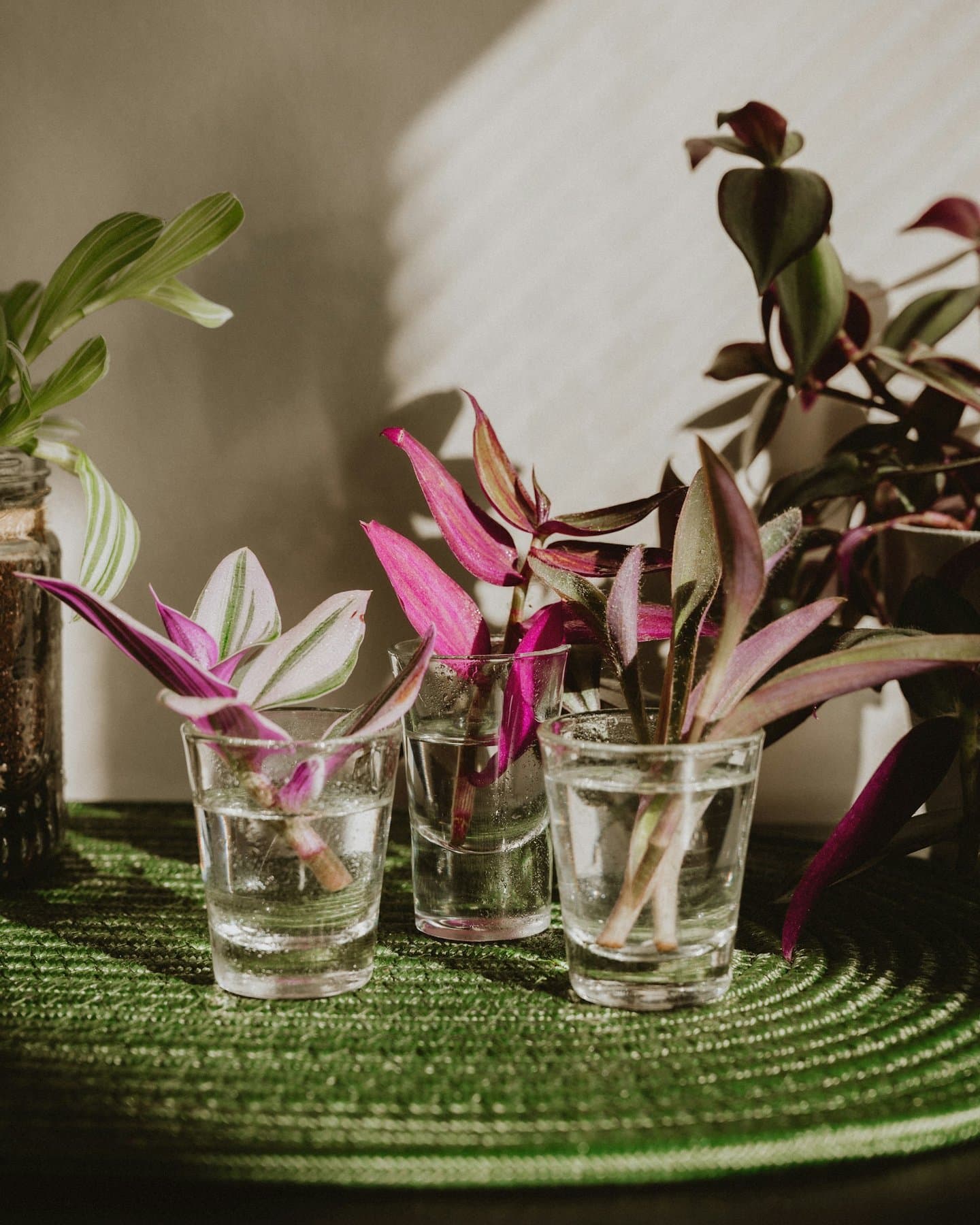
Water propagation is the jar method for indoor node cuttings and spider plant plantlets. A healthy stem piece with at least one node, or a spiderette with root nubs, stands in clean water until adventitious roots form, then moves into a small drained pot of mix. Soft-stem vines such as pothos and heartleaf philodendron are the usual demos. Soil propagation sticks the same node straight into moist mix and skips the jar. Thick woody trunks that rot as bare sticks stay on air layering.
Iowa State Extension stem-tip how-to (January 2025 review; species list includes Epipremnum aureum and Philodendron hederaceum): many houseplants root in a jar of water; change water one to two times each week; never let developing roots dry in air; transplant when roots are about 1 inch long; water-formed roots are coarser and may show transplant stress until they adapt. UMD Extension Maryland Grows names Heartleaf Philodendron and Golden Pothos among plants that root easily from stem cuttings in clean tap water. Missouri Botanical Garden Rooting Cuttings in Water lists begonias, coleus, polka-dot plant, ivies, and philodendrons as easy water rooters and flags many woody plants such as hibiscus and citrus as poor water candidates that usually rot before rooting. UNL G1853: some plants root easily in water, but perlite or vermiculite generally gives more satisfactory results. Illinois Extension houseplant propagation: ivy and philodendron root easily in water, yet that page does not recommend water because water-formed roots are often weak and adapt less easily to potting mix. Clemson HGIC: pothos stem cuttings root easily in soil or water with at least one node. NCSU Wayne County: many houseplants root in a cup of water; remove and pot as soon as some roots develop to reduce rot risk. Wisconsin 4-H Propagating House Plants: heartleaf philodendron from a 4 to 6 inch cutting rooted in sand or water.
For plant-by-plant steps, see how to propagate pothos, how to propagate philodendron, and how to propagate spider plant. Below: when water is the best fit, materials, jar steps, jar-water cadence, water versus soil, light while jars root, potting timing cues, and troubleshooting.
Best way
Water fits when you want to watch a soft-stem node root in a clear jar, then pot near about 1 inch of roots on Iowa State’s stem-tip target. Soft vines such as pothos and heartleaf philodendron, plus spider plant plantlets with root nubs, are the usual demos (UMD, Clemson, Iowa State, Mobot, Wisconsin 4-H). Thick woody trunks that rot as bare sticks stay on air layering. Growers who skip the transplant stick the same node into moist mix on soil propagation.
| Method | Best when | Source support |
|---|---|---|
| Water jar | Soft indoor stem with a node (or spiderette with root nubs). Visible roots. Water changes about 1 to 2 times per week | Iowa State stem-tip: many houseplants in a jar. Change 1 to 2 times weekly. Pot about 1 inch roots. UMD: heartleaf philodendron and golden pothos in clean tap water. Mobot: philodendrons, ivies, coleus, begonias among easy water rooters. Clemson: pothos in soil or water with a node |
| Soil or soilless mix | Same node, fewer moves, or sources prefer media | UNL G1853: water works for some, but perlite or vermiculite generally more satisfactory. Illinois Extension: ivy and philodendron root in water, yet that page prefers media (water roots adapt less easily). Steps: soil propagation |
| Air layering | Thick woody canes that fail as bare jar sticks | Mobot: many woody plants (hibiscus, citrus) usually rot before rooting. Hub: air layering. Thick fiddle wood: fiddle leaf fig |
Pick water for visibility on a soft stem. Pick soil when UNL or Illinois media preference or transplant avoidance matters. Pick air layering for thick wood. Species pages keep plant-by-plant clocks. Jar technique and method choice stay here.
Materials
- Clear glass or jar
- Room-temperature water (UMD: clean plain tap water)
- Stem cutting or plantlet with a node, or a spiderette with root nubs
- Clean scissors or pruners
- Pot with drainage and potting mix for the move to soil
Jar method for node cuttings
- Cut below a node so the joint will sit underwater. Mobot: cut just below where a leaf attaches; roots form most readily there; a long stub below the node often rots. UMD: leave at least one node and some tip leaves. Iowa State media protocol (same stem-tip page): cuttings often 3 to 6 inches with at least two nodes; stick with at least one node wet and no leaves buried. Mobot general water guide: most cuttings 4 to 6 inches; oversized pieces root poorly or grow lanky.
- Strip leaves that would be submerged. UMD, Mobot, Iowa State, and Clemson (pothos node rule) keep foliage above the waterline. Submerged leaves rot and foul the jar.
- Remove flowers or buds if present. Mobot: flowers pull reserves into seed and can mold in the wet setup.
- Fill the jar so the node stays wet and foliage stays dry. Top up so roots never dry in air (Iowa State).
- Place in bright, indirect light. Avoid cooking the jar in hot sun. UMD: bright light but not direct sun; about 70°F; keep away from cold drafts. Iowa State stem-tip: 4 to 6 hours of bright indirect light; too much light can burn foliage; too little slows root formation and cuttings may rot or dry before roots form. Air about 65°F to 75°F on that page. If you have a PPFD reading, convert intensity and lamp hours with the propagation light DLI tool. Fixture distance notes live on best grow lights for indoor propagation when windows cannot supply that band.
- Change water about one to two times per week (Iowa State), or sooner when the water clouds (UMD; Illinois Good Growing). UMD: bacterial growth in stagnant water can lead to rotting. Mobot: add fresh water as needed until cuttings are fully rooted. Full cadence and warning signs are in Jar water: cadence and warning signs below.
- Wait until roots are about 1 inch long before potting most stem cuttings on the Iowa State stem-tip target. Mobot: generally 3 to 4 weeks to root for that general guide; pot when roots are 1 to 2 inches long or longer. UMD: adventitious roots can take several weeks; leave them in water another week or two, then pot into a small well-draining container. Iowa State stem-tip says about 1 inch; Mobot says 1 to 2 inches or longer; some species FAQs say several inches.
- Plant into moist mix in a pot with drainage; keep lightly moist for several days while roots adjust. Iowa State: after potting, keep well watered in bright indirect light; water roots may wilt, drop leaves, brown, or tip-burn until they adapt. Mobot: choose a pot with just enough space for the root system; pre-moisten mix; do not leave the pot standing in water. UMD: keep medium moist until new leaf initiation, then ease watering.
- Resume normal watering once new growth shows the roots have taken.
Spider plant plantlets follow the same jar hygiene: change water on the same cadence and pot near about 1 inch of roots when using water. Pinning a still-attached pup onto moist mix, or cutting a pup with root nubs into mix, stays on the spider plant page. UNL lists spider plant under division and runners rather than as a stem-tip water demo.
Jar water: cadence and warning signs
Keep the jar on a schedule, and change it early when the water goes off. The sources below disagree slightly on the exact weekly count. They agree that cloudy or stagnant water is a problem.
How often to change the water
| Cadence | Source |
|---|---|
| About 1 to 2 times each week | Iowa State stem-tip cuttings |
| At least twice a week, or when the water is cloudy | UMD Maryland Grows |
| Weekly | Montana State Extension (Cloning at Home; cites Iowa State) |
| Refresh when the water starts to get cloudy | Illinois Good Growing (2025); UMN Extension (Monstera water method) |
| Add fresh water as needed until cuttings are fully rooted | Missouri Botanical Garden water guide (no weekly count on that guide) |
Use the Iowa State band (about 1 to 2× per week) as the default rhythm. Move sooner when UMD, Illinois, or UMN cloudy-water triggers fire.
Days since the last full change and how the water looks have a next-step band on the propagation water change calculator.
Checklist while the cutting sits in the jar:
- Water still covers the node and any new roots (Iowa State: never let developing roots dry in air).
- No leaves under the waterline (UMD, Mobot, Iowa State: submerged leaves rot and foul the jar).
- Water still looks clear enough that you are not ignoring cloudiness (UMD; Illinois Good Growing; UMN Extension Monstera).
- Bright indirect light, not a cooked jar in hot sun (UMD; Iowa State 4 to 6 hours bright indirect; NCSU Wayne County heat note on covered jars).
Change now vs usually fine
| What you see | What to do | Attribution |
|---|---|---|
| Water cloudy | Change the water now | UMD (at least twice a week or when cloudy; bacterial growth can lead to rotting); Illinois Good Growing (refresh when cloudy); UMN Extension Monstera (change when cloudy) |
| Waterline dropped, roots or node in air | Top up or change so roots stay wet | Iowa State |
| Leaves under water, or mush from submerged foliage | Strip those leaves; change water; keep foliage dry | UMD, Mobot, Iowa State |
| Cutting soft, collapsing, or clearly rotting in the jar | Remove that cutting from the jar so it does not foul the rest; start a fresh piece from the mother plant if you still want a water start | UMD bacterial-rot warning; Illinois Good Growing (remove cuttings that have begun to rot; that note is humidity and media care, not a water-jar recipe); UMN (a cutting with root rot may need a new cutting); Mobot (poor water candidates often rot before rooting) |
| Clear water, node wet, cutting firm | Stay on the weekly cadence | Iowa State / UMD schedule |
Smell and slime: UMD names cloudy water and bacterial growth leading to rotting. That page does not print a separate healthy-biofilm versus bad-slime test. If the jar has built a heavy film or slime while a change was delayed, empty it and put the cutting in clean water in a clean jar, then return to the cadence above. That cleanup is practical hygiene aligned with UMD’s cloudy/bacterial note, not a quoted extension recipe for biofilm ID.
If the jar has gone off
- Empty the old water.
- Move a still-firm cutting into clean room-temperature water in a clean container (UMD: clean container with fresh tap water) so the node stays wet and leaves stay dry.
- If the old jar is filmed or slimy, switch jars. No soap/bleach scrub recipe.
- Resume about 1 to 2 changes per week (Iowa State), or sooner if cloudiness returns (UMD; Illinois Good Growing; UMN Extension Monstera).
- If the stem is already rotting, discard that cutting and take a new one with a clean cut just below a node (Mobot / UMD / Iowa State node rules), rather than nursing a mushy piece.
Light when jars stall
Bright-indirect targets, stall and rot cues, and the DLI tool live under Light while propagating. Keep this jar section focused on water cadence and cloudy-water hygiene.
Light while propagating
Jar cuttings need bright, indirect light, not a dark shelf and not a cooked windowsill.
Iowa State’s stem-tip page wants about 4 to 6 hours of bright indirect light, with air about 65°F to 75°F. Too little light slows root formation. Cuttings may rot or dry before roots form. Too much can burn foliage. UMD wants bright light but not direct sun, about 70°F, away from cold drafts. NCSU Wayne County’s covered-jar note is a heat warning. Sealed warm jars cook cuttings.
While the node sits underwater, keep leaves dry and firm. Avoid hot direct sun. If roots stall for weeks with clear water and a firm stem, check light before blaming the plant (Iowa State).
If you meter PPFD at the jar, use the propagation light DLI calculator. Fixture distance when windows fail: best grow lights for indoor propagation. Light here is about rooting pace and rot risk, not fixture shopping.
Which cuttings fit water
Easy soft-stem water examples in the sources:
- Golden pothos / devil’s ivy (Epipremnum aureum): UMD, Clemson, Iowa State stem-tip list, Illinois Good Growing. See how to propagate pothos.
- Heartleaf philodendron (Philodendron hederaceum and related heartleaf labels): UMD, Iowa State, Mobot, Wisconsin 4-H (sand or water), Illinois Extension (roots easily; page prefers media). See how to propagate philodendron.
- Coleus, Swedish ivy, arrowhead / syngonium: UMD water list. Mobot also names begonias, coleus, polka-dot plant, and ivies.
- Spider plant (Chlorophytum) plantlets / runners: site spider plant page and NCSU handbook-style runner notes; UNL table: division and runners.
Poor water fits in the sources:
- Many woody plants such as hibiscus and citrus: Mobot; they usually rot before rooting.
- Thick fiddle leaf fig wood: treat like other thick Ficus canes; air layering and species steps live on how to propagate fiddle leaf fig, not as a pothos-style jar demo.
- UNL and Illinois prefer perlite, vermiculite, or other rooting media for many cuttings even when water can work.
Plant-specific recipes live in those species guides. Jar technique and the water-versus-soil choice stay on this hub.
Water vs soil propagation
| Factor | Water | Soil / mix |
|---|---|---|
| Root visibility | Excellent; easy to watch progress | Hidden until a gentle tug-test or new growth |
| Watering rhythm | Change jar 1 to 2× per week (Iowa State); UMD at least twice weekly or when cloudy | Keep mix lightly moist, not soggy (see soil propagation) |
| Transplant step | Required when moving to a pot | Already in the final medium |
| Root texture | Often coarser water roots (Iowa State); Illinois: often weak and slower to adapt | Finer roots formed in aerated media; UNL: perlite or vermiculite often more satisfactory |
| Best for | Soft vines and demos: pothos, philodendron, spiderettes (UMD, Clemson, Wisconsin heartleaf) | Growers who want fewer moves; rot-prone or woody starts. See soil propagation and air layering |
Neither method wins for every cutting. Choose water when visibility matters on an easy soft stem. Choose soil or soilless mix when you want to skip transplant stress or when the sources steer that species away from jars.
Iowa State Extension, stem tip cuttings (January 2025): change water 1 to 2 times per week; pot near ~1 inch of roots; water-grown roots are coarser than soil-grown roots.
Troubleshooting
Water cloudy or slimy. Change now. UMD wants at least twice a week or when cloudy, because bacterial growth can lead to rotting. Illinois Good Growing and UMN Extension (Monstera) refresh when cloudy. Move a still-firm cutting into clean room-temperature water in a clean container (UMD). Keep the node wet and the leaves dry. Resume about 1 to 2 changes per week (Iowa State). Cadence tables live under Jar water: cadence and warning signs. A schedule helper is the propagation water change calculator.
No roots after several weeks, stem firm, water clear. Check light. Iowa State notes that too little bright indirect slows roots. Confirm a node is underwater and no leaves are submerged (UMD, Mobot, Iowa State, Clemson pothos node rule). Mobot often cites about 3 to 4 weeks to root. That is not a hard fail clock for every species. No node on a vine that needs one means take a new cutting.
Stem soft, collapsing, or rotting. Remove it from a shared jar. UMD warns that bacterial growth can lead to rotting. Illinois and UMN note that rotting pieces need removal or a new cutting. Recut just below a node. Woody hibiscus or citrus-style starts that keep rotting are poor water candidates on Mobot. Change method. Do not nurse mush.
Waterline dropped, node or new roots in air. Top up or change so roots stay wet (Iowa State).
Leaves yellow or drop after potting from water. Iowa State notes that water-formed roots are coarser and may wilt, drop leaves, brown, or tip-burn until they adapt. Use a small drained pot and moist mix. Mobot wants a pot sized to the roots and says not to stand it in water. UMD wants the medium kept moist until new leaf initiation, then eased. NCSU Wayne County wants potting as soon as some roots develop so water roots do not sit until they rot.
Thick wood only rotted. That matches Mobot’s poor-water woody list. Use air layering or the species page (fiddle leaf fig for thick Ficus lyrata), not a longer stay in a fouler jar.
Common mistakes
- Submerging leaves until they rot (UMD, Mobot, Iowa State).
- Waiting for the water to go cloudy before the first change of the week (Iowa State 1 to 2× cadence; UMD cloudy / bacterial rot note; Illinois Good Growing refresh-when-cloudy).
- Potting into a huge container that stays wet (Mobot: pot sized to the root system; do not stand pots in water).
- Expecting woody fiddle stems to behave like pothos; use air layering for thick wood (Mobot woody warning; fiddle leaf fig page for Ficus lyrata).
- Leaving a rotting cutting in a shared jar (UMD bacterial growth and rotting; remove failed pieces and keep firm cuttings in clean water).
- Leaving roots dry above a falling waterline (Iowa State).
- Low light on cuttings (Iowa State: too little light slows rooting; cuttings may rot or dry first). Cooking a jar in direct sun is the opposite failure (UMD, NCSU Wayne County bag/jar heat note).
- Taking a piece with no node on vines that need one (UMD, Clemson pothos, Mobot).
People also ask
How often should I change the water?
About once or twice per week on Iowa State’s stem-tip protocol. UMD: at least twice a week, or when the water is cloudy. Illinois Good Growing: refresh when cloudy. Mobot: add fresh water as needed. Use the Iowa State band as the default, and change early when the jar clouds. See Jar water: cadence and warning signs.
Why is the water cloudy?
UMD: change when cloudy; bacterial growth can lead to rotting. Illinois Good Growing: refresh when cloudy. UMN Extension (Monstera): change water when it becomes cloudy. Cloudiness is a change-now signal, not a reason to wait for the next calendar change. Empty the jar, use clean water, and return to about 1 to 2 changes per week (Iowa State) unless it clouds again sooner.
When do I move cuttings to soil?
When roots are about an inch long is the practical Iowa State stem-tip target for many stem cuttings. Mobot: 1 to 2 inches or longer. UMD: after roots form, leave them another week or two, then pot into a small well-draining container. NCSU Wayne County: pot as soon as some roots develop so water roots do not sit until they rot.
Can cuttings live in water forever?
Missouri Botanical Garden water guide: many rooted cuttings will survive in water for extended periods. UMD, Iowa State, and NCSU Wayne County treat water mainly as a rooting step, then potting. They don’t give a feeding plan for cuttings kept in water long term. Clean water and then potting is the path these sources describe when a classic pot is the goal.
Which plants are easiest in water?
Pothos, heartleaf philodendron, and spider plant plantlets are beginner standards. UMD lists heartleaf philodendron, golden pothos, coleus, Swedish ivy, and arrowhead. Mobot adds begonias, coleus, polka-dot plant, ivies, and philodendrons. Clemson confirms pothos in water or soil with a node. Wisconsin: heartleaf in sand or water.
Is water better than soil?
Neither is universally better. Use the table above. Water for visibility on soft stems. Soil or soilless mix to skip transplant shock and for many cuttings UNL and Illinois steer toward media. Full soil steps: soil propagation.
How much light do jar cuttings need?
Iowa State stem-tip wants 4 to 6 hours of bright indirect light. Too little slows roots. Too much can burn. UMD wants bright light, not direct sun, about 70°F. See Light while propagating. If you meter PPFD, use the DLI tool. Fixture hang-height when windows fail: best grow lights for indoor propagation.