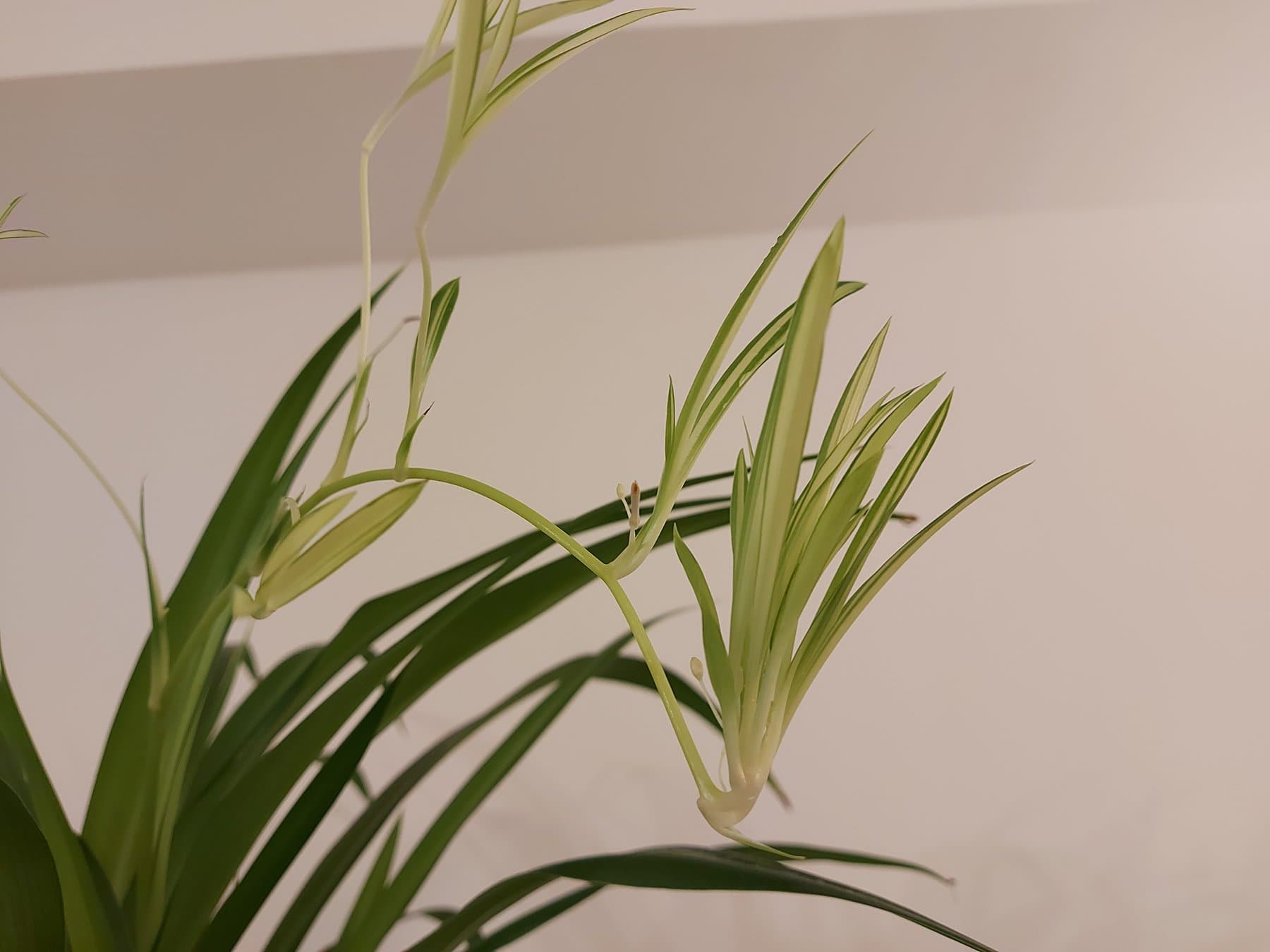
Spider plant on this guide means Chlorophytum comosum (Asparagaceae), also labeled ribbon plant, spider ivy, or airplane plant. NCSU Extension Gardener Plant Toolbox: herbaceous perennial houseplant native from tropical West Africa to Cameroon and Ethiopia to South Africa; strap-like green or striped leaves; long stolons that produce flowers and plantlets; Recommended Propagation Strategy Division, with plantlets or division named in the description. Wisconsin Horticulture: clump-forming perennial with thick fleshy roots and rhizomes; plantlets form after flowering on long wiry stems. Iowa State Easy Low-Maintenance Houseplants: sometimes called airplane plant; cascading stems with small plantlets; hanging baskets suit the habit. ASPCA and NCSU toolbox tags: non-toxic to cats and dogs (NCSU also tags horses).
This guide covers plantlets (spiderettes, pups, offsets) on runners, plus mother-plant division. Iowa State Propagating Houseplants marks Chlorophytum for layering, division, and offsets/plantlets, not leaf cuttings. NCSU Extension Gardener Handbook Chapter 13: plantlets at the tips of runners may be rooted while still attached to the parent or detached and placed in a rooting medium; spider plant is the named houseplant example with strawberry. For jar technique shared with other easy water rooters, see water propagation. For potting mix after the pup is independent, see soil propagation. Indoor light for plantlets: Iowa State and Clemson want bright indirect light for new divisions and rooted pieces; when windows stay dim, see the DLI tool and grow lights for indoor propagation. NCSU Toolbox also notes stolons and plantlets are light-dependent and form under short days, so long daily photoperiods can delay runners.
When plantlets are ready
Use plantlets that already show roots or clear root beginnings, not bare green tips.
RHS How to grow spider plants: detach good-sized offsets once they have their own roots. Wisconsin Horticulture: remove and pot a plantlet that has already started developing roots, or pin a still-attached plantlet until it roots. Clemson HGIC 1513: detach plantlets once roots have formed and pot into moist growing mix. SDSU Extension: offshoots are small versions of the main plant with roots already established. UF/IFAS Gardening Solutions: shoots develop pre-rooted plantlets at their tips; remove and pot the plantlets. Colorado PlantTalk: small plantlets develop after the flowers; remove them and place in moist potting soil or water.
Sources don't give a leaf count or root length for when a plantlet is ready. Look for a good-sized plantlet with its own roots or visible root initials. Iowa State Easy Houseplants: small plantlets can be removed and potted. RHS: young plants can take up to a year before they begin producing offsets.
Water vs soil for plantlets
Extension and RHS sources name both paths. Water shows roots. Soil skips a transplant step.
| Path | What the sources say | Tradeoff |
|---|---|---|
| Moist mix (detach) | Clemson: pot directly into moist growing mix once roots formed. Wisconsin Hort: pot up a plantlet already starting roots. SDSU: plant the offshoot in potting soil. UF/IFAS: remove and pot plantlets. Colorado PlantTalk: moist potting soil. | Skips jar transplant. Crown stays at the surface; do not bury deep. |
| Still attached, then cut | Wisconsin Hort and Wisconsin 4-H: pin plantlet on moist soilless mix while attached; sever after roots form. NCSU Handbook: root while attached or detach into medium. Iowa State marks Chlorophytum for simple layering. | Mother plant feeds the pup until it anchors. Needs a second pot beside the hanging basket. |
| Water jar | RHS: detach spiderlings into a glass of water; pot when roots lengthen. SDSU: place the offshoot in water for a couple of weeks, then soil. Colorado PlantTalk: moist potting soil or water. | Progress is visible. Change water when cloudy; pot once roots lengthen (RHS). SDSU's "couple of weeks" is water-rooting time, not a universal soil aftercare clock. |
Full jar hygiene and potting-up habits live on water propagation. Mix, drainage, and crown depth live on soil propagation.
When a pup sits in a jar, when to change the water: propagation water change calculator.
Separate the pup from the mother (cut vs leave attached)
Two reliable patterns show up across the same primaries.
Leave attached until rooted. Wisconsin Horticulture: set the plantlet, still attached, on soilless potting medium; hold it in contact with a bent paper clip or wire until roots develop; then sever the connecting stem. Wisconsin 4-H Propagating House Plants (names spider plant among runner plants): fill pots with moist mix; place runners with tiny plants into the mix without cutting; pin with a hairpin or paper clip; water lightly; keep moist; check in two weeks for roots; when roots have formed, cut the runners. NCSU Handbook: plantlets may be rooted while still attached. Iowa State simple-layering how-to (Chlorophytum marked for simple layering): bend or stretch a flexible stem to an adjacent pot; pin with floral pins, hairpins, or a bent paper clip; bury a node without burying leaves; when firmly rooted, cut from the parent. Iowa State's general simple-layering root window is 6 to 12 weeks and may be longer depending on species; do not collapse that range into Wisconsin 4-H's two-week check for pinned spider runners.
Cut free, then root. RHS: detach good-sized offsets that already have roots and pin into moist peat-free compost with a U-shaped wire, or detach into water and pot when roots lengthen. Clemson: detach once roots have formed; pot into moist mix; plantlets also root when they contact soil; they may be left on for a fuller basket if you are not making new pots. SDSU: remove an offshoot and plant in soil, or water first for a couple of weeks. Colorado PlantTalk: remove plantlets and place in moist potting soil or water. UF/IFAS: simply remove and pot the plantlets.
Clemson notes you can leave plantlets on the mother for a very full basket. RHS: plantlets become gnarly-rooted and heavy over time; trim them off to improve appearance if you are not potting them up. Neither page prints a "must remove by week X" rule.
Division of the mother plant
When the crown is crowded, divide the fleshy root mass instead of chasing every runner.
NCSU Toolbox Recommended Propagation Strategy: Division. Wisconsin Hort: larger plants can be divided. RHS: mature plants can be divided; thick fleshy roots may need a knife; repot healthy pieces with at least one growing point; useful for cultivars that do not produce offsets. Clemson: divide and repot before roots crack the container; repot any time of year. Iowa State Division and Offsets lists Chlorophytum comosum; early spring is ideal; most houseplants can be divided any time of year; each piece needs healthy leaves and roots; water to settle; bright indirect light; wait a few weeks before fertilizing. Colorado PlantTalk: fleshy roots push plants out of pots or break plastic; repot or divide more often than many houseplants.
Aftercare after potting
Skip a single blog stopwatch for every pup.
Wisconsin 4-H (pinned runners, spider plant named): keep the soil mixture moist and check in two weeks for roots; cut the runner when roots have formed. That two-week figure is a check interval for still-attached pinning, not a claim that every detached pup is independent in fourteen days.
Iowa State simple layering (after the new plant is cut free and potted): keep well watered in bright indirect light; well established within a few weeks, then move to the preferred indoor spot and begin regular fertilization once established. Iowa State division protocol: wait a few weeks before fertilizing so roots recover.
Clemson HGIC and SDSU: wait four to six months before feeding a newly potted spider plant. Clemson watering for established plants: allow soil to dry briefly between waterings. SDSU: water once a week, allowing soil to dry between waterings. Wisconsin Hort for established plants: allow soil to dry slightly between thorough waterings.
Sources don't give a fixed schedule for keeping detached plantlets wet and then drying them back. Keep new pots moist enough that young roots do not dry out, in bright indirect light, without sitting in a soggy saucer (RHS: pour away excess water; Clemson and SDSU name root rot from overwatering or poor drainage).
Light while propagating
A newly potted spider plant pup stays in bright indirect light while it settles. Iowa State and Clemson name that light for new divisions and rooted pieces.
Iowa State Division and Offsets lists Chlorophytum comosum. Water the mix so it settles, then keep the piece in bright indirect light. The few weeks before fertilizer are a root recovery wait, not a light duration.
Once a layered plant is cut free and potted, Iowa State keeps it well watered in bright indirect light. A few weeks later the plant is established. Those weeks are establishment, not a day-length schedule.
Keep a new pup moist enough that young roots do not dry, in bright indirect light, and out of a soggy saucer.
A detached pup with no roots still needs moist mix, not a swamp, in that same light. Clemson’s 65 to 75°F is daytime warmth, not a light setting.
RHS names bright sunlight among causes of brown tips on an established plant. A rooting pup is not kept in that sunlight.
The mother makes stolons and plantlets on short days and long nights. A pup in a new pot does not need those short days to root. Long grow-light days can delay runners on the mother.
When a window cannot deliver bright indirect light, see the propagation light calculator and best grow lights for indoor propagation. While a pup or division re-establishes, it stays in the bright indirect light Iowa State and Clemson name. That light is not a lamp list, and it is not the mother’s short-day runner trigger.
Why runners form (and why they stall)
NCSU Toolbox: stolons and plantlets develop when the mother receives short days and long uninterrupted nights, less than 12 hours of light a day, for at least three weeks. Do not over-fertilize; that decreases plantlet formation. Wisconsin Hort and SDSU repeat the short-day, long-night trigger of at least three weeks (Wisconsin notes indoor plants may still produce runners any time of year). Clemson and Colorado PlantTalk: most offshoots when days shorten in fall. RHS: most spider plants will not flower or produce plantlets until at least a year old; too little light, cool temperatures, and an overly large pot discourage flowering; some cultivars such as Chlorophytum capense 'Variegatum' and C. orchidastrum 'Green Orange' do not produce offsets. Wisconsin Hort: plants grow and produce plantlets best when slightly pot bound; heavily fertilized plants may form fewer plantlets. SDSU: the plant likes to be root bound and will produce babies when root bound, but roots left too long can crack the pot.
If plantlets never appear, check age, day length, pot size, fertilizer rate, and cultivar. NCSU ties plantlet formation to less than 12 hours of light a day for at least three weeks, so long grow-light schedules on the mother work against that cue. For measuring indoor light on the pups you do root, see the DLI tool.
Problems: yellow tips, no roots, mushy bases
Yellow or brown leaf tips. NCSU Toolbox: avoid tap water; chlorine and fluorides can cause leaf tip burn. Wisconsin Hort: tip burn from low humidity, excessively dry soil, salt accumulation, and/or fluoride or chlorine in tap water; distilled water or rainwater helps. RHS: brown tips from too much or too little water, fluoride in tap water, bright sunlight, or very dry air; rainwater or filtered water preferred; snip browned tips for looks while you fix conditions. Clemson: tip burn from too much fertilizer or water high in soluble salts; also low humidity and excessively dry soil. SDSU: browning from low humidity, dry soil, and/or chemical buildup from tap water; set water out 24 hours before use so chemicals can evaporate. Colorado PlantTalk: brown tips from overfertilization, overwatering, letting the plant get too dry, low humidity, and drafty air. Do not treat tip burn on a mature mother as proof the pup method failed; fix water quality and moisture first.
No roots on a detached pup. Prefer plantlets that already show roots (RHS, Wisconsin Hort, Clemson, SDSU, UF/IFAS). Check moist (not swampy) media, bright indirect light, and warmth in the Clemson day range of 65 to 75°F. Cultivars that never make offsets need division instead (RHS).
Mushy plantlets or foul jars. Clemson: root rot from soil that does not drain quickly or from excessive watering. Wisconsin Hort and SDSU: overwatering brings root rot. RHS: do not let plants sit in soggy compost; pour away saucer water. For water jars, keep foliage above the water line and refresh cloudy water; SDSU and RHS treat water as a temporary rooting step before potting. A soft, brown, collapsing base is rot, not slow rooting; start again with a firmer, already-rooted plantlet in fresh mix or clean water.
People also ask
Can I propagate spider plant in water?
Yes. RHS: detach spiderlings into a glass of water and pot them individually once roots lengthen. SDSU: water for a couple of weeks to encourage more roots, then plant in soil. Colorado PlantTalk: moist potting soil or water. Water is a rooting step on those pages, not a claim that every spider plant must live forever in a jar. See water propagation for jar habits shared with other houseplants.
Can I propagate spider plant from a leaf only?
No source describes it. Iowa State method table for Chlorophytum comosum marks layering, division, and offsets/plantlets; the leaf-cuttings column is blank. NCSU Handbook, Wisconsin Hort, RHS, Clemson, SDSU, UF/IFAS, and Colorado PlantTalk all describe plantlets on runners or division of the crown. A strap leaf without a plantlet base is not the spider-plant method those sources teach.
When is a pup ready to remove?
When it is a good-sized offset with its own roots or clear root beginnings (RHS, Wisconsin Hort, Clemson, SDSU, UF/IFAS). The sources do not freeze that as a single inch measurement. You may also pin a younger plantlet while it stays attached until roots form (Wisconsin Hort, Wisconsin 4-H, NCSU Handbook).
How long until a pinned plantlet roots?
Wisconsin 4-H (spider plant named for runners): keep moist and check in two weeks for roots, then cut the runner. Iowa State general simple-layering protocol (species list includes Chlorophytum): new roots in 6 to 12 weeks, maybe longer depending on species.
Why won't my spider plant make babies?
RHS: often under a year old; too little light, cool temperatures, or an overly large pot; some cultivars never make offsets. NCSU Toolbox: needs short days (less than 12 hours of light) with long uninterrupted nights for at least three weeks; over-fertilizing decreases plantlet formation. Wisconsin Hort and SDSU: slightly pot-bound plants produce plantlets better; heavy feeding reduces plantlets. Clemson: most offshoots as days shorten in fall.
Are spider plants safe for cats and dogs?
ASPCA (Spider Plant, Chlorophytum comosum): non-toxic to dogs and non-toxic to cats. NCSU Toolbox tags: non-toxic for cats, dogs, and horses. Neither ASPCA nor NCSU lists a toxic compound for this plant. Any plant chewed in quantity can still upset a stomach; keep pots where they will not be shredded for sport.