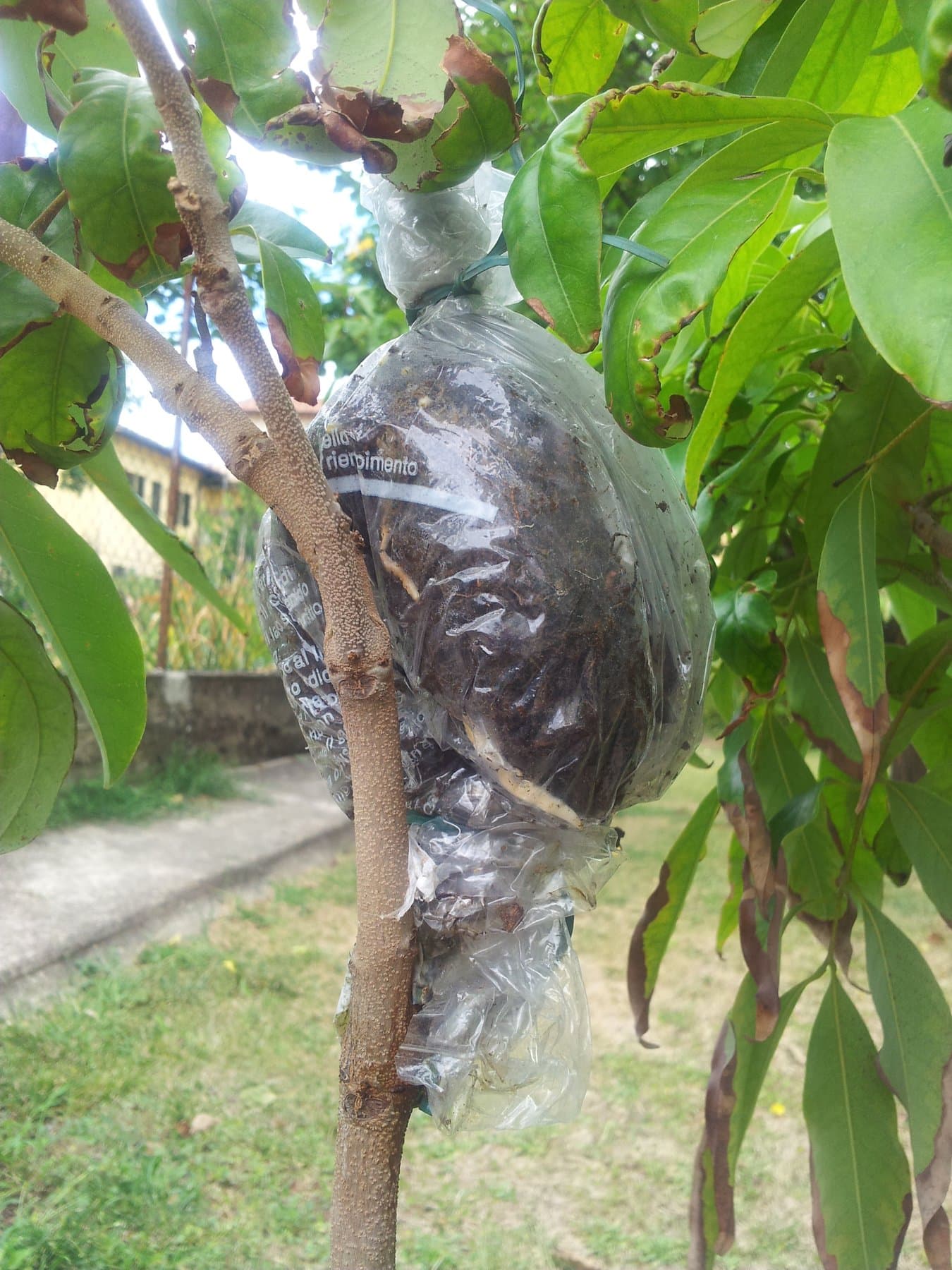
Air layering roots a stem while it is still attached to the parent plant. The wound sits in damp sphagnum under plastic until adventitious roots fill the wrap. Then the rooted section is cut free and potted. Iowa State Extension (January 2025 review): layering forms new roots on vegetative pieces while the propagule remains attached; air layering suits plants without flexible stems and tall or leggy houseplants. NCSU Extension Gardener Handbook Chapter 13: water stress stays low and carbohydrate and mineral levels stay high because the stem is still fed by the parent. Clemson HGIC: the air-layer section keeps receiving water from the mother plant, unlike cuttings that can dry out after they are severed.
This guide covers indoor woody and thick houseplant stems. Soft node cuttings belong on water propagation and soil propagation. Outdoor fruit-tree and landscape shrub air layers stay outside this how-to. Species workflows stay on how to propagate monstera, how to propagate fiddle leaf fig, how to propagate rubber plant, and how to propagate philodendron. Wrap technique, wound types, timing ranges, failures, and when to sever are covered below.
When air layering beats a cutting
Choose air layering when the stem is thick or woody and a bare stick would be a large risk, or when the plant has gone leggy with a bare lower trunk and you want a rooted top while the mother keeps feeding it.
Sources that steer thick indoor stems here:
- Illinois: large tropicals often grow too tall and lose lower leaves; very large leaves lose moisture so quickly that stem cuttings respond poorly; rubber tree, dieffenbachia, croton, and others fit air layering while the top stays nourished by the parent.
- Iowa State table marks air layering for Ficus elastica, Ficus lyrata, Ficus benjamina, Monstera deliciosa (also simple layering), Dieffenbachia, Dracaena fragrans, croton, Schefflera arboricola, and others. Heartleaf philodendron and pothos sit under simple layering on that table, not air layering.
- UNL G1853 table: Fiddleleaf Fig (Ficus lyrata) as air layering; Rubber Plant (Ficus elastica) as air layering and seeds; rubber plant is the worked leggy-stem example.
- Penn State Propagating Houseplants: dumb cane, dwarf Schefflera (Heptapleurum arboricola), and Dracaena spp. as easy air-layer examples. Penn State Monstera page: air layering or stem cuttings.
- NCSU Handbook: overgrown rubber plants or dieffenbachia that have lost most lower leaves. Clemson: leggy bare-stem houseplants (outdoor woody names on that page are out of scope here). Texas A&M: leggy indoor foliage plants including ornamental figs, dieffenbachia, and croton; seldom used when simpler methods work. RHS lists Ficus and Philodendron among suitable plants (that guide also covers outdoor shrubs and trees).
Choose a water or soil cutting when the stem is soft, node-rich, and short enough that a severed piece can hold moisture without the mother. Soft vines and jar demos live on water propagation. Stick-in-mix node starts live on soil propagation. Mobot Rooting Cuttings in Water flags many woody plants as poor water candidates that usually rot before rooting; thick Ficus wood is not a pothos-style jar demo.
Materials
- Sharp clean knife (Iowa State, Clemson, Mobot, UNL, Texas A&M)
- Unmilled long-strand sphagnum moss, soaked then squeezed damp, not dripping (Iowa State; Mobot monocot and dicot guides; Clemson; Texas A&M; NCSU Handbook)
- Clear plastic wrap, cut sandwich bag, or polyethylene sheet (Iowa State, Illinois, UNL, Mobot, Penn State, NCSU). Clemson and Texas A&M also name aluminum foil over the wrap when light or heat is strong. RHS: clear plastic acceptable for speedy rooters such as Ficus; black plastic preferred on that guide for plants that take a long time, to limit algae inside the sleeve
- Twist ties, electrician tape, cotton string, or waterproof tape to seal ends (Iowa State, Clemson, UNL, Mobot, NCSU)
- Toothpick, matchstick, or wood sliver to hold a slant wound open (Iowa State monocot method; Illinois; UNL; Mobot monocot; NCSU; Texas A&M)
- Optional rooting hormone powder or liquid (IBA or NAA per Iowa State). Clemson: may improve success but is not necessary. UNL: usually hastens rooting if applied correctly; some plants root as well untreated. Iowa State: place powder in a separate dish; never dip into the stock jar; do not over-apply
- Stake or splint if the wounded stem needs support (Illinois; Mobot monocot; Texas A&M)
- Pruners for the sever cut; drained pot slightly larger than the root ball; commercial potting mix (Mobot; Iowa State; Clemson)
Wound types: slant cut vs bark ring
University and botanical guides describe two wound styles. Match the style to stem anatomy.
Bark ring (girdle) for woody dicots. Iowa State (weeping fig, rubber tree, fiddle-leaf fig, croton): two cuts about 1 inch apart to the woody center, connect, strip the bark ring, scrape cambium. NCSU Handbook: 1-inch ring; scrape cambium so callus does not bridge. Clemson: parallel bark cuts about 1.5 inches apart, connect, strip, scrape. Mobot dicot guide (Ficus elastica): 1/2 to 1 inch band below a node; scrape cambium; dry overnight or at least 12 hours before moss to reduce rot and kill leftover cambium. Texas A&M: parallel cuts about 1 1/2 inches apart through bark and cambium, then strip.
Upward slant cut for monocots and many less-woody stems. Iowa State (dracaena, dieffenbachia): upward cut about one-third of stem diameter; do not cut through; keep open with a toothpick; optional hormone in the cut. Illinois: one-third to one-half through; prop with a stick; stake tall spindly stems. Mobot monocot: usually 6 to 12 inches below the tip; about half way through; toothpick keeps sides from reuniting. NCSU: about one-third through, normally about 1 foot from the tip. UNL rubber how-to: 1 to 1 1/2 inch slant, one-quarter to one-half through, matchstick or toothpick (Ficus elastica example; table still lists F. lyrata for air layering). Texas A&M: 1 1/2 to 2 inch upward cut almost to center for rubber plant and dieffenbachia. RHS tongue method: 2.5 cm (1 in) angled cut through a leaf bud with moss under the tongue; outdoor-shrub style on that page, not the default indoor Ficus girdle.
Complete or partial girdling interrupts downward movement of carbohydrates and related compounds so they accumulate at the wound and promote rooting when a moist medium is present (Iowa State; Clemson phloem note; Mobot monocot nutrient-flow note).
Steps
- Time the wrap when the plant is growing if you can. Iowa State: early spring is ideal for layering, but most houseplants can succeed any time of year. Clemson: any time of year, best while plants are actively growing. Texas A&M: spring on previous-season shoots or mid-summer on mature current-season wood for optimum rooting. RHS: autumn or spring for many outdoor subjects; evergreens respond better to spring on that guide. Indoors, cool low-light months can still work, but most timelines assume active growth.
- Pick the site on a healthy stem. Iowa State: about 12 to 18 inches from the shoot tip; remove leaves in the immediate area. Mobot monocot: usually 6 to 12 inches below the tip. NCSU: normally about 1 foot from the tip; clear leaves and twigs a few inches above and below a node. Clemson and Texas A&M: pencil-size or larger for woody stems. UNL: remove leaves or twigs about 3 to 4 inches above the incision. Mobot dicot: remove leaves near the cut and leaves below the cut toward the rest of the plant; wipe Ficus sap as needed and clean the knife if sap builds up.
- Wound with the matching method above. Do not cut so deep the stem snaps (Iowa State monocot warning; Illinois stake note; Mobot support step). For dicot bark rings, scrape cambium fully (Iowa State, NCSU, Clemson, Mobot, Texas A&M).
- Optional hormone on the exposed surface or into the slant (Iowa State, Illinois, UNL, Mobot, NCSU; Clemson and Texas A&M optional). Mobot dicot: apply along the top cut of the girdle; roots form there.
- Soak unmilled sphagnum, then squeeze to damp, not dripping. Clemson: soak several hours; wring until moist like a damp sponge; excess water can cause deterioration and decay. Texas A&M: soak several hours; squeeze surplus; excessive moisture results in decay. Mobot: damp but not dripping. UNL: moist, but not soggy. Illinois: very moist sphagnum in a fist-sized ball. Iowa State: one or two handfuls of moist unmilled sphagnum around the wound.
- Wrap plastic so no moss sticks out the ends; seal top and bottom. Mobot: moss poking out acts like a wick and dries the ball faster. Iowa State: none of the moss should protrude; twist ties above and below. Clemson: film snug against bark above and below; retain moisture but limit excess that invites disease. Texas A&M: snug seals so moisture does not escape and excess does not enter when watering the plant. Optional foil over plastic in strong sun or heat (Clemson).
- Return the plant to its usual bright, indirect location and monitor. Mobot: monitor weekly. Clemson: check moss weekly so it stays moist; if moss dries out, layering fails. Iowa State: remoisten if moss feels dry and lightens in color; open the top tie, pour a little water, reseal. Mobot: color shift from brown toward light tan signals drying. Keep mother-plant leaves in the light band they already use; if you meter PPFD on the canopy while the wrap is still attached, convert intensity and lamp hours with the propagation light DLI tool. Fixture distance when windows fail: best grow lights for indoor propagation.
- Wait for an abundant root mass, not the first thread. Ranges by source:
- Iowa State: roots should appear in several weeks; for some species several months; sever when a good root system is readily visible with roots several inches long.
- Mobot monocot and dicot guides: 1 to 3 months for rooting; some plants longer; do not remove when the first root appears; wait until abundant roots grow through the moss and encircle the plastic.
- Illinois: after 3 to 4 months, roots should begin to appear through the plastic; then cut below the roots and pot.
- UNL: after several weeks, roots should be visible near the moss edges; sever when a good root system has formed.
- Clemson: several weeks to months depending on the plant; remove when roots are visible throughout the moss.
- RHS: leave wrapping up to a year for slow outdoor subjects on that guide; for Ficus, clear plastic is acceptable on that page. Do not paste the RHS "up to a year" outdoor figure onto every indoor monstera wrap as a fixed clock.
- Texas A&M: rooting time varies with plant variety and season; remove after new roots penetrate the moss ball and are visible on all sides. Sources don't give a monstera-only or fiddle-only week count beyond these ranges. No single indoor timeline fits every species.
- Sever just below the moss-and-root ball. Iowa State: cut just below the bottom twist tie; remove ties and plastic; pot in commercial potting mix. Clemson and Texas A&M: carefully remove film; avoid disturbing roots or moss when potting. Mobot monocot: remove plastic, then supports, then sever below where roots emerged; gently spread roots over moist mix. RHS: do not attempt to remove moss from the roots. Penn State: plant the newly rooted piece immediately after cutting below the new roots.
- Aftercare for the new plant. Iowa State: keep well watered in bright, indirect light; well established within a few weeks, then move to the preferred indoor spot and begin regular fertilization once established. Clemson: well watered and out of direct sunlight until the new root system is well developed. NCSU Handbook: pamper until the root system becomes more developed. Texas A&M: optional polyethylene tent 4 to 8 days to limit moisture loss; light shade, no direct sun; harden by cutting a few holes in the tent every few days; many plants are lost in this stage if roots were not sufficient to support the top.
- Mother plant. Iowa State: most plants break buds just below the cut and make several new branches. Mobot monocot: dormant buds along the remaining stem can reshoot; strong light encourages a new shoot. UNL: remaining cane can be saved; new buds arise on it.
Common failures
- Dry moss inside the wrap. Clemson: if moss dries out, layering fails; check weekly. Iowa State and Mobot: remoisten when moss lightens and feels dry. Mobot: moss protruding from the plastic dries the ball.
- Severing at the first root thread. Mobot: wait for abundant roots encircling the plastic. Iowa State: wait for a good system with roots several inches long. Texas A&M: many losses happen when the root system cannot yet sustain the top.
- Dripping, anaerobic moss. Clemson: excess water causes deterioration and decay. Texas A&M: excessive moisture results in decay of plant tissue. UNL: moist, not soggy. Pack damp sponge-wet moss, not a waterlogged ball.
- Stem snap from an oversized cut. Iowa State monocot: do not cut through. Illinois and Mobot: stake or splint weakened stems.
- Incomplete cambium scrape on a bark ring so the wound bridges and roots never start (Iowa State; NCSU; Clemson; Mobot overnight dry for leftover cambium on dicots).
- Direct sun on a new pot the first days (Clemson; Texas A&M shade note; Iowa State bright indirect after potting).
- Choosing air layering for an easy soft vine that roots faster as a node cutting (Texas A&M: seldom used when simpler methods work; Iowa State routes heartleaf and pothos to simple layering).
People also ask
Which houseplants are good air-layer candidates?
Thick or woody indoor stems that struggle as bare cuttings. Iowa State table: Ficus elastica, Ficus lyrata, Ficus benjamina, Monstera deliciosa, Dieffenbachia, Dracaena fragrans, croton, Schefflera arboricola, and others. UNL: fiddleleaf fig and rubber plant under air layering. Illinois: rubber tree, dieffenbachia, croton, and similar large-leaved tropicals. Penn State: dumb cane, dwarf Schefflera, Dracaena; Monstera page adds air layering or stem cuttings. NCSU: overgrown rubber plants and dieffenbachia. RHS: Ficus and Philodendron among suitable subjects. Cluster pages: how to propagate monstera, how to propagate fiddle leaf fig, how to propagate rubber plant, how to propagate philodendron. Heartleaf philodendron on Iowa State's table is simple layering; use the philodendron page for vine versus thicker-stem choices.
How long does air layering take?
Ranges differ by source and species. Iowa State: several weeks, or several months for some species. Mobot: 1 to 3 months, sometimes longer. Illinois: roots often begin to show at about 3 to 4 months on that page. UNL: roots often visible after several weeks; sever when the system looks good. Clemson: several weeks to months. RHS: up to a year for slow subjects on that outdoor-leaning guide; Ficus may use clear plastic as a faster indoor-friendly example on the same page. Texas A&M: varies with variety and season. No source gives one indoor week count for every monstera or fiddle wrap.
When do I cut the layer free?
When a dense root mass is visible through the wrap, not at the first root. Iowa State: good root system with roots several inches long, then cut below the bottom of the wrap. Mobot: abundant roots growing through moss and encircling the plastic. UNL: good root system under the plastic, sever just below the moss ball. Clemson: roots visible throughout the moss. Penn State: once roots have formed, cut just below them and pot immediately.
Do I need rooting hormone?
Helpful, not required on every plant. Clemson: may improve success but is not necessary. UNL: usually hastens rooting if used correctly; some plants root untreated. Iowa State: IBA or NAA products; separate dish; over-application can slow roots. Moisture, a clean wound, and sealed damp moss matter as much as the powder. How to apply it and what homemade options really do: rooting hormone.
Air layer vs water or soil cutting?
Water and soil cuttings sever a soft node piece first. Air layering keeps the top attached until roots exist, which suits thick Ficus trunks, large monstera canes, and other stems Illinois and Iowa State flag as poor or risky cutting subjects. Soft vines belong on water propagation or soil propagation. Full wrap steps stay in this guide; species guides carry plant-specific notes.
Can I air layer in winter indoors?
Iowa State: early spring is ideal, but most houseplants can be layered any time of year. Clemson: any time, best during active growth. Expect slower progress in cool, low-light months, and use the week-to-month ranges above. Keep moss from drying and keep the canopy in bright indirect light.