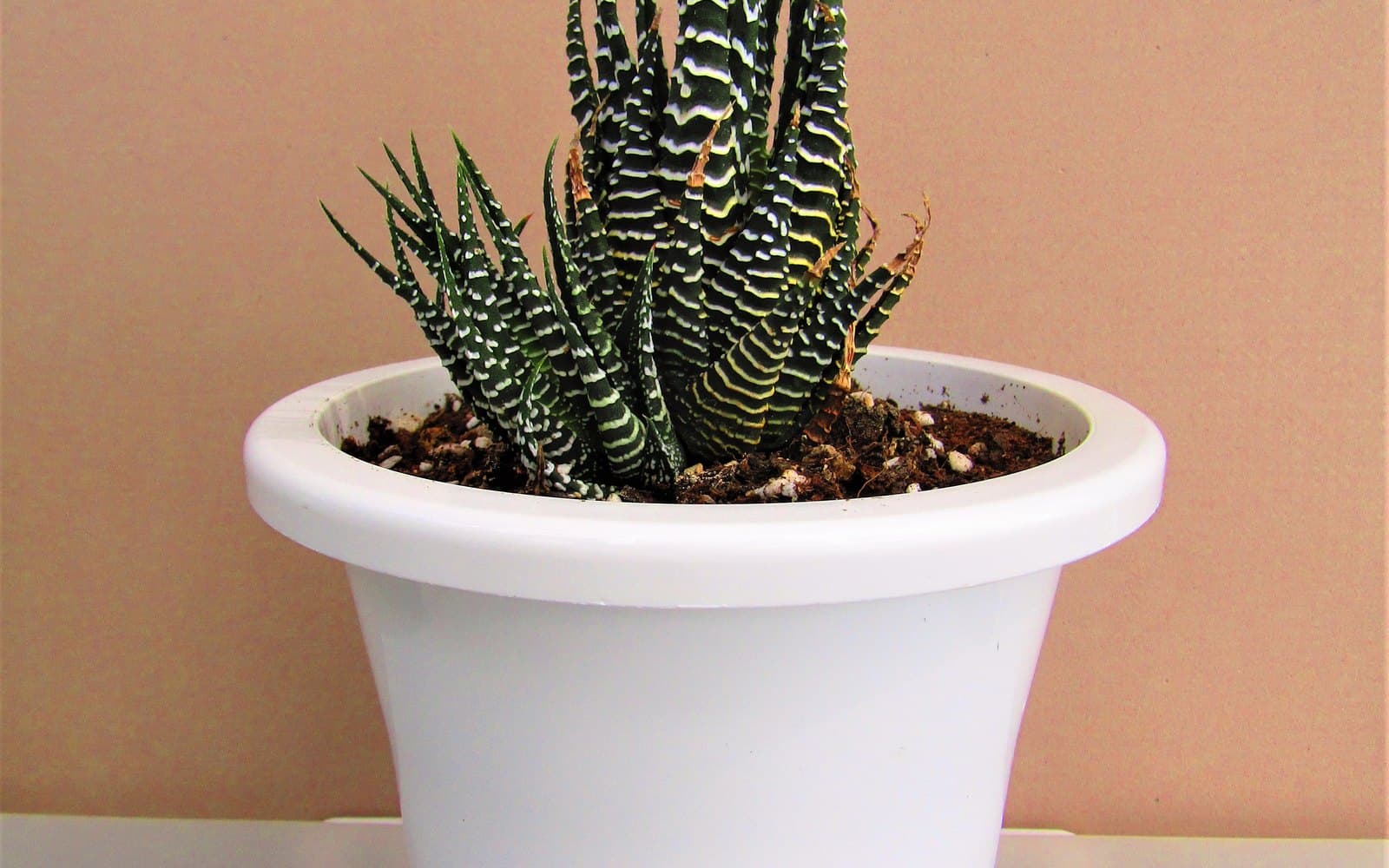
Haworthia is a genus of small South African rosette succulents in Asphodelaceae (NCSU daylily family). Labels may say zebra plant, zebra haworthia, pearl plant, star cactus, or window plant. Same URL for this indoor how-to. Many familiar zebra-banded houseplants are now Haworthiopsis (formerly Haworthia). Soft-leaved window types such as Haworthia retusa and Haworthia cooperi stay in Haworthia. NCSU: the 2013–2014 split moved many cultivated species to Haworthiopsis and Tulista. Haworthia: translucent epidermal windows at leaf tips. Haworthiopsis: opaque linear leaves with white raised calluses or bands, often on the undersides.
Common indoor taxa on opened primaries: Haworthiopsis fasciata and Haworthiopsis attenuata (both sold as zebra plant / zebra haworthia; often confused), Haworthiopsis tessellata (veined / alligator haworthia), Haworthia retusa (star cactus). RHS also groups soft Haworthia species and Haworthiopsis forms under its Haworthia genus guide. Check the botanical name on the label; propagation steps below apply across these clump-forming indoor haworthioids where the named source covers them.
Wisconsin Hort (Dan Mahr): vegetative propagation, especially cuttings and offsets, is the quickest common method; majority of species cluster from the base as offsets or pups. RHS Haworthia genus guide: clump-forming haworthias are easy to propagate by separating smaller outer rosettes and potting them individually. RHS Haworthiopsis fasciata and H. attenuata profiles: sow seed at 21–24°C in spring, separate offsets, or take leaf cuttings in spring and summer. NCSU Recommended Propagation Strategy: Division, Leaf Cutting, and (on several zebra and genus pages) Seed. Iowa State succulent how-to names Haworthia among genera that work from offsets and division. Virginia Tech names haworthia among offset examples.
Indoor windowsill and dish-garden focus. For mix, see soil propagation.
Offsets and division
Wisconsin: majority of species cluster from the base; young plants are offsets or pups. In many cases pups develop roots while still attached. In some species the link breaks once the pup is established and plants fall apart when unpotted; in others the attachment remains and is broken or cut. If separation creates a subsoil wound, air-heal the plants for a few days before repotting so pathogens cannot enter the fresh wound from soil.
RHS Haworthia genus guide: separate some of the smaller rosettes around the outside and pot up individually.
RHS Haworthiopsis fasciata and attenuata: separate offsets in spring and summer (same Propagation line as seed and leaf cuttings).
NCSU Haworthiopsis fasciata and attenuata: produces pups and offsets; propagate by separating pups or removing offsets from the parent. NCSU Haworthiopsis tessellata: best propagated by division of offsets or tiny pups at the base; stoloniferous roots. NCSU Haworthia retusa: propagated by removing offsets or pups at the base. NCSU Haworthia genus page Recommended Propagation Strategy includes Division.
Iowa State (How to Propagate Succulents): for offsets, gently pull or cut so leaves or stems and roots stay attached; clean sharp pruners if needed; pot in well-drained media such as cactus potting soil in a container with a drainage hole; lightly water; after a few weeks the new plant establishes. That page lists Haworthia among genera suited to this method. Those “few weeks” are Iowa State’s general offset note, not a haworthia-only clock.
Virginia Tech (426-002): plants with a rosetted stem often form new shoots at the base; sever after they have developed their own root system; unrooted offsets of some species may be removed and placed in a rooting medium; examples include haworthia, bromeliads, and many cacti.
Opened Wisconsin, NCSU, and RHS pages do not give a pup diameter, parent-fraction size rule, or water-jar protocol for haworthia offsets.
Leaf cuttings
Wisconsin: for plants that never or only rarely offset, carefully cut individual mature leaves from the stem with a slight bit of attached stem tissue; once the wound has dried, place the leaf in a well-drained soil medium; in many cases one or more new plants slowly form from the severed leaf. Wisconsin notes this is not the average hobbyist’s first method but is used by experienced growers for rare or slow plants.
RHS Haworthiopsis fasciata and attenuata: take leaf cuttings in spring and summer.
NCSU fasciata and attenuata body text: may also be propagated by leaf cuttings (and rarely by seeds). NCSU Recommended Propagation Strategy lists Leaf Cutting for Haworthia (genus), H. retusa, H. fasciata, and H. attenuata. Opened NCSU retusa body text names offsets/pups only; keep Leaf Cutting as the Recommended Strategy field, not as a retusa how-to paragraph.
Iowa State’s leaf-cuttings section on the succulent how-to does not list Haworthia among its leaf examples. Do not copy that page’s leaf protocol onto haworthia.
Opened primaries do not give leaf-callus day counts beyond Wisconsin’s “once the wound has dried,” or plantlet week counts for haworthia leaf cuttings.
Seed
Wisconsin: Haworthias can be grown from seed; seed is not commonly available except through specialist dealers; sow in a well-drained mix and keep moist until germination, usually within 1 to 2 weeks; do not let the soil dry significantly while seedlings establish.
RHS Haworthiopsis fasciata and attenuata: sow seed at 21–24°C in spring.
NCSU fasciata and attenuata: rarely by seeds in body text; Seed appears in Recommended Propagation Strategy on those pages and on the Haworthia genus page. Opened NCSU retusa and tessellata pages do not list Seed in Recommended Propagation Strategy.
Common mistakes
- Treating every zebra-labeled plant as Haworthia fasciata when NCSU and RHS place common zebra banded types in Haworthiopsis (fasciata vs attenuata often mislabeled; attenuata has tubercles on both leaf surfaces, fasciata is smooth on the upper surface).
- Inventing blog pup-size fractions, water-rooting week counts, or leaf-plantlet timers that opened Wisconsin, NCSU, RHS, Iowa State, and Virginia Tech pages do not state for these taxa.
- Copying Iowa State’s general leaf-cutting recipe onto haworthia when that page’s leaf examples omit Haworthia.
- Skipping Wisconsin’s air-heal step after a subsoil wound from offset separation.
- Overwatering cuttings or fresh divisions; Wisconsin, NCSU, and RHS all flag rot in wet or poorly drained conditions, especially in cool low-light periods.
- Expecting seed from grocery-store plants; Wisconsin: seed mainly through specialist dealers.
People also ask
Is zebra haworthia still Haworthia?
Often no on current labels. NCSU and RHS place zebra-banded houseplants such as Haworthiopsis fasciata and Haworthiopsis attenuata in Haworthiopsis (synonyms include Haworthia fasciata / attenuata). Soft window-tipped types such as Haworthia retusa remain Haworthia. NCSU genus note: translucent tip windows point to Haworthia; opaque linear leaves with white raised bands or spots point to Haworthiopsis.
Can I propagate haworthia from offsets or pups?
Yes. Wisconsin, RHS genus and Haworthiopsis profiles, NCSU species pages, Iowa State (succulent offsets list naming Haworthia), and Virginia Tech (haworthia among offset examples) all support separating offsets. Prefer rooted pups when possible (Virginia Tech; Wisconsin notes many already have roots).
Do leaf cuttings work?
Yes on named primaries for several taxa. Wisconsin describes mature leaves with a bit of stem tissue for rarely offsetting plants. RHS fasciata and attenuata name leaf cuttings in spring and summer. NCSU lists Leaf Cutting for the genus and for fasciata, attenuata, and retusa Recommended Strategy fields.
Can I grow haworthia from seed?
Yes when seed is available. Wisconsin: germination usually 1 to 2 weeks in moist well-drained mix. RHS fasciata and attenuata: 21–24°C in spring. NCSU body text calls seed rare for the common zebra types.