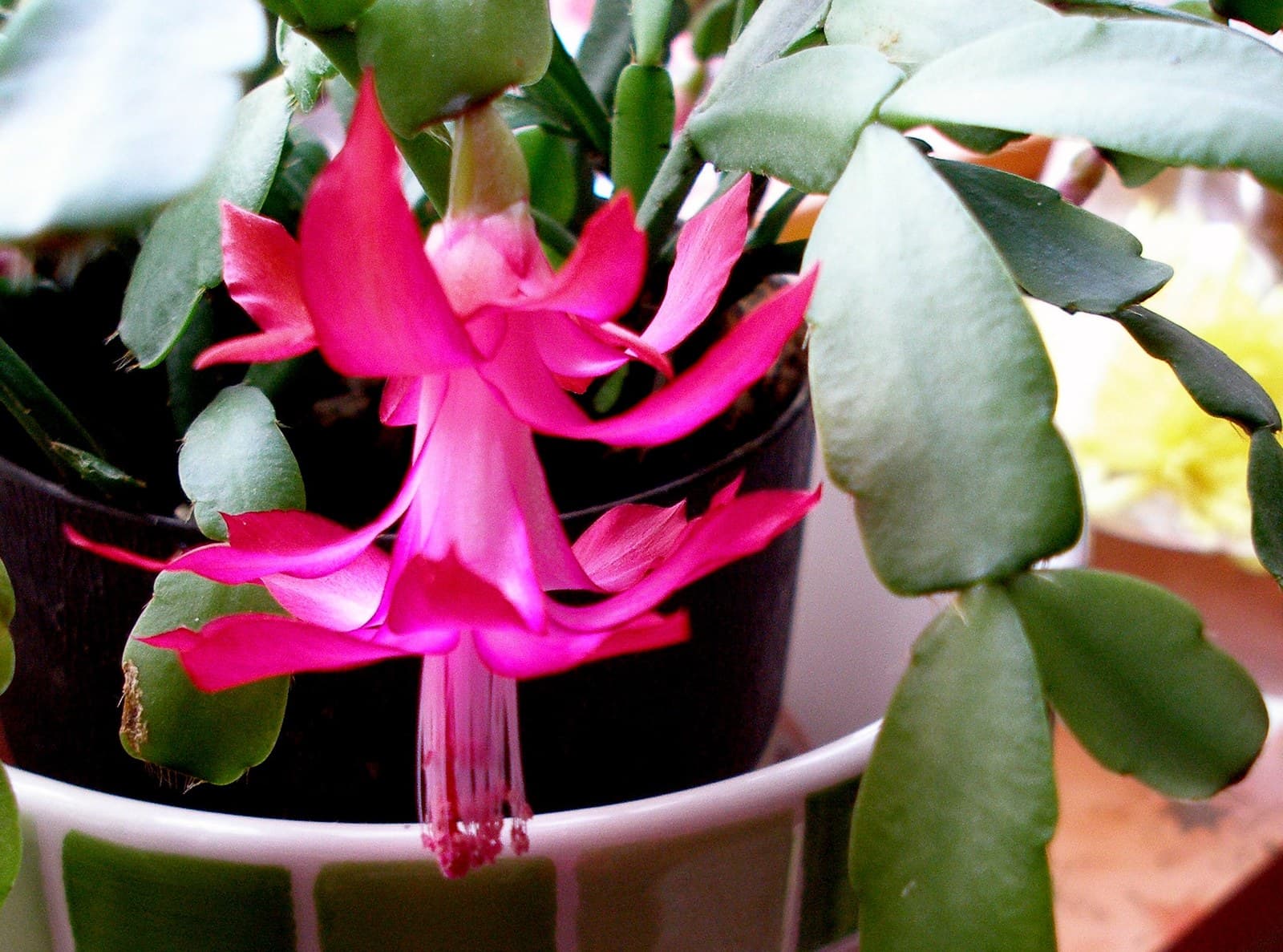
A Christmas cactus is Schlumbergera, often sold as holiday cactus. These plants are epiphytes from shady rain forests, not desert cacti. The “pads” you see are flattened stem segments, called phylloclades, not true leaves. Propagation follows stem cuttings at a joint, not leaf trays used for other succulents.
Thanksgiving cactus or Christmas cactus? Clemson distinguishes them by segment shape. Thanksgiving (Schlumbergera truncata) has 2 to 4 saw-toothed edges on each phylloclade. Christmas (S. × buckleyi) has more rounded margins. The cutting method in the sources on this page is the same. Use Clemson’s notch note for ID only.
Can you propagate a Christmas cactus? Yes. You propagate from stem segments (phylloclades) cut or pinched at a joint. Iowa State, Clemson HGIC, and Wisconsin Horticulture all describe that path in drained media. UC Master Gardeners Solano also note holiday cactus cuttings rooted in a jar of water (at least two joints, water at the base only). That water note is a mention, not a full Schlumbergera jar recipe. Leaf-on-grit trays for other succulents stay on how to propagate succulents.
For drained mix after roots form, see soil propagation. Shared jar habits for plants that root in water live on water propagation. Overview of cuttings and media: plant propagation.
Best way indoors
| Situation | Method the sources support | Why |
|---|---|---|
| Healthy stem with firm joints | Stem segments in perlite, coarse sand, or well-drained mix (Iowa, Clemson, Wisconsin) | Primary path across the three extension pages. Segment counts, callus days, and rooting weeks differ by source. |
| Watch roots in a clear jar | Water jar only as UC Master Gardeners Solano describe (at least two joints, water at the base) | For jar care, see water propagation and the propagation water change calculator. Beyond Solano’s note, sources don’t describe rooting this plant in water. |
| Detached “leaf” on grit or tray | Not for Christmas cactus | These are stem segments. Leaf trays for other succulents live on how to propagate succulents. |
Wisconsin says roots often form in 2 to 3 weeks, Clemson gives 3 to 8 weeks, and Iowa about 6 to 8 weeks. Iowa calluses overnight, Clemson for 1 to 2 days, and Wisconsin for 2 to 3 days.
Materials
- A healthy Christmas cactus with firm stem segments
- Clean scissors, or pinch at a joint
- A pot with drainage (Clemson: 4-inch pot for three cuttings, or 6-inch for five)
- Perlite or coarse sand (Iowa State), or well-drained potting mix (Clemson, Wisconsin)
- Optional: a clear plastic bag (Clemson protocol)
- Well-drained mix for potting on once roots are about an inch long (Iowa State)
- Bright, indirect light space while roots form (Clemson); a brightly lit place (Iowa State)
Skip hormone unless a source you follow names it. Iowa, Clemson, and Wisconsin don’t require rooting hormone for holiday cactus stem segments. Skip leaf trays and grit meant for other succulents.
Stem segments (phylloclades)
Stem segments are how Iowa State, Clemson, and Wisconsin multiply holiday cactus. The pages agree on a joint cut or pinch, a callused base, about 1 inch of insertion, and right-side-up orientation. They do not agree on one segment count, one callus clock, one medium name, or one rooting week band. Read each line as its own recipe.
Take the cutting
Iowa State Extension. Take 2 to 5 flattened stem segments. Cut or pinch at a joint.
Clemson HGIC. Take 3 to 5 phylloclades, pinched, in May or June.
Wisconsin Horticulture. Take one joint, or 2 to 3 joints. New plants any time; often better late spring through summer.
Segment counts are not one number. Iowa: 2 to 5. Clemson: 3 to 5. Wisconsin: one joint, or 2 to 3. Follow the source you are using.
When to cut. Clemson names May or June. Wisconsin allows any time and prefers late spring through summer. Those are not one calendar rule.
Callus the cut end
Callus means the cut surface dries and seals before you stick the segment. Wet tissue into wet mix is a common rot path. Sources disagree on how long to wait.
Iowa State. Callus overnight. Pot the next day.
Clemson. Callus a day or two outdoors in the shade.
Wisconsin. Dry 2 to 3 days in a shady place.
Callus times differ. Iowa calls for overnight, Clemson 1 to 2 days, and Wisconsin 2 to 3 days. Across these sources, callus time runs overnight to about 3 days only as a span of what the pages say, not as a blended recipe.
Stick in drained media
Iowa State. Fill a drained pot with moist perlite or coarse sand. Insert the callused end about 1 inch deep. Firm the medium. Keep the original orientation. Cuttings placed upside down will not root. Water when the medium begins to dry. A brightly lit place while roots form.
Clemson. Insert about 1 inch in well-drained mix. Water the soil well. Optional: keep humidity with a clear plastic bag on the pot until roots form, then remove the bag. Bright, indirect light until roots form. Clemson’s bag is optional; Iowa and Wisconsin do not require a bag.
Wisconsin. Well-drained mix. Keep moist, not saturated.
Media differ. Iowa uses perlite or coarse sand, and Clemson and Wisconsin use a well-drained mix. Shared drained-mix habits after potting on live on soil propagation.
Orientation. The end that faced the pot stays down. Iowa State is explicit: upside down will not root. Mark the base when you take the cutting if the segment looks similar both ways.
Light while rooting. Iowa wants a brightly lit place. Clemson wants bright, indirect light until roots form. A dim interior shelf stalls starts and softens tissue. If the pot sits in a dark corner, raise light before you blame the cultivar. Check the propagation light DLI calculator and, when windows cannot deliver, best grow lights for indoor propagation.
Moisture and the optional bag. Wisconsin: moist, not saturated. Iowa: water when the medium begins to dry. Clemson: water well, then optional bag until roots form. Iowa and Wisconsin do not require a bag. Closed plastic in low light raises mold risk. Prefer airflow and correct moisture over sealing tighter.
Wait for roots, then pot on
Wisconsin Horticulture. Rooting often 2 to 3 weeks.
Clemson HGIC. Roots form in 3 to 8 weeks.
Iowa State. Roots in about 6 to 8 weeks. Pot on when roots are one inch or longer, into a well-drained mix.
Rooting weeks are not one number. Wisconsin often 2 to 3 weeks. Clemson 3 to 8 weeks. Iowa about 6 to 8 weeks. Match your expectation to the page you followed. Pulling a cutting at day ten because “nothing happened” is too early for Clemson’s and Iowa’s bands, and still early for a slow Wisconsin start.
After roots reach about an inch (Iowa’s pot-on cue), move into well-drained mix and grow on. Shared potting habits: soil propagation.
Water jar (Solano only)
UC Master Gardeners Solano describe holiday cactus cuttings rooted in a jar of water: at least two joints, water at the base only. That is the water attribution on this page. The steps above follow Iowa State, Clemson, and Wisconsin in mix or perlite.
Solano doesn’t give a change schedule, vessel size, hormone, or rooting time for water. For jar technique and change hygiene shared across easy water plants, see water propagation and the propagation water change calculator. Prefer the drained-media path when you want the Iowa, Clemson, and Wisconsin clocks in one place.
Light while propagating
A Christmas cactus segment needs a brightly lit place while roots form. Iowa State keeps the cutting in that kind of light for the whole rooting stretch. Clemson keeps the same segment in bright, indirect light until roots form.
A dim interior shelf stalls the start and softens tissue. Pale segments that sit still in a dark corner are a light problem first. Raise the light before you blame the cultivar. The callused end still belongs about an inch deep, right-side up, in moist perlite, coarse sand, or well-drained mix. Light does not replace drainage, and a wet pot in a dark room does not replace a bright one.
Clemson’s clear plastic bag is optional until roots form. Iowa State and Wisconsin do not require a bag. Closed plastic in low light is a mold chamber. Crack or remove the cover, keep the mix moist rather than wet, and give the segments more light instead of sealing tighter.
When the window cannot keep the pot brightly lit, meter the spot with the propagation light DLI calculator. Fixture distance for a lamp that fills a weak window is on best grow lights for indoor propagation. Segments form roots in a brightly lit place. A dim shelf stalls them.
Troubleshooting
No roots yet. Check which clock you are on. Wisconsin: often 2 to 3 weeks. Clemson: 3 to 8 weeks. Iowa: about 6 to 8 weeks. Early checks are fine; early discard is not. Confirm segment count matches your source (Iowa 2 to 5; Clemson 3 to 5; Wisconsin one joint or 2 to 3), callus time matches that source, insertion about 1 inch, and right-side-up orientation. Soft, brown tissue will not recover; take a fresh segment from firm green growth.
Rotting segment. Common causes: wet break into wet mix with no callus; soggy medium; a pot with no drainage; leaves of other plants’ methods misapplied to stem tissue. Callus on your source’s clock (overnight Iowa; 1 to 2 days Clemson; 2 to 3 days Wisconsin). Restart from firm tissue in drained media. Do not bury a soft, collapsed base deeper hoping it will “find” air.
Mold under a bag. Clemson’s clear plastic bag is optional until roots form. Iowa and Wisconsin do not require a bag. Closed plastic in low light is a mold chamber. Crack or remove the cover, improve air flow, and keep the mix moist rather than wet. Raise light with the propagation light DLI calculator or best grow lights for indoor propagation rather than sealing tighter.
Upside-down cutting. Iowa State: cuttings placed upside down will not root. Flip only if you are sure you marked the wrong end and the tissue is still firm; otherwise take a new segment and keep the original orientation from the start.
Soggy mix / no drainage. Wisconsin wants moist, not saturated. Iowa waters when the medium begins to dry. Standing water collapses callused bases the same way it collapses soft herbaceous cuttings. Use a pot with drainage holes and a drained medium (perlite or coarse sand on Iowa’s page; well-drained mix on Clemson and Wisconsin). Shared drained-mix habits: soil propagation.
Leaf on grit (wrong method). Christmas cactus does not propagate from a detached leaf laid on grit the way many other succulents do. These are stem segments cut at a joint. Leaf-on-mix trays stay on how to propagate succulents. If you laid a phylloclade flat on grit expecting pups, move to the stem-segment method on this page instead.
Dim light / pale, stalled starts. Iowa wants a brightly lit place. Clemson wants bright, indirect light until roots form. A dim shelf stalls roots and softens tissue under a bag. Measure or estimate light with the propagation light DLI calculator. When windows cannot deliver, use best grow lights for indoor propagation.
Water recipe. Solano names a jar with at least two joints and water at the base. For jar care, see water propagation and the propagation water change calculator. Prefer mix or perlite when following Iowa, Clemson, and Wisconsin.
Common mistakes
- Expecting one rooting time. Wisconsin says often 2 to 3 weeks, Clemson 3 to 8 weeks, and Iowa about 6 to 8 weeks.
- Expecting one callus time. Iowa says overnight, Clemson 1 to 2 days, and Wisconsin 2 to 3 days.
- Expecting one segment count. Iowa uses 2 to 5, Clemson 3 to 5, and Wisconsin one joint or 2 to 3.
- Segment upside down (Iowa State: will not root).
- Wet break into wet mix with no callus.
- Soggy medium or a pot with no drainage.
- Sealing Clemson’s optional bag tight in low light until mold forms.
- Laying a Christmas cactus “leaf” on grit like the succulents parent. These are stem segments. Leaf-on-mix stays on how to propagate succulents.
- Building a full water-jar routine from UC Master Gardeners Solano’s short note (at least two joints, water at the base). For jar care, see water propagation and the propagation water change calculator.
- Treating Thanksgiving and Christmas as different cutting recipes. Clemson distinguishes notches for ID; the cutting method in these sources is the same.
People also ask
Can you propagate a Christmas cactus?
Yes. Propagate from stem segments (phylloclades) cut or pinched at a joint. Iowa State, Clemson, and Wisconsin describe rooting in perlite, coarse sand, or well-drained mix after a callus period. UC Master Gardeners Solano also note a water jar (at least two joints, water at the base). Leaf trays for other succulents are the wrong method here.
How many segments do I need?
Iowa State: 2 to 5. Clemson: 3 to 5. Wisconsin: one joint, or 2 to 3. Those are not one number. Follow the page you are using.
Do the ends need to callus?
Yes. Overnight (Iowa State), 1 to 2 days (Clemson), or 2 to 3 days (Wisconsin).
Can I root Christmas cactus in water?
UC Master Gardeners describe a jar of water (Solano County: at least two joints, water at the base only). For water cuttings in general, see water propagation and the propagation water change calculator. The steps in this guide follow Iowa State, Clemson, and Wisconsin in mix or perlite.
Which way up?
The end that faced the pot stays down. Iowa State: upside down will not root.
How long until roots?
Sources do not agree on one number. Wisconsin Horticulture: often 2 to 3 weeks. Clemson: 3 to 8 weeks. Iowa State: about 6 to 8 weeks. Match your wait to the page you followed. Iowa: pot on when roots are one inch or longer.
When should I take cuttings?
Clemson: May or June. Wisconsin: any time, often better late spring through summer. Those calendars are not averaged into one month.
Thanksgiving cactus or Christmas cactus?
Clemson: Thanksgiving (Schlumbergera truncata) has 2 to 4 saw-toothed edges on each phylloclade; Christmas (S. × buckleyi) has more rounded margins. Same cutting method in these sources.
Why not leaf trays?
Christmas cactus phylloclades are stem segments, not the detached leaves used for many other succulents. Leaf-on-grit and leaf-tray methods live on how to propagate succulents. Use joint cuttings here.
What mix should I use?
Iowa State names moist perlite or coarse sand. Clemson and Wisconsin name well-drained mix. After roots form, pot into well-drained mix (Iowa’s pot-on cue when roots are about an inch). Shared habits: soil propagation.