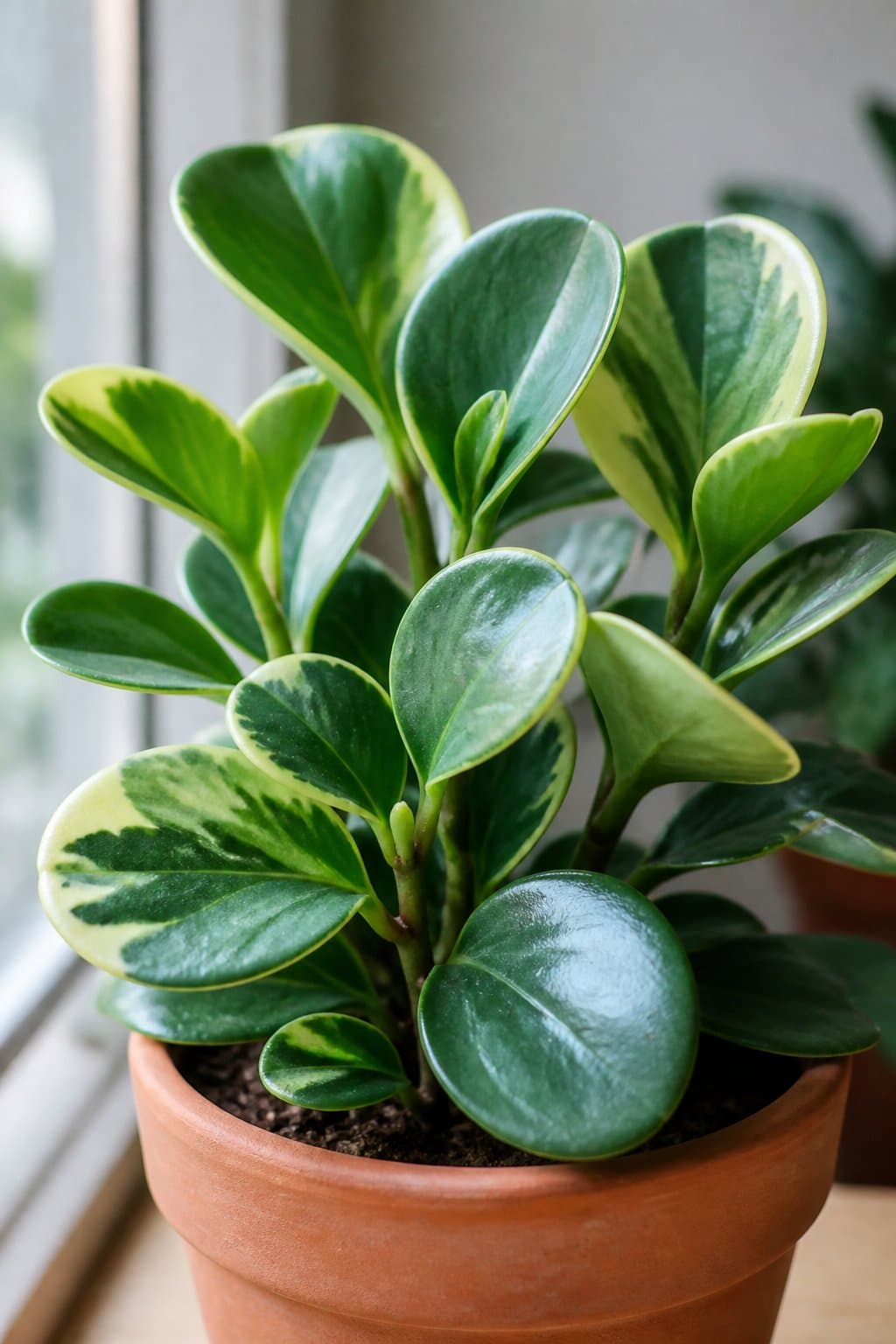
Peperomia is a large genus in the pepper family. NCSU: propagate by leaf cuttings, stem cuttings, or divisions, depending on the species. Watermelon peperomia, ripple peperomia, baby rubber plant (Peperomia obtusifolia), string of turtles, and cupid peperomia belong in this guide.
Clemson: raindrop peperomia (Peperomia polybotrya) is often mistaken for the Chinese money plant. That plant is Pilea peperomioides, at how to propagate a chinese money plant.
For mix in a drained pot, see soil propagation. Clemson names water for some species, including baby rubber plant; that method lives on water propagation.
Stem cuttings
Clemson: cut a three-to-five-inch piece of stem. Strip the leaves on the lower third. Dip in rooting hormone, then into potting soil or a rooting medium. Cover with clear plastic. Keep it out of direct sun.
Clemson, water: some species, such as baby rubber plant (Peperomia obtusifolia), root in water. Cuttings 4 to 6 inches. Lower leaves off. Cut just below a leaf node. Bright, indirect light. Pot after roots and new leaves form.
UNL lists tip cuttings for Peperomia. Missouri lists a herbaceous cutting and says it roots easily; keep moisture down while it roots.
Three to five inches in mix (Clemson) and four to six inches in water for obtusifolia (Clemson) are not one length.
Leaf cuttings
Clemson: take a leaf with at least an inch of petiole. Insert it into a rooting medium. New plants form at the base of the petiole, then lift and pot them. All leaf cutting types compared: leaf cuttings.
Iowa State puts Peperomia species on its leaf-petiole list. On that page: 1 to 1½ inches of petiole, or as much as you have if it is shorter, hormone optional, 45 degrees into the mix. Roots usually in three to four weeks. Plantlets in six to eight weeks. Those weeks are the list page, not a peperomia-only trial. Iowa’s air and heat-mat temperatures on that page are for houseplant cuttings in general.
UNL: peperomia is commonly started by whole leaf cuttings, with or without the stalk. UNL also lists leaf-bud cuttings for the genus (a leaf plus a short piece of stem that holds a bud).
Missouri’s peperomia photo caption: a rooted leaf and petiole, with a new plant from the petiole. Same comment: avoid excess moisture while it roots.
Clemson’s “at least an inch” and Iowa’s 1 to 1½ inches are close.
Division
NCSU and UNL list division. Missouri does not mark division for peperomia.
UNL’s general division: out of the pot, fingers or a knife, each piece with some roots. Pieces with no roots may be rooted as tip cuttings.
NCSU: method depends on the species. Division suits a clump that already has several crowns.
Common mistakes
- Wet mix on a leaf or stem. Missouri: avoid excess moisture while it roots. Clemson: overwatering drops leaves on the mother plant too.
- Treating every peperomia as a water cutting. Clemson names water for some species, including obtusifolia, not as a genus-wide jar recipe.
- A raindrop peperomia filed as a Chinese money plant. Clemson: they get mixed up. Pilea has its own guide.
- Expecting one cutting length. Clemson’s mix stems are 3 to 5 inches and the water cuttings 4 to 6 inches.
People also ask
Stem or leaf?
NCSU names both, plus division, depending on the species. Clemson writes stem, leaf, and water. Iowa’s named list for peperomia is leaf petiole.
How long until a plantlet?
Iowa’s petiole page: roots usually in three to four weeks, plantlets in six to eight. Clemson does not give a week count for mix or water. Do not turn those into one number.
Is baby rubber plant a rubber plant?
No. Baby rubber plant here is Peperomia obtusifolia. The rubber plant Ficus elastica is at how to propagate a rubber plant.