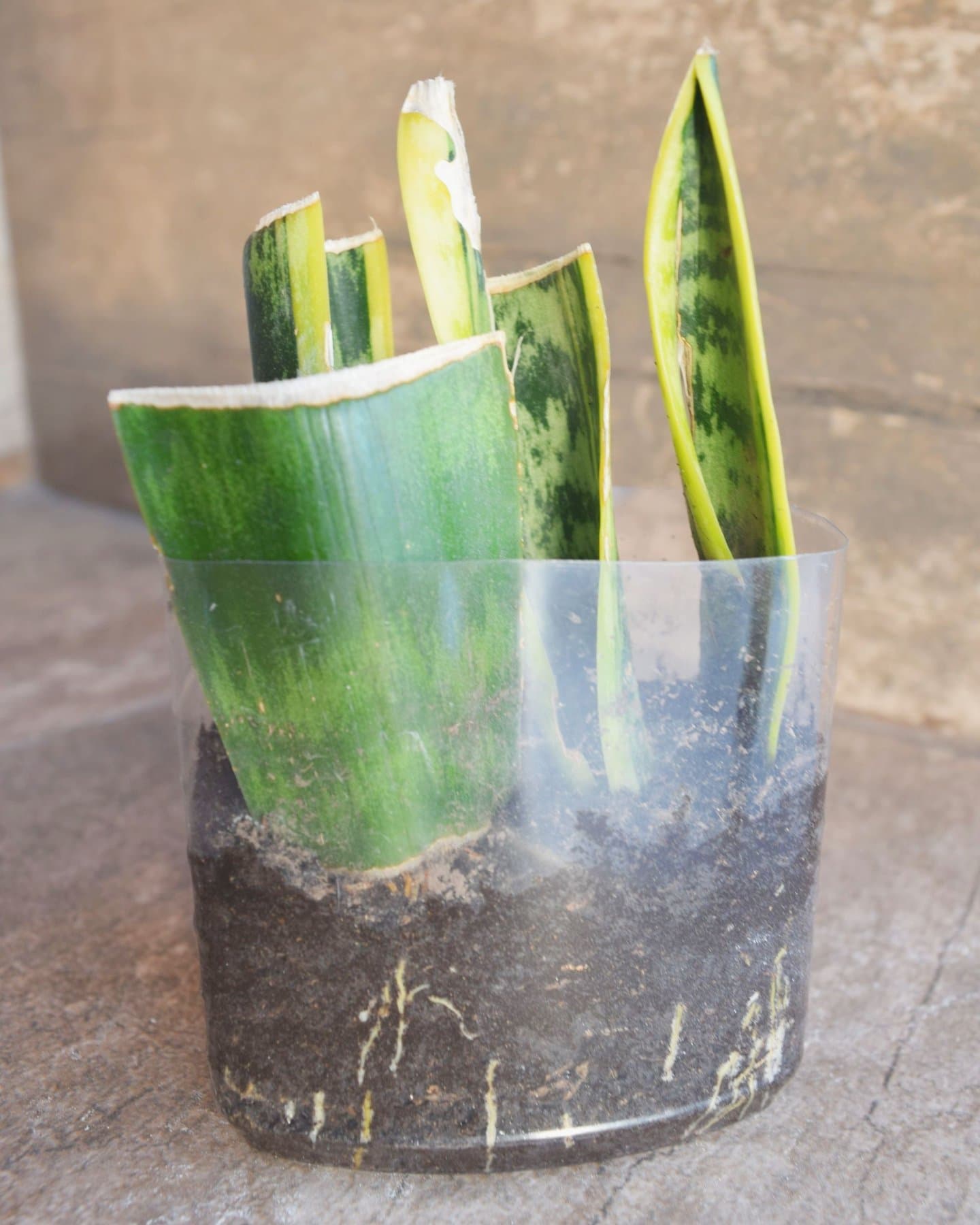
Snake plant is Dracaena trifasciata, previously Sansevieria trifasciata. Labels may say mother-in-law's tongue, good luck plant, or bowstring hemp. Same plant. Family Asparagaceae. NCSU Extension Gardener Plant Toolbox: erect clumping tropical evergreen; native to west and west-central Africa; stiff upright succulent leaves in rosettes or clusters, often with transverse bands of green, sometimes yellow or white margins on cultivars. RHS plant profile lists synonyms as Dracaena trifasciata and common names including snake plant and three-striped dragon tree. Penn State Extension: historically Sansevieria; reclassified into Dracaena with corn plant and lucky bamboo relatives. RHS Growing Guide notes genetic studies linking former Sansevieria to Dracaena.
Distinct from other Dracaena cane houseplants that rely on stem or cane cuttings. This guide covers the former Sansevieria group grown as sword-leaf and bird's-nest types. Iowa State Propagating Houseplants lists Dracaena trifasciata syn. Sansevieria trifasciata among easy houseplants and marks leaf cuttings and division. UNL G1853 table: Snake Plant (Sansevieria spp.) by leaf section cuttings and division. NCSU Handbook Chapter 13: Sansevieria trifasciata leaf-without-petiole sections, 3-inch to 4-inch pieces inserted vertically into medium; also names snake plant among indoor plants propagated by division. RHS profile: propagate by leaf cuttings, suckers, or division. Penn State: leaf cuttings work, but division is easiest. Colorado PlantTalk: divide rhizome shoots, or stick horizontal leaf sections in potting mix.
Division gives a finished plant with roots already attached. Leaf sections build new plantlets at the buried basal edge and take longer. For gritty, free-draining mix context shared with other fleshy houseplants, see soil propagation and the succulents how-to. For water rooting in general, see water propagation. Sources for this species describe rooting in mix and division, not rooting in water.
Division (rhizomes and offsets)
This is the reliable path when the clump is crowded enough to share.
NCSU Plant Toolbox Recommended Propagation Strategy includes Division. NCSU Handbook Chapter 13: indoor plants that can be propagated by division include snake plant; separation and division are normally done in fall or early spring.
Iowa State Division and Offsets: Dracaena trifasciata syn. Sansevieria trifasciata is listed among houseplants best propagated by division and offsets. Early spring is ideal; most houseplants can be divided any time of year. Unpot; loosen the root ball by hand or cut if needed; each piece needs healthy leaves and roots; larger pieces recover faster; repot in fresh potting soil in an appropriately sized container with drainage; water to settle; bright indirect light; wait a few weeks before fertilizing.
Iowa State How to Propagate Succulents: Sansevieria (Dracaena) is named for offsets and division; gently pull or cut so leaves or stems and roots stay attached; pot in well-drained media such as cactus potting soil in a container with a drainage hole; lightly water; after a few weeks the new plant establishes.
RHS Growing Guide: pot up well-rooted offsets from the outside of established clumps, or divide large clumps into pieces with one or more leaves attached to fibrous roots; spring (March to May) preferred; wear gloves because sap can irritate skin. Penn State: after a few years the plant creates offspring; remove from the container, divide, and repot with new soil. Colorado PlantTalk: new shoots arise from rhizomes and may be divided out for a new plant.
Variegated margin cultivars such as laurentii: Iowa State Leaf Section Cuttings and UNL both say use division, not leaf sections, to keep chimeric yellow edges. RHS Growing Guide: leaf cuttings from variegated cultivars tend to revert to green.
Leaf section cuttings
Named across NCSU Handbook Chapter 13, Iowa State leaf-section and succulent pages, UNL G1853, RHS Growing Guide, Colorado PlantTalk, and Penn State (leaf cuttings named; division preferred for speed). Other plants that grow from leaf pieces: leaf cuttings.
Orientation is critical. Iowa State Leaf Section Cuttings: cut a leaf into 3- to 4-inch-tall sections; the end closest to the base of the parent is the bottom; notch the top so polarity stays correct; dip the bottom in rooting hormone; insert one to two inches deep into moistened rooting medium; warm location, bright indirect light, high humidity (dome or bag with air exchange); new shoots or plantlets at the base in two months on that page. Iowa State How to Propagate Succulents: for Sansevieria (Dracaena), cut a 3- to 5-inch section; callus a day; insert into well-drained potting mix; roots and shoots only on the original "down" end; marking bottom straight and top angled helps; after several weeks new roots and shoots develop.
NCSU Handbook Chapter 13: snake plant (Sansevieria trifasciata), a monocot, can be propagated by cutting long leaves into 3-inch to 4-inch pieces; insert vertically into the medium. UNL: leaf section cuttings for snake plant; insert the edge closest to the base of the parent into the rooting medium. RHS Growing Guide: cut a mature leaf at the base, slice into 5 cm (2 in) sections; keep orientation; callus a day or two in a dry place; insert half the cutting, bottom downward, into damp peat-free cuttings compost or a 50:50 peat-free loam-based compost and horticultural grit mix; propagator with bottom heat about 18°C (65°F) or a clear bag in a warm room; best for non-variegated plants. Colorado PlantTalk: horizontal leaf sections in potting mix under a clear bag with a few holes in warm medium light; sections root in a few weeks on that page.
Hormone: Iowa State leaf-section protocol dips the bottom end; Iowa State succulents page notes most succulents root without hormone even though hormone can sometimes help.
Skip a single "roots in X weeks, pups in Y months" stopwatch those sources do not give. Iowa State's leaf-section page gives plantlets in two months, its succulents page roots and shoots in several weeks, and Colorado PlantTalk rooting in a few weeks. Those windows are not interchangeable blog timers.
Water
NCSU, Iowa State, RHS, UNL, Penn State, and Colorado PlantTalk don't describe rooting snake plant leaf sections in water. Those pages stick sections in rooting medium or divide rhizomes. Iowa State's general note that some species root in water, and that water-grown roots are coarser and may stress after potting, is not a snake-plant recipe. See water propagation for general jar technique, and prefer media sticking or division above for this species. The water change calculator is for jars that belong on that method path, not a substitute snake-plant recipe.
Light and mix
Iowa State Leaf Section Cuttings: 4 to 6 hours of bright, indirect light for optimal root and shoot growth; too little light slows rooting and cuttings may rot or dry before roots form; air about 65°F to 75°F; media about 75°F to 80°F with a heat mat if used. Colorado PlantTalk: medium to bright indirect light preferred; adapts to low light with less pronounced markings. NCSU Plant Toolbox: partial shade (direct sun only part of the day, about 2 to 6 hours); tolerates very low light; protect from overwatering. Penn State: bright indirect light; tolerates low light; keep out of direct sun that can burn. RHS Growing Guide: bright lightly shaded position; most cope with lower light; avoid midday summer sun that can scorch; room temperatures about 15–24°C (60–75°F). If windows cannot supply that band for cuttings, grow lights help; meter PPFD and convert with the propagation light DLI tool, then see best grow lights for indoor propagation.
Mix and moisture: Iowa State and RHS stress well-drained media and drainage holes. Penn State: cactus potting mix or mix with perlite; water only when dry; containers with drainage holes. RHS: free-draining peat-free cactus compost, or two parts peat-free loam-based compost to one part grit; let compost dry between waterings; do not leave plants standing in water. NCSU: well-drained soil; dry between waterings in the growing season. Full media steps: soil propagation. Succulents how-to covers overlapping gritty-mix habits for Sansevieria listed among Iowa State offset genera.
Common mistakes
- Planting leaf sections upside down. Iowa State succulents and leaf-section pages, UNL, and RHS all require the original basal end in the medium.
- Keeping mix constantly wet. Penn State, NCSU, and RHS flag overwatering and root rot; RHS Growing Guide: err on minimal watering for these drought-tolerant succulents.
- Expecting new shoots in a few days. Iowa State leaf-section timing is plantlets in about two months; succulents page says several weeks for roots and shoots; Colorado says a few weeks to root. Leaf sections are slower than division (Penn State: division easiest).
- Using a pot with no drainage. Iowa State, Penn State, and RHS require drainage holes and free-draining media.
- Propagating soft, damaged, or disease-spotted leaves. Start from healthy stock (Iowa State overview and division guidance).
- Using leaf sections to keep yellow-edged chimeric variegation such as laurentii. Iowa State, UNL, and RHS: those cuttings tend to revert; divide instead.
- Following blog timelines for water roots or month counts. Extension and RHS sources don't give them for this plant.
People also ask
Is division better than leaf cuttings?
Division gives a finished plant faster when the clump can be shared. Penn State: most easily propagated by division. Leaf sections suit solid-green types or when only a leaf is available (Iowa State, NCSU Handbook, RHS). For variegated margin cultivars, Iowa State, UNL, and RHS steer you to division so pattern does not revert.
Can snake plant root in water?
Sources for this species describe leaf sections in rooting medium and rhizome division. They don't describe rooting snake plant in water. General water-rooting technique lives on water propagation, but jar demos for snake plant are hobby practice.
How long until I see a new plant?
Division starts with roots already present; Iowa State notes larger pieces recover faster and to wait a few weeks before fertilizing. Leaf sections: Iowa State leaf-section page, plantlets in two months; Iowa State succulents page, roots and shoots after several weeks; Colorado PlantTalk, root in a few weeks. No single timeline fits every method. Do not dig up sections weekly to check.
Why did my cutting turn mushy?
Usually excess water or poor drainage. Penn State and NCSU: overwatering leads to root rot. RHS: do not leave plants sitting in water; use free-draining compost. Restart with a correctly oriented section, barely moist well-drained mix, and a pot with drainage.
Do snake plants need bright sun to propagate?
Bright, indirect light is the band named for cuttings (Iowa State 4 to 6 hours bright indirect; Colorado medium to bright indirect; Penn State bright indirect). Harsh direct midday sun can scorch (Penn State, RHS). Adult plants tolerate low light (NCSU, Colorado), but Iowa State warns too little light slows rooting. Grow lights help when windows cannot supply that cutting band.