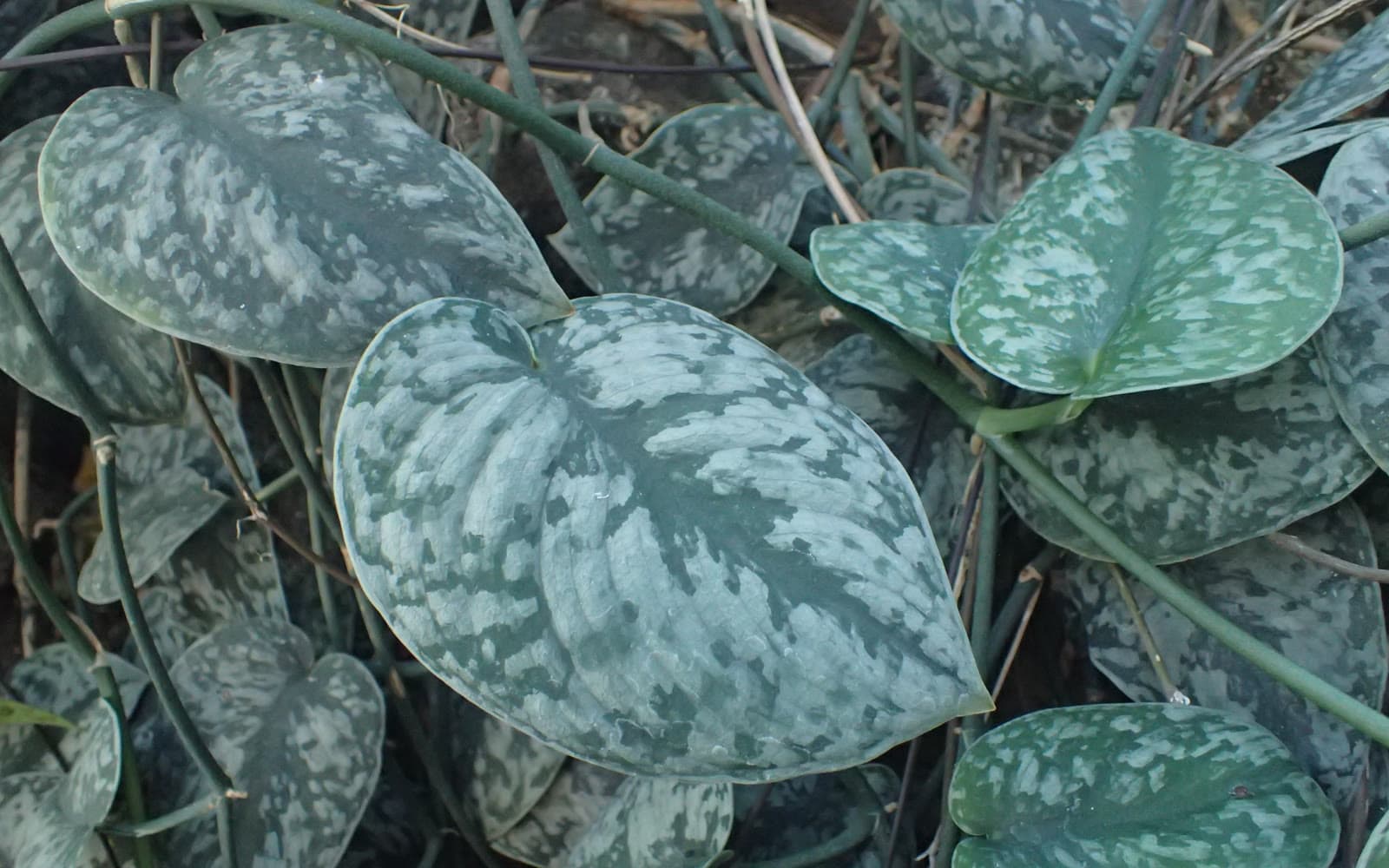
Satin pothos is Scindapsus pictus. Labels may say silk pothos, silver pothos, or satin potho. Same URL. Family Araceae. Genus Scindapsus, not Epipremnum. This page is not common pothos / devil's ivy (Epipremnum aureum), which already lives at how to propagate pothos.
Clemson HGIC (on its Epipremnum pothos page, under houseplants commonly confused with pothos): Scindapsus pictus is typically called satin pothos, although it is not a true pothos; silvery shiny leaves; broader leaves than most pothos; grows much more slowly; more challenging, more prone to pests and disease, and less tolerant of overwatering than pothos. RHS Epipremnum genus guide notes the reverse naming trap: true pothos is sometimes still sold under its previous name Scindapsus. Keep the two genera on separate URLs.
NCSU Extension Gardener Plant Toolbox: Scindapsus pictus; common names Satin Pothos, Silk Pothos, Silver Pothos; previously known as Pothos argyraeus, Scindapsus argyraeus, and Scindapsus pictus var. argyraeus; Recommended Propagation Strategy Stem Cutting; narrative it may be propagated by stem cuttings. Kew Plants of the World Online: Scindapsus pictus Hassk.; accepted; native SE Bangladesh to W. and Central Malesia; climber of the wet tropical biome. Missouri Botanical Garden Plant Finder (S. pictus 'Argyraeus'): satin pothos / silk pothos; slow-growing tropical evergreen climber; Epipremnum pictum noted as a synonym of the species; new plants easily propagated from 4-inch stem cuttings in spring or early summer. Iowa State Extension lists satin pothos (Scindapsus pictus) among closely related species next to pothos (Epipremnum aureum), so treat that page's numbered trailing-philodendron cutting recipe as related-group guidance, not a pictus-only measurement.
Indoor climbing or trailing focus. For mix, see soil propagation. Water lives on water propagation.
Stem cuttings
NCSU: Recommended Propagation Strategy is Stem Cutting. Narrative line: it may be propagated by stem cuttings. No cutting length, node count, or days-to-root on that species page.
RHS Scindapsus pictus 'Argyraeus' profile: Propagate by stem cuttings. Opened profile does not add inch lengths or week counts.
Missouri Botanical Garden ('Argyraeus' Plant Finder): new plants are easily propagated from 4-inch stem cuttings taken in spring or early summer. That length and season are Mobot's species/cultivar culture note, not a blog timeline.
NCSU identity cues that matter for taking cuttings: tropical evergreen climbing vine with rootlets; juvenile leaves ovate, entire, about 3 to 4 inches long, satin-textured, matte green to dark green with silver-gray blotches above and paler unblotched undersides; indoor height about 1.5 to 3 feet on a stake or hanging basket; native height to about 10 feet; growth rate slow; pinching stems helps keep the plant tidy.
Iowa State Growing Philodendrons (lists S. pictus as a closely related species): trailing types of philodendron propagate from stem cuttings; stem sections 3 to 6 inches long with lower leaves removed root in water or rooting media such as perlite or well-drained potting soil. Those steps are written for philodendron on a related-species page, not as a satin-pothos-only protocol.
Iowa State stem-tip how-to (general houseplant protocol; species list includes Epipremnum aureum / pothos and Philodendron hederaceum, not Scindapsus pictus): cuttings 3 to 6 inches with at least two nodes; stick with at least one node in media and no leaves buried; bright indirect light and high humidity; roots often in 3 to 6 weeks on that general protocol. Do not treat those figures as pictus-specific.
Clemson HGIC Pothos (Epipremnum spp.): stem cuttings root in soil or water but should have at least one node. That node line is written for Epipremnum on the same page that later IDs Scindapsus as a lookalike, not as a Scindapsus cutting recipe. Do not copy the common-pothos page workflow onto this URL.
Clemson HGIC Philodendron: plants may be propagated at any season from stem cuttings, or by air layering. Related-plants section names pothos (Epipremnum aureum) and monsteras, not Scindapsus.
Water
Opened NCSU, RHS Scindapsus, and Mobot pages do not give a water-versus-soil protocol or week counts for S. pictus.
Iowa State Growing Philodendrons: trailing philodendron cuttings may root in water; change water frequently until new roots several inches long form, then pot in regular potting soil. That water line is philodendron guidance on the page that also names satin pothos as related.
Iowa State stem-tip how-to (general): many houseplants root in a jar of water; change water one to two times each week; transplant when roots are about 1 inch long; water-formed roots are coarser. Species list on that page includes Epipremnum aureum, not S. pictus.
Clemson pothos: stem cuttings in water need at least one node. Epipremnum-only claim on that factsheet.
Layering and other methods
Clemson Philodendron names air layering alongside stem cuttings for philodendrons. Opened NCSU, RHS Scindapsus, and Mobot pages do not detail air layering or seed for S. pictus. Do not invent a leaf-blade-only recipe; NCSU's recommended strategy is stem cutting, and Mobot's culture note is stem cuttings.
UF/IFAS Assessment lists Scindapsus pictus (common name silver pothos; Araceae; tropical Asia origin) for Florida natural-area risk status only. That page is not a houseplant propagation how-to.
Common mistakes
- Treating this page as Epipremnum aureum / common pothos, or copying how to propagate pothos cutting recipes here without saying those plants are different genera.
- Believing the trade name satin pothos means the plant is a true pothos; Clemson states it is not a true pothos; NCSU and RHS keep it in Scindapsus.
- Confusing RHS's note that Epipremnum is sometimes sold as Scindapsus with the reverse claim that satin pothos is Epipremnum.
- Inventing blog week counts for soil or water rooting that opened NCSU, RHS Scindapsus, and Mobot pages do not state for this species.
- Treating Iowa State's 3 to 6 inch trailing-philodendron or general stem-tip timings as a satin-pothos-only measurement.
- Copying Clemson's Epipremnum “at least one node in soil or water” line onto Scindapsus without attributing it as pothos guidance on a lookalike section.
- Overwatering cuttings; Clemson flags Scindapsus as less tolerant of overwatering than pothos; NCSU and Mobot both flag root rot in poorly drained or wet soils; yellow leaves may signal overwatering on NCSU.
People also ask
Is satin pothos the same as common pothos?
No. Satin pothos is Scindapsus pictus (Araceae). Common pothos / devil's ivy is Epipremnum aureum. Clemson: typically called satin pothos although it is not a true pothos; slower and less tolerant of overwatering than pothos. NCSU and RHS keep the plant in Scindapsus. Kew: accepted as Scindapsus pictus Hassk. Use how to propagate pothos for Epipremnum.
What is the main way to propagate satin pothos?
Stem cutting. NCSU Recommended Propagation Strategy: Stem Cutting. RHS 'Argyraeus' profile: propagate by stem cuttings. Mobot: 4-inch stem cuttings in spring or early summer.
Can cuttings root in water?
Opened NCSU, RHS Scindapsus, and Mobot pages do not specify water for S. pictus. Iowa State's trailing-philodendron page (which also IDs satin pothos as related) supports water for philodendron stem cuttings. Clemson supports water for Epipremnum stem cuttings with a node. Attribute those as related-aroid or Epipremnum guidance, not pictus-only week counts.
How long should a cutting be?
Mobot ('Argyraeus'): 4-inch stem cuttings in spring or early summer. NCSU and RHS Scindapsus profiles do not state a length. Iowa State's 3 to 6 inch figures are philodendron or general stem-tip guidance; label them that way.
Keep reading
- How to propagate pothos (Epipremnum; not Scindapsus)
- Plant propagation
- Soil propagation
- Water propagation