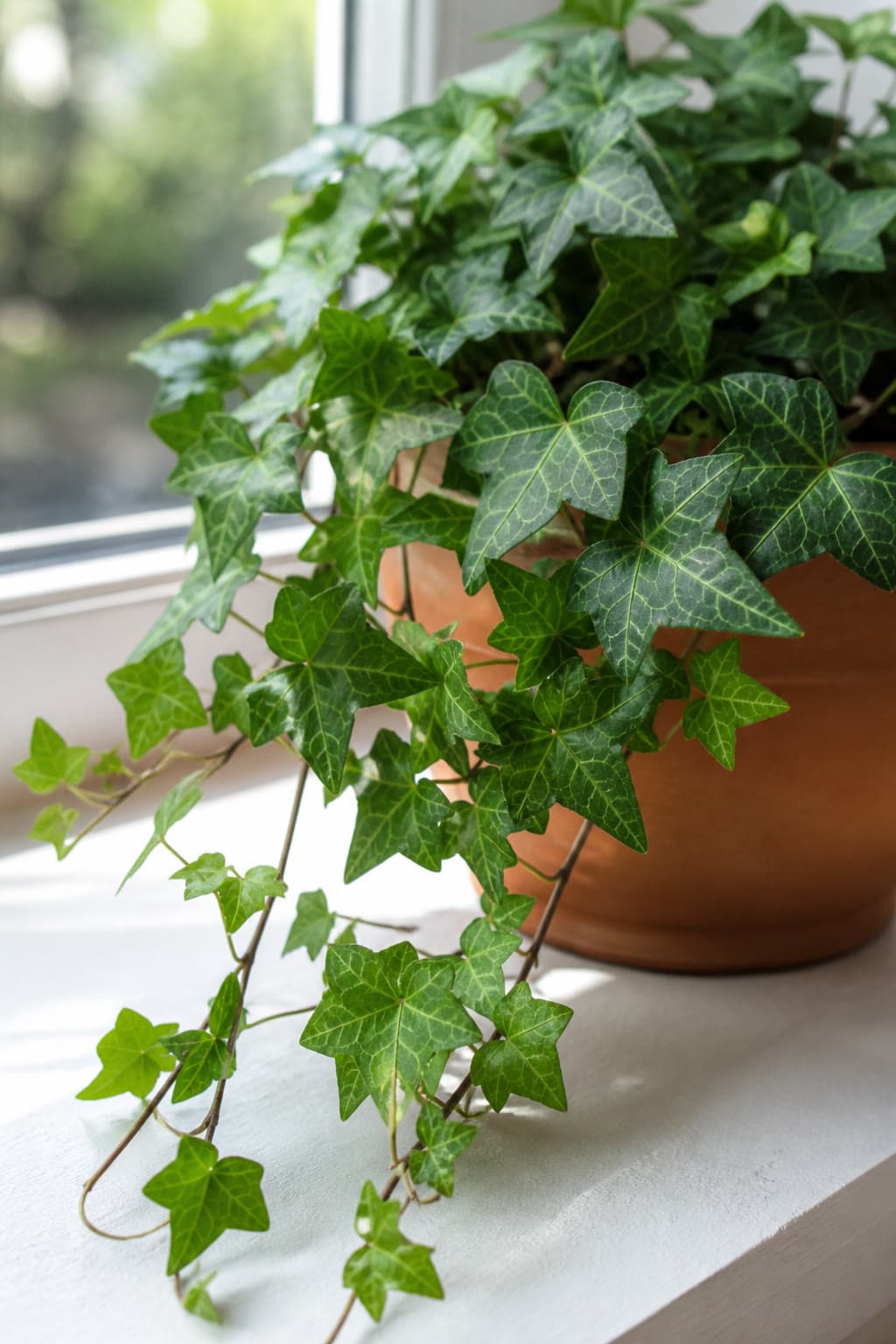
English ivy is Hedera helix. Indoor plants sold as ivy, Glacier ivy, Baltic ivy, or needlepoint ivy belong in this guide. Those cultivar names stay here. Devil’s ivy is pothos (Epipremnum), a different plant with its own cutting page at how to propagate pothos. Swedish ivy is Plectranthus, not Hedera. When that plant is useful to compare, see how to propagate swedish ivy. The plant here remains Hedera helix.
Can you propagate English ivy? Yes. Iowa State answers “how can I propagate an English ivy?” with stem cuttings in perlite or coarse sand under a bag or dome. Iowa’s separate stem-tip houseplant list also names Hedera helix, with that list’s general tip length and week band. Illinois lists stem (A) and leaf-bud (C) for Hedera. UNL says English ivy is easily started from leaf-bud cuttings. Wisconsin 4-H names English ivy for leaf-bud. Missouri marks a herbaceous cutting and compound layering; easy to root, sometimes slow starting. NCSU’s recommended strategies include stem cutting. The juvenile houseplant vine also makes adventitious roots along the stem (NCSU), which is why a node on moist mix takes. Iowa marks Hedera helix for simple layering, not air layering. UVM names English ivy among vines easy to root in water. Illinois names ivy as a water-rooter and still does not recommend a jar.
NCSU: in North Carolina it is safer as a houseplant. Outdoors it is invasive there. Keep that caveat when the vine leaves the windowsill.
For drained mix after roots form, see soil propagation. Jar technique shared across easy water plants lives on water propagation. Overview of cuttings vs layering: plant propagation.
Best way indoors
| Situation | Method the sources support | Why |
|---|---|---|
| Named English ivy FAQ shoot in mix under bag or dome | Iowa ivy FAQ stem cutting in perlite or coarse sand | 4- to 5-inch shoots; hormone; bottom 1 to 1½ inches; roots in 6 to 8 weeks, then pot. Ivy-named FAQ recipe. |
| Hedera helix on Iowa’s general stem-tip list | Iowa stem-tip list general recipe | 3 to 6 inches, at least two nodes; most houseplants on that page root in 3 to 6 weeks. List clocks, not FAQ clocks. |
| Many starts from a short vine | Leaf-bud (UNL, Wisconsin 4-H, Illinois C) | Single leaf on 1- to 1½-inch stem (UNL); bud about ½ inch below the surface. Leaf without bud is not this method. |
| Vine still attached, one buried node | Simple layering (Iowa) | Pin or bury ≥1 node, 2 to 4 inches deep; roots in 6 to 12 weeks on that page, maybe longer; cut free when firmly rooted. Not air layering. |
| Long vine, several rooted sections | Compound layering (Missouri G6560) | Long vine alternately covered and exposed, then cut into rooted pieces. Not Iowa’s simple layer recipe. |
| Clear jar, watch roots form | Water cutting (UVM names ivy; Illinois names ivy and still does not recommend jar) | UVM: general 3 to 6 inches; pot when roots >2 to 3 inches; time “days or weeks, sometimes months” for houseplants in general, not an ivy-only week count. For jar care, see the propagation water change calculator and water propagation. |
| Nursery mist bench | UF/IFAS EP243 commercial tip or nodal / single-node under mist | Mist; 70 to 86 °F. Nursery production figures, not a home week count. |
Iowa’s ivy FAQ gives 4 to 5 inches and 6 to 8 weeks. Iowa’s stem-tip list gives 3 to 6 inches and 3 to 6 weeks. UVM gives “days or weeks, sometimes months” for houseplants in general, and EP243’s 70 to 86 °F is a nursery mist range.
Stem cuttings in mix
Mix under a bag or dome is the primary home path on Iowa’s English ivy FAQ. Iowa’s stem-tip houseplant list also names Hedera helix, with a different general tip length and week band. Illinois, Missouri, NCSU AG-062, and UF/IFAS EP243 add stem marks that are not the same recipe. Read each line as its own protocol.
Iowa English ivy FAQ (mix, bag or dome)
Iowa State Extension (English ivy FAQ, last updated March 4, 2022). How can I propagate an English ivy? Stem cuttings. Take 4- to 5-inch shoots. Pinch off the lower leaves. Dip the cut in rooting hormone. Root in perlite or coarse sand, with the bottom 1 to 1½ inches in the medium. Cover with a clear plastic bag over the pot, or a dome over a flat. Bright light, not direct sun. Keep the medium moist. Roots in 6 to 8 weeks, then pot up.
That FAQ is mix, not water. Perlite or coarse sand, hormone, bag or dome, moist medium. Do not replace this path with a jar and still call it the Iowa ivy FAQ.
Clock stays on the FAQ. Roots in 6 to 8 weeks, then pot up. That is the ivy-named FAQ clock. It is not Iowa’s stem-tip list clock, and it is not UVM’s general water wording.
Light on the FAQ. Bright light, not direct sun, while the bag or dome is on. Dim rooms stall rooting and invite mold under plastic. If the tray sits dark, raise light with the propagation light DLI calculator or best grow lights for indoor propagation rather than sealing tighter.
Iowa stem-tip list (Hedera helix on the list)
Iowa State Extension (stem-tip cuttings, last reviewed January 2025). Hedera helix (English Ivy) appears on the houseplant stem-tip list. That page’s general recipe is 3 to 6 inches, at least two nodes. Most houseplant stem cuttings on that page form roots in 3 to 6 weeks. Water roots on that page are more coarse and may stress after potting.
List clocks are not FAQ clocks. 3 to 6 inches and 3 to 6 weeks belong to the stem-tip list. 4 to 5 inches and 6 to 8 weeks belong to the ivy FAQ. Follow the page you are using.
Illinois, Missouri, NCSU AG-062
Illinois Extension. English Ivy, Hedera spp., listed for stem (A). Their general stem recipe is 3 to 6 inches, two to six nodes. That is Illinois’s general stem band, not Iowa’s FAQ length.
Missouri Extension (G6560). English ivy marked for herbaceous cutting. Easy to root. Sometimes slow starting. Missouri doesn’t give an inch or week figure for ivy. Keep “sometimes slow starting” as a pacing note, not a second FAQ clock.
NCSU AG-062. English ivy (Hedera helix) listed as semi-hardwood (SH) and hardwood (HW) on the home-gardener stem-cutting table. That is a woodiness mark for the table, not a home week count and not a substitute for Iowa’s FAQ 6 to 8 weeks.
UF/IFAS EP243 commercial mist (nursery, not home weeks)
UF/IFAS EP243. Commercial / nursery production of interiorscape Hedera. Juvenile ivy from tip or nodal cuttings. Single-node cuttings are more common in production. Mist. 70 to 86 °F. Those are nursery figures. They are not a windowsill thermostat script and they are not a home week count.
After roots form on the mix page you followed, move into drained mix and grow on. Shared potting habits: soil propagation.
Water cuttings
Water is named for this plant on UVM and Illinois, with different stances. Iowa’s English ivy FAQ is mix.
UVM Extension. English ivy (Hedera helix) among vines easy to root in water. On that page a general cutting is 3 to 6 inches. Pot when roots are more than 2 to 3 inches. Time is “days or weeks, sometimes months,” for houseplants in general. That wording is not an ivy-only week count.
Illinois Extension. Ivy and philodendron will root easily in water, and they still do not recommend a jar. Water roots are often weak. That is a named caution, not a deletion of the water path. If jars keep failing or transplant shock is high, prefer Iowa’s FAQ mix path.
Iowa stem-tip list on water roots. Water roots are more coarse and may stress after potting. That note sits on the general stem-tip page, not on the ivy FAQ. Use it as a transplant caution when you did root in water.
Iowa ivy FAQ is not a water recipe. The FAQ’s perlite or sand, hormone, bag or dome, and 6 to 8 weeks stay on mix. Do not run a jar-only trial and then judge success against the FAQ’s 6 to 8 week clock.
Jar care. When you do use water, shared change timing and jar habits live on the propagation water change calculator and water propagation.
Light while rooting in water. A dim interior shelf stalls starts and softens tissue. If the jar sits in a dark corner, raise light before you blame the cultivar. Check the propagation light DLI calculator and, when windows cannot deliver, best grow lights for indoor propagation.
After roots pass UVM’s more-than-2-to-3-inch potting cue (when you follow UVM), pot into drained mix. Shared habits: soil propagation. Expect coarser water roots and possible stress after potting (Iowa stem-tip list).
Leaf-bud cuttings
Leaf-bud is a supported path when you need many plants from a short vine. UNL, Wisconsin 4-H, and Illinois name it for English ivy. The bud is required. A leaf alone is not this method.
UNL Extension (G1853). English ivy is easily propagated by leaf-bud cuttings. A single leaf on a 1- to 1½-inch piece of stem. The bud sits where the leaf joins the stem. Insert it so the bud is about ½ inch below the surface.
Wisconsin 4-H (4H328). English ivy named for leaf-bud cuttings. One node, a short stem. Bud buried one-half inch. Care as for stem cuttings. That sheet’s stem-cutting note to check for roots in two to three weeks is general, not an ivy-only leaf-bud trial.
Illinois Extension. Leaf-bud (C) for Hedera: leaf blade, petiole, and a piece of stem that holds a bud. Useful when the vine is short and you want more starts than tip cuttings alone would give.
Leaf without bud ≠ leaf-bud. UNL and Wisconsin want the bud in the mix, about ½ inch down. Illinois’s leaf-bud definition includes the stem piece that holds the bud. A blade with no bud will not grow a new vine the way these pages describe. Take a fresh piece that still has the bud at the leaf joint.
After the budded piece is set, keep media moist and light bright-indirect the way you would for a stem cutting under cover when your source says to care for it that way (Wisconsin). Shared mix habits after roots: soil propagation.
Layering
Layering multiplies a vine while it is still attached. Iowa and Missouri name different layering styles. Do not fuse them into one recipe.
Iowa simple layering (not air)
Iowa State Extension (air and simple layering). Hedera helix (English Ivy) is marked for simple layering, not air layering. Pin or bury at least one node, 2 to 4 inches deep, in soil, perlite, or sphagnum. Leaves off the buried stretch. New roots in 6 to 12 weeks on that page, maybe longer depending on the species. Cut free when the stem is firmly rooted.
Simple, not air. Do not wrap a mid-stem section in plastic and call it Iowa’s ivy layer path. Iowa’s mark for this plant is simple layering.
Clock stays on Iowa’s layering page. 6 to 12 weeks, maybe longer. That is not Iowa’s FAQ stem 6 to 8 weeks, and it is not the stem-tip list’s 3 to 6 weeks.
Missouri compound layering
Missouri Extension (G6560). English ivy marked for compound layering. A long vine alternately covered and exposed, then cut into rooted pieces. That is a different geometry from Iowa’s single buried node. Follow one source. Do not alternate cover-and-expose on Iowa’s simple-layer depth rules and call the hybrid “the” ivy layer method.
Why a node takes (NCSU)
NCSU Extension Gardener Plant Toolbox. The juvenile vine makes adventitious roots along the stem. That habit is why a node on moist mix takes, whether the node is a cutting stuck in media or a buried stretch in a layer. For general pot-splitting, see how to divide houseplants. English ivy is not mainly a division plant. Stem, leaf-bud, and layering are the methods sources name.
Light while propagating
Bright light, not direct sun, is the Iowa FAQ line under a bag or dome. Bright-indirect light suits most home starts once they leave sealed plastic. Dim rooms stall FAQ bags, leaf-bud trays, and water jars. Pale, stretched tissue under plastic is a light problem before it is a cultivar problem.
EP243’s mist and 70 to 86 °F band are nursery production figures. They are not a home DLI target and they are not averaged into a windowsill recipe.
Measure or estimate light with the propagation light DLI calculator. When windows cannot deliver, use best grow lights for indoor propagation.
Troubleshooting
No roots after FAQ weeks. Check which clock and method you are on. Iowa ivy FAQ mix: roots in 6 to 8 weeks, then pot up. Iowa stem-tip list: most houseplants on that page form roots in 3 to 6 weeks. Iowa simple layering: 6 to 12 weeks, maybe longer. UVM water: “days or weeks, sometimes months” for houseplants in general, not an ivy-only week. Wisconsin’s 2 to 3 week stem check is general, not an ivy leaf-bud clock. Pulling a FAQ bag at day ten because “nothing happened” is too early for 6 to 8 weeks. Confirm tip length matches the source (FAQ 4 to 5 inches; list 3 to 6 inches; do not force one onto the other), lower leaves pinched on the FAQ path, hormone if you follow the FAQ, medium moist, and bright light not direct sun. Soft, brown tissue will not recover; take a fresh shoot from firm green growth.
Rot under a bag or dome. Iowa’s FAQ uses a clear plastic bag or a dome. Closed plastic in low light is a mold chamber. Crack or remove the cover briefly for air, keep leaves off wet media, and raise light with the propagation light DLI calculator or grow lights for indoor propagation rather than sealing tighter. Keep the medium moist, not waterlogged.
Leaf without bud filed as leaf-bud. UNL wants a single leaf on a 1- to 1½-inch stem with the bud at the joint, inserted so the bud is about ½ inch below the surface. Wisconsin wants the bud buried one-half inch. Illinois’s leaf-bud (C) needs the stem piece that holds the bud. A blade alone is not leaf-bud. Retake the cutting with the bud attached.
Jar-only when the FAQ is mix. Iowa’s English ivy FAQ is perlite or coarse sand under a bag or dome, with a 6 to 8 week root clock, then pot up. Running only a water jar and then judging against that FAQ clock mixes methods. UVM supports water for this vine by name; Illinois names ivy as a water-rooter and still does not recommend a jar. For jar care, see the propagation water change calculator and water propagation. If jars fail or transplants stress (Iowa stem-tip: water roots coarser), switch to the FAQ mix path rather than extending the jar wait.
Confusion with pothos or Swedish ivy. Devil’s ivy is pothos (Epipremnum), not Hedera helix. Use how to propagate pothos. Swedish ivy is Plectranthus; see how to propagate swedish ivy when that plant is the one on the shelf. Glacier, Baltic, and needlepoint stay on this English ivy page. Confirm the label before you apply Iowa’s FAQ 4 to 5 inch mix recipe.
Averaging FAQ vs list clocks. Iowa FAQ: 4 to 5 inches, 6 to 8 weeks. Iowa stem-tip list: 3 to 6 inches, 3 to 6 weeks for most houseplants on that page. Those are separate Iowa pages. Follow one page end to end.
Applying EP243 nursery numbers to a windowsill. Mist and 70 to 86 °F belong on EP243’s commercial sheet. They are not a home bag thermostat. For home, use Iowa’s FAQ mix, Iowa’s list recipe, UNL leaf-bud, Iowa simple layer, Missouri compound layer, or UVM’s named water path, and keep EP243 labeled as nursery.
Common mistakes
- Expecting Iowa’s ivy FAQ (4 to 5 inches, 6 to 8 weeks) to match Iowa’s general stem-tip list (3 to 6 inches, 3 to 6 weeks).
- Expecting the FAQ’s mix weeks to match UVM’s general “days or weeks, sometimes months,” or Wisconsin’s general 2 to 3 week stem check.
- A leaf with no bud, filed as a leaf-bud cutting. UNL and Wisconsin want the bud in the mix about ½ inch down.
- Fusing Iowa simple layering with Missouri compound layering into one recipe.
- Treating Iowa’s ivy mark as air layering. Iowa lists Hedera helix for simple layering, not air.
- Confusing this plant with devil’s ivy (pothos) or Swedish ivy (Plectranthus). Disambiguation: how to propagate pothos; how to propagate swedish ivy.
- A jar as the only method when following the Iowa ivy FAQ. That FAQ is perlite or sand. Illinois names ivy as a water-rooter and still prefers media.
- Expecting a set number of weeks in water. UVM’s timing is general, not specific to ivy.
- Pasting EP243 mist and 70 to 86 °F onto a home windowsill bag and calling it one recipe.
- Sealing a FAQ bag tight in low light until mold forms.
- Ignoring NCSU’s outdoor invasive caveat in North Carolina; safer as a houseplant there.
People also ask
Can you propagate English ivy?
Yes. Stem cuttings in mix (Iowa ivy FAQ; Iowa stem-tip list naming Hedera helix; Illinois stem; Missouri herbaceous; NCSU stem; EP243 commercial tip or nodal under mist), leaf-bud cuttings (UNL, Wisconsin 4-H, Illinois C), simple layering (Iowa), and compound layering (Missouri) are all supported. UVM names water for this vine; Illinois names water-rooting and still does not recommend a jar.
Ivy, Glacier, Baltic, or needlepoint?
Those names belong here as Hedera helix cultivars or trade names. Not pothos, not Swedish ivy.
Is English ivy the same as devil’s ivy or Swedish ivy?
No. Devil’s ivy is pothos (Epipremnum): how to propagate pothos. Swedish ivy is Plectranthus: how to propagate swedish ivy. This guide is Hedera helix.
Stem or leaf-bud?
Iowa’s FAQ is a stem cutting in mix. UNL and Wisconsin name leaf-bud as easy for English ivy. Illinois lists both stem (A) and leaf-bud (C). Choose by how much vine you can spare: tips for FAQ or list stems; budded leaf pieces when the vine is short.
Mix or water?
Iowa’s ivy FAQ is mix (perlite or coarse sand under bag or dome). UVM names English ivy among vines easy to root in water. Illinois names ivy as a water-rooter and still does not recommend a jar; water roots are often weak. Iowa’s stem-tip list warns that water roots are coarser and may stress after potting. Those are not one method. For jar care, see the propagation water change calculator and water propagation.
How long until roots?
Iowa ivy FAQ: 6 to 8 weeks, then pot up. Iowa stem-tip list: 3 to 6 weeks for most houseplants on that page. Iowa simple layering: 6 to 12 weeks, maybe longer. UVM does not give an ivy-only week count (“days or weeks, sometimes months” for houseplants in general). Wisconsin’s 2 to 3 week stem check is general, not ivy-only. EP243 has no home week count. Those are not one number. Match your wait to the page you followed.
Do I need rooting hormone?
Iowa’s English ivy FAQ dips the cut in rooting hormone for the mix path. Follow that page when you use the FAQ recipe. For water or leaf-bud cuttings, use hormone only if your source calls for it.
Simple layer or compound layer?
Iowa: simple layering for Hedera helix (not air). Missouri: compound layering for English ivy. Different geometries. Follow one source.
Is it invasive outdoors?
NCSU: in North Carolina it is safer as a houseplant; outdoors it is invasive there. Keep that caveat when the vine leaves indoor culture.
What about nursery mist temperatures?
UF/IFAS EP243: commercial mist at 70 to 86 °F for juvenile tip or nodal / single-node production. Nursery figures, not a home week count and not a windowsill bag thermostat.