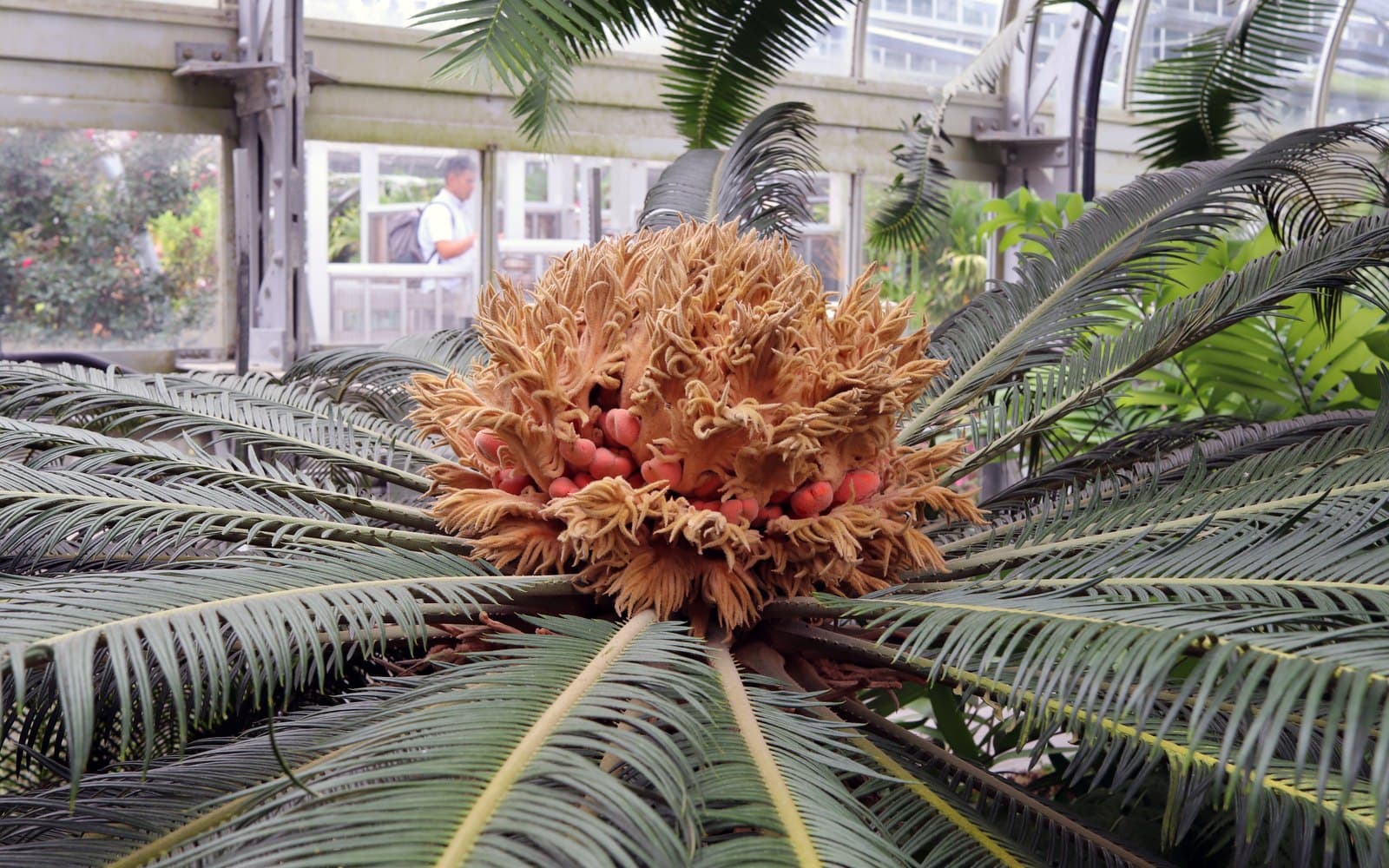
Sago palm is Cycas revoluta. Labels may say Japanese sago palm, king sago palm, or cycad. Same URL. Family Cycadaceae. NCSU: native to Japan (Kyushu) to Nansei-Shoto; introduced elsewhere. UF/IFAS FOR 254 / FR316: native to tropical islands of southern Japan; grown in Florida, California, Georgia, and Puerto Rico. Slow-growing evergreen with stiff, glossy, palm-like pinnate fronds in a rosette on a thick shaggy trunk. NCSU: height and width about 3 to 10 feet outdoors; indoor plants smaller; leaves may be 3 to 7 feet long depending on age. RHS: palm-like evergreen perennial to about 2 m, with arching pinnate leaves to 1.5 m; golden-brown ovoid structures rarely seen except on mature plants.
Not a true palm. NCSU: distinct palm-like appearance but not a true palm; gymnosperm that produces cones with exposed seeds, not flowers. UF/IFAS FR316: Cycas are gymnosperms and, though palm-like, unrelated to true palms (angiosperms). UF/IFAS EP648: not related to true palms; living-fossil cycad in Cycadaceae. Clemson HGIC Palms and Cycads: palm-like in appearance but primitive cycads, unrelated to palms. Wisconsin Horticulture: superficially resemble palms and often carry “palm” in the common name, but are most closely related to ginkgo among living groups discussed on that page.
High severity poison on NCSU: all parts contain cycasin; seeds have the highest concentration; ingestion may cause permanent internal damage or death; symptoms may include vomiting, diarrhea, weakness, seizures, and liver failure; problem for cats, dogs, and children. UF/IFAS EP648: all parts highly toxic to humans and animals; toxins include cycasin, macrozamin, neocycasin, and beta-methylamino-1-alanine; seeds highest in cycasin; symptoms within about 12 hours may include vomiting, abdominal pain, diarrhea, headache, dizziness, and weakness. UF/IFAS FR316: powerful neurotoxin; seeds poisonous to humans and animals if ingested. RHS: harmful if eaten; skin irritant; wear gloves and protective equipment; toxic to pets (dogs, cats).
NCSU Recommended Propagation Strategy for this species is seed. NCSU text also says the plant may be propagated by seeds or suckers; suckers form at the base. RHS: propagate by seed or suckers. Wisconsin Horticulture (cycads, with Cycas revoluta examples): seeds or division of offsets (pups). UC Master Gardener Program of Contra Costa (UCANR Help Desk): ripe seed in a sandy mix, and bulbs or side shoots (pups) cut and rooted. Clemson HGIC names the species and not-a-palm status but does not give a numbered propagation how-to on that page.
Indoor container focus. Dioecious: male and female plants needed for seed. NCSU: this plant rarely produces cones when grown as a houseplant indoors. For drained mix, see soil propagation.
Seed
NCSU: Recommended Propagation Strategy is Seed. Male and female plants required; pollination by insects or wind; male pineapple-shaped cone may reach about 2 feet; female large golden rounded cone; seeds mature September to October on that page’s outdoor timing. Rarely produces cones as an indoor houseplant.
RHS: propagate by seed (alongside suckers). No sowing temperature or days-to-germinate on that plant profile.
Wisconsin Horticulture (cycads): seeds have no dormancy, so plant when very fresh; even then germination is often slow and variable.
UCANR Contra Costa Master Gardeners: sow ripe seeds in a shallow flat or pot with a soil mixture containing lots of sand; keep temperatures in the high 70s (°F). Months can pass before tiny shoots show, and another 3 to 6 months or more before seedlings can be moved or repotted. Seed germination takes many months; growing to full size can take many years. Dioecious; viable seed needs pollination from a male plant.
UF/IFAS FR316 and EP648 describe orange to red seeds about 2 inches in diameter on female plants but do not give a home sowing protocol on those opened pages.
Do not invent soak times, plastic-bag recipes, or week-to-sprout counts from shop blogs. Attribute UCANR’s months and high-70s figures only to that Help Desk reply.
Suckers, offsets, and pups
NCSU: suckers are produced at the base; plant may be propagated by suckers as well as seed.
RHS: propagate by suckers (alongside seed). No pup diameter or callus timing on that profile.
Wisconsin Horticulture (cycads, page includes container Cycas revoluta grown from a 3 inch offset): many species eventually produce offsets at the base, or occasionally in the crown; separate and pot up once they are about 2 inches in diameter. Remove the pup with a trowel, shovel, or knife. Most or all leaves should be removed; roots are not essential because the pup will produce new roots and leaves once established. Position so half of the trunk is submerged in the growing medium and half is exposed. Water deeply but sparingly until roots have formed (a few months) or it might rot. A new leaf or flush follows after roots are established. Growing medium must drain well; cactus mix, or peat-based mix amended with 30 to 40% coarse sand and/or perlite, pumice, or baked clay granules.
UCANR Contra Costa Master Gardeners: mature plants sometimes develop bulbs or side shoots on the stem; these can be cut off and rooted. Remove leaves from the side shoots because they pull lots of moisture. Stick the bulbs in soil and keep the mixture on the dry side until new roots form over a few months.
Those Wisconsin and UCANR steps are the detailed primary how-tos opened for offsets. Do not merge them with blog “callus one to two weeks” timings that those pages do not state. Do not invent a water-jar method for pups.
Common mistakes
- Treating sago palm as a true Arecaceae palm and copying parlor palm or areca seed recipes onto it.
- Inventing stem, leaf, or water cuttings that opened NCSU, RHS, Wisconsin, UCANR, UF/IFAS, and Clemson pages do not name for this species.
- Inventing soak, scarify, or “germinate in X weeks” seed steps beyond UCANR’s sandy mix, high 70s °F, and multi-month wait, and Wisconsin’s fresh-seed / slow-variable note.
- Averaging Wisconsin’s about-2-inch offset size with blog 3 to 5 inch pup claims without saying which primary said what.
- Adding a one-to-two-week callus dry-down that opened Wisconsin and UCANR pages do not prescribe.
- Overwatering pups or seed flats; Wisconsin warns a few months of sparingly deep watering until roots form, or rot; NCSU and UF flag intolerance of overwatering and poor drainage on the parent plant.
- Ignoring high toxicity when handling seeds, fronds, or pups; NCSU, UF/IFAS, and RHS all warn that all parts are poisonous, with seeds especially concentrated.
People also ask
Is sago palm a real palm?
No. It is Cycas revoluta, a cycad (Cycadaceae). NCSU, UF/IFAS FR316 and EP648, Clemson HGIC, and Wisconsin Horticulture all state it is not a true palm despite the common name.
What is the botanical name?
Cycas revoluta. Confirmed on NCSU, RHS, UF/IFAS FR316 and EP648, Clemson HGIC, Wisconsin Horticulture, and UCANR Contra Costa Master Gardeners.
Can I grow it from seed?
Yes as a strategy. NCSU Recommended Propagation Strategy is Seed. RHS names seed. Wisconsin: plant very fresh seed; germination often slow and variable. UCANR: sandy mix, high 70s °F; months to shoots. Male and female plants are required for viable seed; indoor plants rarely cone (NCSU).
Can I propagate from pups or suckers?
Yes. NCSU and RHS name suckers. Wisconsin: separate basal offsets about 2 inches in diameter; strip most or all leaves; pot half-buried; water sparingly for a few months until roots form. UCANR: cut side shoots or bulbs, remove leaves, keep mix on the dry side until roots form over a few months.
Is it toxic?
Yes. NCSU: high severity; all parts with cycasin; seeds highest; danger to people and pets. UF/IFAS EP648 and FR316: highly toxic / neurotoxic if ingested. RHS: harmful if eaten; toxic to dogs and cats; gloves when handling.