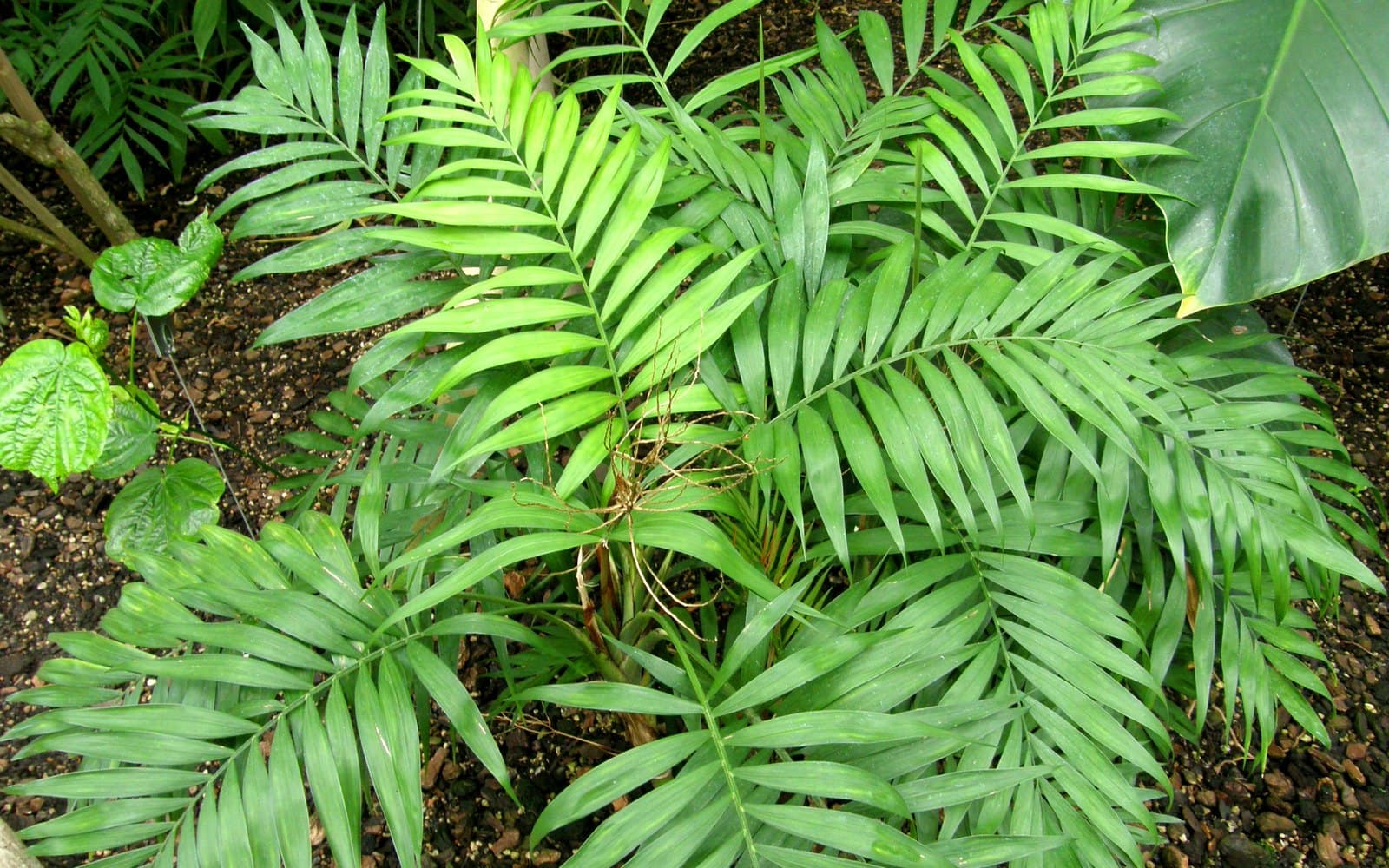
Parlor palm is Chamaedorea elegans. Labels may say neanthe bella, neanthe palm, dwarf palm, or parlour palm. Same URL. Older names include Collinia elegans and Neanthe bella. Family Arecaceae. Native Mexico to Honduras.
NCSU describes a solitary stem species; growers often pot three or more plants together for fullness. Penn State: single-stem plants sold with multiple plants in one container; indoor height often 2–3 ft, can reach 6 ft. NCSU height range 2–7.5 ft.
UAEX and UF/IFAS name seed. UAEX, Penn State, and NCSU multi-plant context support division as separating those individuals. UAEX: seed best; terminal, single-eye, leaf, cane, and air layer no; division yes.
Do not invent tip cuttings. Do not treat clustering palm division (for example Rhapis in UF CIR1163) as identical to C. elegans. Often confused with Phoenix roebelenii (pygmy date). Keep Areca, Kentia, and bamboo palm Chamaedorea seifrizii off as if identical.
For mix, see soil propagation.
Seed
UAEX FSA-2095: parlor palm seed is best. Most true palms from seed. General houseplant seed notes there: soil 75–80°F, plastic bag, indirect light; seedlings often 2–4 weeks depending on species. That general range is not the parlor palm timeline.
UF/IFAS EP238: germination of parlor palm (Chamaedorea elegans) may not begin for several months and then continue sporadically for over a year. Contrast on the same page: Washingtonia robusta under 2 weeks; areca 3–4 weeks. High germination temperatures generally 70–100°F, best often 85–95°F. Plant fresh when possible. Transplant when 1–2 leaves. Never plant seedlings too deep. Wear gloves when cleaning most Chamaedorea fruit pulp (calcium oxalate).
Penn State: propagation via divisions or seeds.
Division and multi-plant pots
UAEX: division yes for parlor palm. General division guidance there: late winter or early summer after rest; tear apart leaving roots intact; same planting depth; may pot several divisions together for fullness.
Penn State: parlor palm is single-stem but sold multi-plant; propagate by divisions or seeds.
NCSU: solitary stem, but nurseries pot multiple individuals. Indoor "division" means carefully separating those plants, not assuming suckering like clustering palms. UF CIR1163 division protocol (sharp spade, shade, water 4–6 months) is written for clustering palms; do not copy it onto C. elegans without that caveat.
Common mistakes
- Claiming tip, stem, leaf, or air-layer cuttings. UAEX marks those no for parlor palm.
- Using the general UAEX 2–4 week seedling range as if it were C. elegans. UF EP238 says several months, then over a year.
- Copying clustering-palm sucker division onto solitary C. elegans.
- Treating Chamaedorea seifrizii bamboo palm, Areca, or Kentia as this plant.
- Skipping gloves when cleaning Chamaedorea fruit pulp (UF EP238).
People also ask
How long does parlor palm seed take to germinate?
UF/IFAS EP238: may not begin for several months, then continue sporadically for over a year. Do not substitute faster palm examples from the same page.
Can I divide a parlor palm?
UAEX and Penn State support division. For C. elegans that usually means separating multiple plants sold in one pot (NCSU solitary stem, multi-plant nursery habit), not assuming clustering suckers.
Can I take stem cuttings?
No. UAEX marks terminal cuttings no for parlor palm. Seed and careful separation are the named routes.