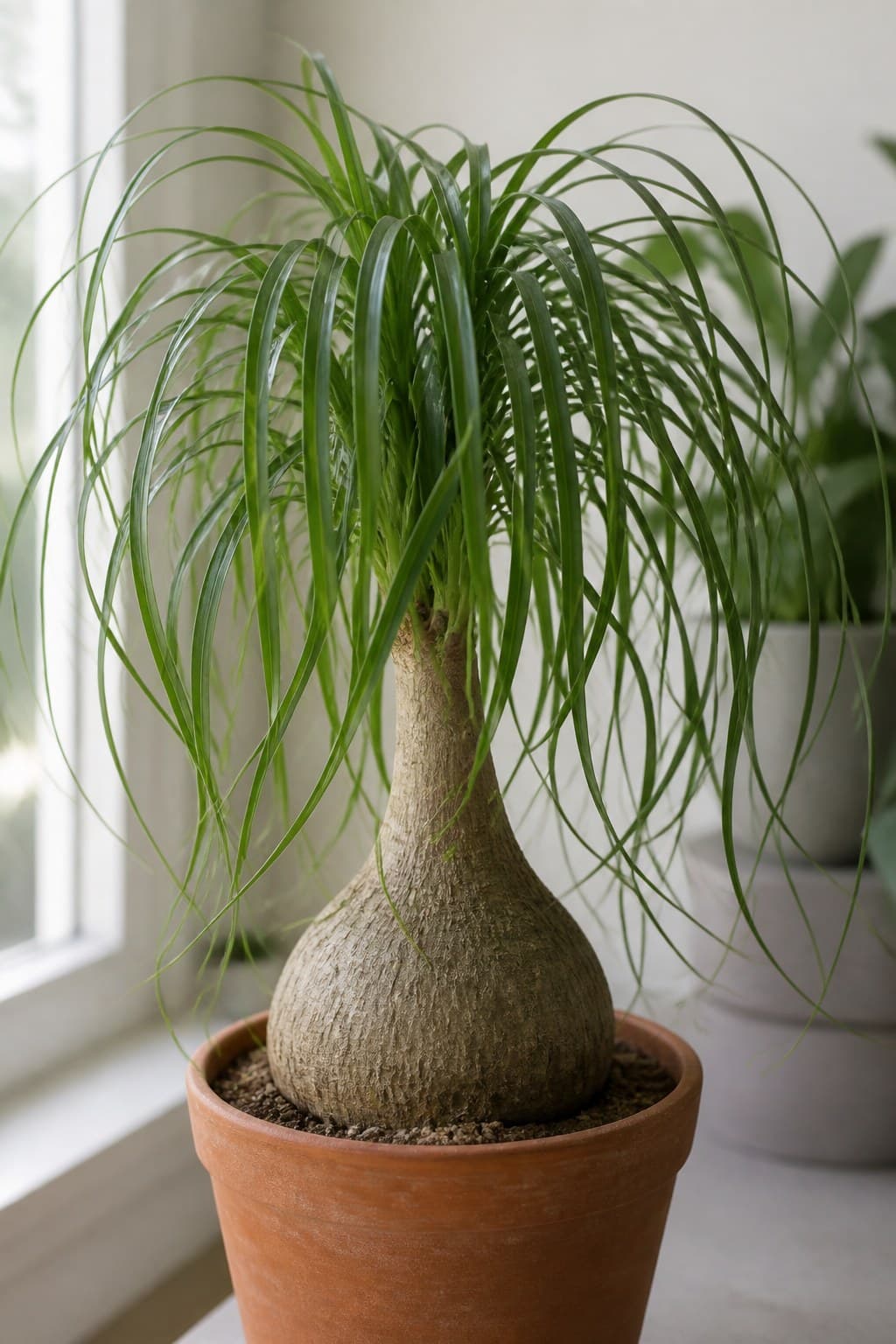
Ponytail palm is Beaucarnea recurvata. Labels may still say Nolina recurvata. Elephant foot, elephant's foot tree, and bottle palm are the same plant. Those names belong here. Iowa's care FAQ uses ponytail palm or elephant-foot tree. It is not a true palm.
Wisconsin Horticulture calls it a succulent with a swollen caudex. Iowa's FAQ says the same. Iowa's houseplant propagating table still lists it under foliage, method: offsets only. It is not a succulents named-list add on that sheet.
Stem cuttings do not make a second plant on Wisconsin, Iowa, RHS, UF/IFAS, UAEX, or NYBG. Wisconsin: if you cut a small plant (less than 6 inches diameter) it can branch into a three-headed specimen. NYBG: topping a too-tall stem in spring puts new growth just below the cut in several weeks. That renovates the same plant.
For a drained mix, see soil propagation. Soft-vine jar steps live on water propagation. Those pages cover other plants. Wisconsin, Iowa, RHS, UF/IFAS, UAEX, and NYBG do not name water or a stem cutting as a clone path for ponytail palm.
Best way indoors
Wisconsin, Iowa, RHS, and NYBG do not share one clone path.
| Situation | Method the sources support | Why |
|---|---|---|
| Fresh seed you can source | Seed in spring | Wisconsin: propagated only by seed; sow spring, minimum 68 °F; germinates readily, no special treatment. RHS: seed at 18 to 21 °C in spring. UF/IFAS ST093: by seed, usually imported from Mexico. UAEX: grown from seed, germinates readily. NYBG: seed is reliable but hard to source; growth is slow. |
| Base offset Iowa / RHS / NYBG style | Offset in spring (variable) | Iowa propagating table: Offsets/Plantlets only. Iowa easy-houseplants: offsets at the base. RHS: root offsets in spring. NYBG: variable success; wait until 6 inches tall; callous several days; hormone on bottom third; gritty mix; water only very lightly until roots form. |
| Small bumps on the caudex (Wisconsin) | Not a second plant | Wisconsin: what look like small offsets on the caudex can be cut flush; they will not root to produce new plants. |
| Topping a tall trunk | Same-plant renovation only | Wisconsin under-6-inch cut: three-headed specimen on the same caudex. NYBG spring top: new growth below the cut in several weeks. Not a second plant from the removed top. |
| Stem cutting in a water jar | Not named for this species | Wisconsin, Iowa, RHS, UF/IFAS, UAEX, and NYBG do not name water or a stem cutting as a way to clone ponytail palm. |
| One averaged "easy offset" recipe | Keep sheets labeled apart | Wisconsin "will not root" stays on Wisconsin. Iowa, RHS, and NYBG offset notes stay on those sheets. NYBG's 6 inches and several days of callus are not a shop's shorter pup or a 24-hour dry-down. |
| Days-to-germinate or weeks-to-root stopwatch | Not given | Wisconsin, Iowa, RHS, UF/IFAS, UAEX, and NYBG do not give days-to-germinate. NYBG only: several days to callous, then light watering until roots form. |
NMSU's 2003 Q&A repeats spring offsets and hormone; the writer said they had never done it. Keep that Q&A as context, not a how-to.
Materials
- Fresh seed (if you can source it) or a base offset that matches Iowa / RHS / NYBG notes (not Wisconsin's non-rooting caudex bumps)
- Small pot with a drainage hole
- Gritty, fast-draining mix (NYBG; Wisconsin cactus-type drainage for the parent plant)
- Optional: rooting hormone for the bottom third of an NYBG-style offset
- Clean, sterile cutting tool if you separate an offset
- Bright window space (Iowa, Wisconsin, NYBG parent-culture light bands below)
- Optional: cactus fertilizer only in spring or summer for the parent plant after a start is established (Iowa: dilute once or twice a month in spring and summer; Wisconsin: once or twice in the growing season; NYBG: every other month spring and summer only). Skip fertilizer on a freshly callused offset still waiting on roots.
Seed
Wisconsin: this plant is propagated only by seed. Sow in spring with a minimum temperature of 68 °F. The seed should germinate readily with no special treatment. Seed is not commonly available. Plants are dioecious. Only large trees flower, so a houseplant rarely sets seed.
RHS: seed sown at 18 to 21 °C in spring. Wisconsin gives a 68 °F minimum.
UF/IFAS ST093: propagation is by seed, which usually must be imported from Mexico.
UAEX: grown from seed, germinates readily, no special treatment. Seedlings can make two-foot stems with grapefruit-size bases in a couple of years.
NYBG: seed is reliable. It can be difficult to source. Growth is slow.
Wisconsin, Iowa, RHS, UF/IFAS, UAEX, and NYBG do not give days-to-germinate. Skip a soak time from a shop page.
Offsets
Iowa's propagating table marks ponytail palm for offsets or plantlets only. Iowa's easy-houseplants page: propagated by offsets at the base. RHS: root offsets in spring.
NYBG: potting up offsets is possible but has a variable success rate. Spring is the best time. Allow the offset to grow on the parent until about 6 inches tall for greater vigor. Cut away with a sterile tool. Let the cut callous for several days. Trim some bottom leaves so more trunk sits free. Brush the bottom third of the stem with rooting hormone and insert that part into a gritty potting mixture. Water only very lightly until roots form. No week count on that page. You can also simply remove offsets if you prefer a single trunk on the parent.
Wisconsin: what look like small offsets on the caudex can be cut off flush with the trunk. They will not root to produce new plants.
UF/IFAS and UAEX name seed and do not mention offsets.
Those notes are not one recipe. Wisconsin "will not root" stays on Wisconsin. NYBG's 6 inches and several days of callus are not a shop's 4 to 5 inch pup or a 24-hour dry-down.
Same-plant renovation (not a second plant)
Wisconsin: cutting a small plant (less than 6 inches diameter) can produce a three-headed specimen. Growers sometimes do this while plants are dormant to make multi-headed plants. That is branching on the same caudex, not a rooted cutting that becomes a second pot.
NYBG: if a plant becomes too tall or loses so many leaves that a severe cut is needed, reduce stem height in spring with a sterile tool. If it works, new growth appears in several weeks just below the cut. Keep the wound dry while it heals. Success is not guaranteed; reserve this for a plant that truly needs it.
Neither note is a recipe for a second ponytail from a stem cutting. Seed and the labeled offset disagreement above remain the clone paths on those sheets.
Light while propagating
Adult ponytail wants a bright, desert-leaning band. Seed trays and freshly separated offsets still need that same band: not a dark cabinet treated as a rooting chamber, and not a constantly wet saucer under a dim shelf.
Iowa State care FAQ. Place in a brightly lit location; a site near an east or west window is usually good.
Wisconsin Horticulture. Does best in full sun in a well-drained soil mix (as would be used for cactus); adapted to bright light, so place it where it will receive as much light as possible; move outdoors for summer only with gradual acclimation to prevent sunburn.
NYBG. Needs strong light exposure; in the northeastern United States healthiest in a south-facing window with direct or indirect light; can adapt to a bright room with southern light or an east- or west-facing window; consider artificial light to supplement if the source is not bright; turn weekly so all sides receive equal light.
Seed temperature is separate from daily light. Wisconsin seed minimum: 68 °F. RHS seed: 18 to 21 °C in spring. Those are germination temperatures, not a light recipe.
NYBG temperature (parent culture that still applies to a young start). Warm household band about 65 to 75 °F; drafts from doors, vents, or windows are a risk; temperatures into the low 50s can kill the plant.
If the window is weak and a seedling or offset stalls while the mix stays clean, check daily light with the propagation light DLI calculator. Fixture distance when the sill cannot supply the band: best grow lights for indoor propagation.
Mix and watering while a start roots
Wisconsin parent culture: well-drained cactus-type mix; add sharp sand and/or small gravel to regular potting mixes; water deeply but infrequently; allow to dry between waterings; reduce watering in winter to avoid root rot; overwatering is the most common cause of failure.
Iowa care FAQ: type of succulent; do not water as often as most houseplants; allow the potting soil to dry between waterings.
NYBG offsets: gritty mix; water only very lightly until roots form. NYBG parent culture: nearly dry before watering again; do not water into the foliage where it can settle on the caudex; empty run-off; prefers low humidity (no mist).
Full drained-mix steps: soil propagation. Soft-vine jar cadence and the propagation water change calculator stay on water propagation. They are not the default clone path for this species.
Troubleshooting
Offset never roots. Confirm which source you are following. Wisconsin: caudex bumps cut flush will not root into new plants. Iowa, RHS, and NYBG describe base offsets with a variable success rate (NYBG). Wait for NYBG's 6-inch height, several days of callus, hormone on the bottom third, and gritty mix with only very light watering. If the corner is dim, check it with the propagation light DLI calculator.
Soft, wrinkled, or mushy caudex after potting. Overwater or poor drainage. Wisconsin: overwatering is the most common cause of failure. NYBG: wet soil, wrong mix, or run-off left in the dish can kill the plant; wrinkled soft stem base may signal rot. Empty the saucer; let the mix dry; restart only with a drained pot.
Seed does nothing. Seed is hard to source (Wisconsin; NYBG). Wisconsin gives a 68 °F minimum and RHS 18 to 21 °C. None of these sources gives a germination time. Growth is slow (NYBG; UAEX seedling pace is years, not weeks).
Water jar with a stem piece. Wisconsin, Iowa, RHS, UF/IFAS, UAEX, and NYBG do not name water or a stem cutting as a clone path. Move to seed or a labeled offset path instead.
Top cut treated as a second plant. Wisconsin under-6-inch cut and NYBG spring topping renovate the same plant. The removed top is not a named second-plant recipe on those pages.
Brown leaf tips on a young start. Wisconsin: tips dry and brown from too much or not enough water, excess fertilizer, or salts; dead tip tissue can be trimmed. NYBG: irregular watering, low light, cold drafts, vents, fertilizer salts, or mineral-heavy water; less likely low humidity. Correct the light and dry-down band above before chasing a mist (NYBG: prefers low humidity; no need to mist).
Leaves discolor after cold or a sudden outdoor move. NYBG: leaves discolor in cold; leaves can also burn if moved outdoors into direct sun without transition. Wisconsin: gradual acclimation outdoors for summer to prevent sunburn. Keep indoor starts in the NYBG warm band and the bright window notes above.
Shop clocks and short dry-downs. Sources don't give a universal dry-down time or a single rooting time. NYBG says to let the cut callus for several days, then water lightly until roots form.
Common mistakes
- Looking up elephant foot as a separate species (same plant: Beaucarnea recurvata).
- Filing this plant on a succulents named list. Iowa's propagating table keeps it under foliage.
- Treating a topped trunk as a cutting that becomes a second plant.
- Writing "easy offsets" as settled when Wisconsin says caudex bumps will not root.
- Merging Wisconsin's 68 °F seed minimum with RHS 18 to 21 °C into one figure.
- Copying soft-vine jar demos from water propagation onto this species.
- Leaving run-off under a freshly potted offset (NYBG / Wisconsin overwater risk).
Ponytail palm and elephant foot belong here. Beaucarnea recurvata.
People also ask
Is it a palm?
No. Iowa: not a true palm. Same family notes vary (Asparagaceae on UF, NYBG, RHS; Iowa groups it with snake plant and dragon tree). The swollen base is a caudex.
Can a stem cutting root in water?
Wisconsin, Iowa, RHS, UF/IFAS, UAEX, and NYBG do not name water or a stem cutting as a way to clone ponytail palm.
How long until it roots?
Sources don't give weeks for seed or for offsets. NYBG only: several days to callous, then light watering until roots form.
Seed or offsets: which comes first?
Wisconsin, UF/IFAS, and UAEX foreground seed. Iowa and RHS also name offsets in spring. NYBG allows offsets with variable success. Wisconsin rejects caudex bumps as new plants. Pick one labeled path; leave the sheets apart.
Why is the offset rotting?
Usually wet mix or skipped callus. NYBG: callous several days; gritty mix; water only very lightly until roots form. Wisconsin parent culture: overwatering is the top failure mode. Empty saucers; bright light band above.