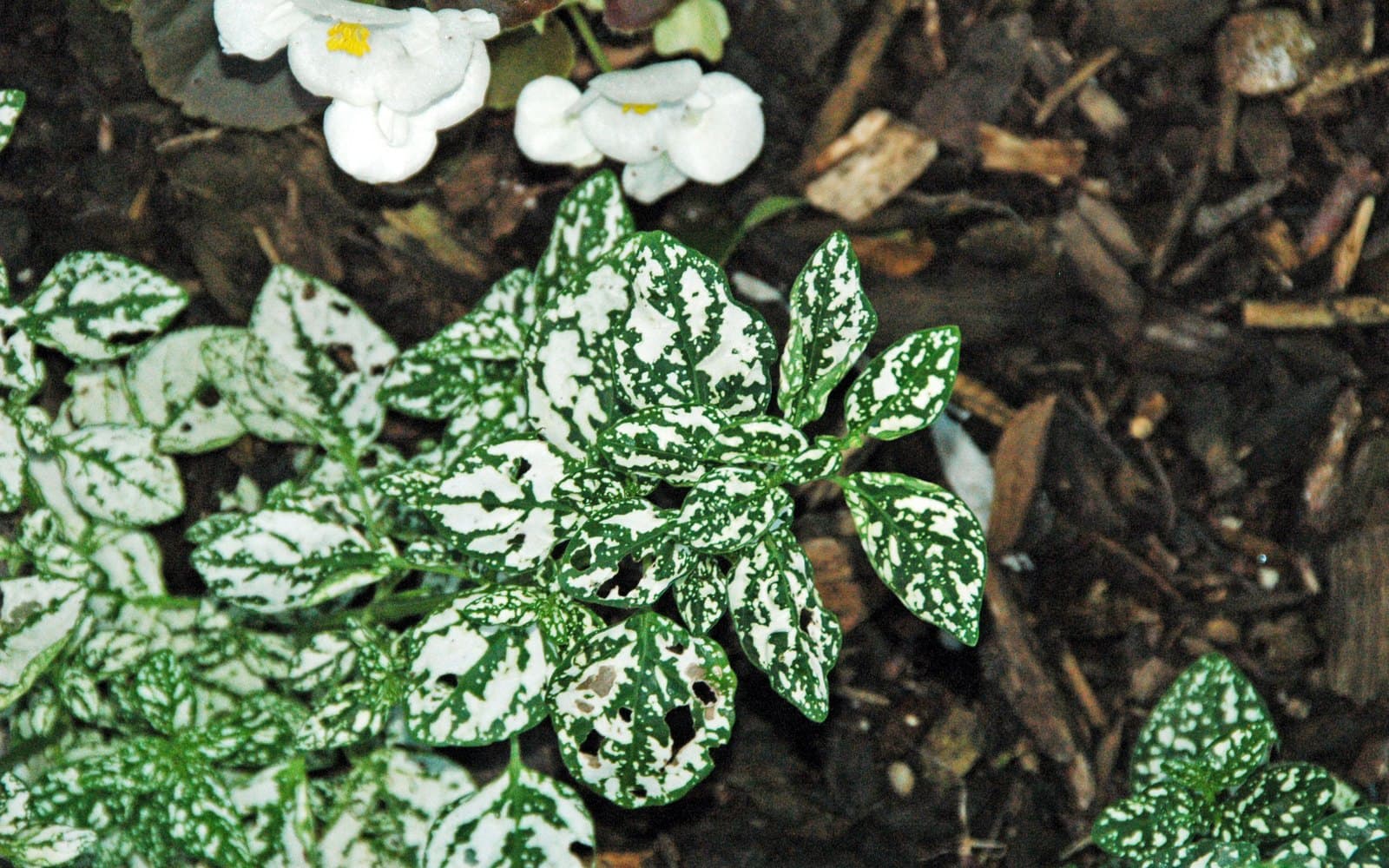
Polka-dot plant is Hypoestes phyllostachya. Labels may say freckle face or pink splash. Those names belong here. NCSU also lists baby's tears as a common name for this species, which is not Soleirolia.
NCSU, Wisconsin Horticulture, RHS, UF/IFAS THAD, and Iowa State's herbaceous list all name stem cuttings. Seed is also widely named. Only the RHS How to grow guide names division, so it is a minor option.
Indoor and bedding focus. Florida invasiveness assessment stays off this how-to.
For mix, see soil propagation. Water lives on water propagation.
Stem cuttings
Wisconsin Horticulture: stem cuttings are easily rooted. Cuttings 4 inches long; remove the lower leaves. They root quickly in water, and often grow when stuck into moist potting mix, sand, or vermiculite, especially in spring and summer.
UF/IFAS THAD: take a 4 inch stem cutting just below the node, remove lower leaves, and stick into sterile, well-aerated medium such as perlite, vermiculite, or sand with peat mixtures. Keep warm, sheltered, and humid in indirect light. Transplant after roots appear after a few weeks. Rooting hormone and bottom heat are optional but not necessary. UF also notes the polka-dot patterning is retained whether you start from seed or cuttings.
NCSU: place the cutting in water in a bright location; roots form soon. No cutting length on that page.
RHS How to grow: softwood stem-tip cuttings in spring and summer; about 5 cm, sever just below a pair of leaves; moist peat-free compost under humidity until well-rooted. Cuttings also root in water on a bright windowsill, then pot up. The plant profile adds softwood cuttings in late spring or semi-ripe cuttings in summer.
Missouri Botanical Garden's water-rooting guide lists polka-dot-plant among houseplants that root easily in water. That page's general protocol (not Hypoestes-only) uses 4 to 6 inch cuttings and generally 3 to 4 weeks. Iowa State's general herbaceous protocol lists the species and uses 2 to 4 inch tips with 4 to 6 weeks for most cuttings. Those generals are not one Hypoestes recipe. Skip a 7 to 10 day water claim those sources do not give.
Virginia Tech's 1991 abstract: stem cuttings did not need bottom heat or rooting hormone; three-node cuttings rooted more rapidly than two-node ones.
Seed
Wisconsin Horticulture: sow 8 to 10 weeks before average last frost for garden plants, or anytime for houseplants. Germinate as quickly as 4 days at 68°F. Cotyledons are green; first true leaves show color. Transplant when seedlings have four true leaves. In warm-season areas the plants reseed freely.
NCSU also names seed and free reseeding in warm temperate locations, with the same cotyledon and true-leaf color note.
UAEX: easy from seed; start about 12 weeks before moving plants to the garden. No germination temperature or days on that page. Wisconsin gives a different lead time.
RHS How to grow: sow in spring onto moist compost, press gently, but do not cover; light stimulates germination. Spotting from seed can be variable. Virginia Tech's abstract says seeds did not require light to germinate, and bottom heat promoted seedling growth but did not enhance germination. Report both light notes; do not pick a single rule.
Common mistakes
- Expecting roots in water within a set number of days. The Hypoestes sources say soon, quickly, or a few weeks, plus general guide timings.
- Expecting one seed-start time. Wisconsin, UAEX, and RHS give different timing.
- Assuming seed must have light. RHS says light stimulates germination, but Virginia Tech found light isn't required.
- Treating division as a standard U.S. extension method. Only RHS How to grow names it among the sources (spring; three or more stems per piece).
- Copying Soleirolia baby's tears methods onto this Hypoestes page.
People also ask
Can I root polka-dot plant in water?
Yes. Wisconsin, NCSU, RHS, and Missouri's water-rooting list all support water. Wisconsin also supports moist mix. UF THAD's numbered steps stick cuttings in sterile medium.
How long until seed germinates?
Wisconsin: as quickly as 4 days at 68°F. UAEX and RHS do not give a days figure on the the sources.
Will seed-grown plants match the parent's spots?
RHS: colorful spotting from seed can be variable. UF THAD: plants retain the polka dots as a genetic trait whether from seed or cuttings.