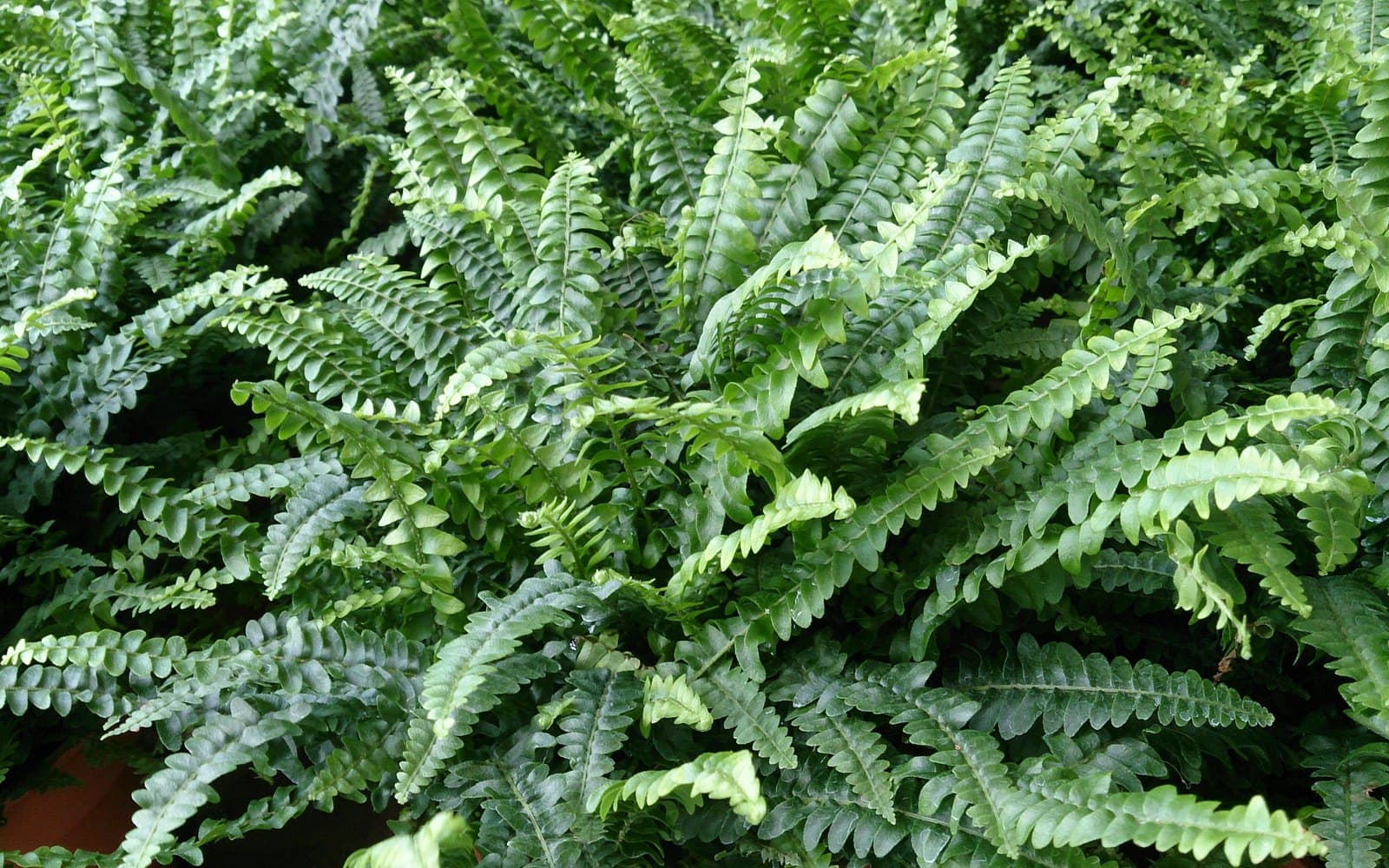
Boston fern is Nephrolepis exaltata bostoniensis (also written N. exaltata var. Bostoniensis). Wisconsin Horticulture traces the Boston form to a natural variant in an 1894 Philadelphia-to-Boston shipment. Same URL. Staghorn fern (Platycerium) and asparagus fern (Asparagus densiflorus and allies) are different plants.
Wisconsin, UAEX, Texas A&M, Cornell, UNL, and UGA name division and/or runners (stolons) as the home methods. Spores are possible for ferns in general, with strong cultivar and sterility caveats below. Tissue culture is a commercial note, not a home H2.
Indoor clump and basket focus. Outdoor landscape division windows stay brief where cited.
For mix after dividing, see soil propagation.
Division
Wisconsin Horticulture: although ferns can be grown from spores, named cultivars will not come true, and most gardeners find it much easier to divide. Repot and/or divide every few years in the spring, cutting the root ball vertically with a sharp knife in half or quarters, keeping as many leaves as possible per division.
UAEX: divide in late winter every couple of years to keep plants vigorous. UGA Growing Ferns: ferns such as Boston and sword often outgrow pots; halve or quarter the root ball with a sharp long-bladed knife, pull sections apart to spread roots in new soil, water thoroughly, and mist for humidity the first few weeks. UNL's general division language: each piece should have some roots; any time works, though the dormant or rest period is best.
Texas A&M lists division or runners without further steps. Do not average Wisconsin spring with UAEX late winter or UGA's outdoor after-first-frost-through-November window.
Runners and stolons
Wisconsin: plants send out long, thin runners (stolons) that root to form a new plant when they touch the ground. UAEX: Boston fern and many kin rely on slender stolons that dangle from the plant; where they contact soil, a new plant forms.
UNL G1853 lists Boston fern for division and runners. Runner method in that guide: place the leafy cluster of the runner in contact with soilless potting medium in a second pot and hold it down with a paperclip or similar; when roots have developed, cut the new plant free. Alternative: cut off leafy clusters with a small section of stem and root as tip cuttings.
Wisconsin 4-H Propagating House Plants names Boston fern among plants commonly produced from runners: set plantlets into soil without cutting, pin with a hairpin or paper clip, keep moist, check in two weeks for roots, then cut the runners. That two-week check is the only week figure stated for this step; do not invent a full rooting duration beyond it.
Spores
Wisconsin: ferns can be propagated from spores, but named cultivars will not come true. UAEX: Boston fern and its many kin are considered sterile and propagate by stolons rather than spores. Cornell lists spores among methods alongside division and tissue culture from stolons. No opened university primary gives a Boston-specific spore sowing protocol with timelines. Leave spores as a short caveat, not a how-to.
Commercial growers frequently use tissue culture (Wisconsin); Cornell notes tissue culture from the stolons.
Common mistakes
- Applying staghorn pup-and-mount methods or asparagus fern seed/tuber methods to this page.
- Promising true-to-type plants from spores of named Boston cultivars when Wisconsin says they will not come true and UAEX calls Boston and kin sterile.
- Inventing runner rooting weeks beyond the Wisconsin 4-H two-week root check.
- Averaging Wisconsin spring division with UAEX late winter or UGA outdoor timing.
People also ask
Division or runners?
Both. Wisconsin and UAEX describe stolons rooting on soil contact. Wisconsin's home preference for named plants is division in spring (half or quarters). UNL lists both.
Can I grow Boston fern from spores at home?
Possible in fern culture generally. Wisconsin: named cultivars will not come true. UAEX treats Boston and many kin as sterile and stolon-based. No Boston-specific sowing timeline on opened sheets.
Is asparagus fern the same thing?
No. Asparagus fern is Asparagaceae, not a true fern. Different methods live on its own page.