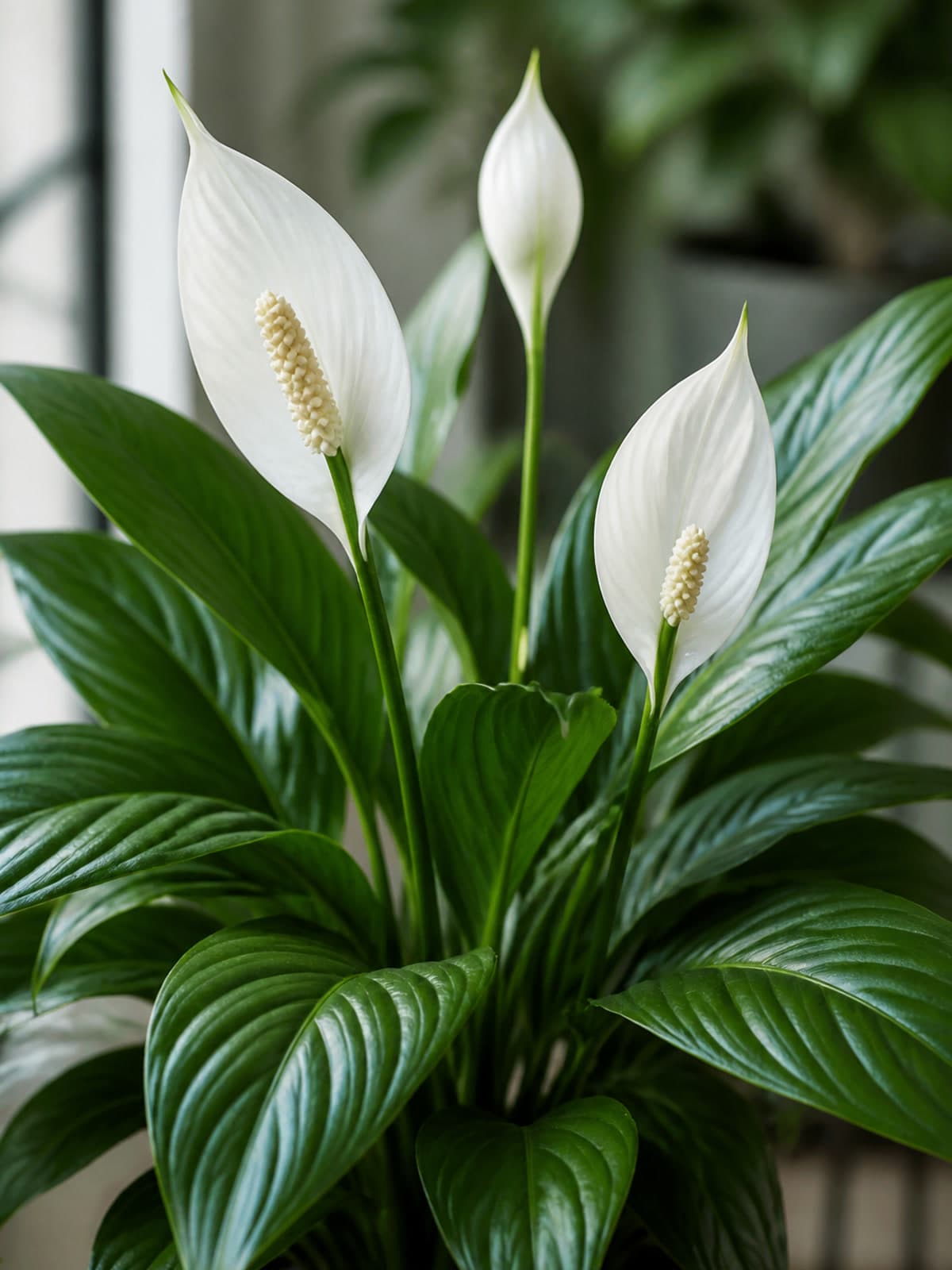
Peace lily is Spathiphyllum. It is not a true lily. Clemson notes that the leaves rise directly from the soil. Iowa State, UNL, NCSU, University of Florida IFAS, and Illinois all point at division. University of Florida also names basal shoots pulled from the mother plant.
Illinois lists only division for Spathiphyllum, not stem or leaf cuttings. UNL’s table is division. NCSU’s recommended strategy is division.
Drained-mix technique for any houseplant is on soil propagation. The main methods across houseplants are compared on plant propagation. Clemson warns that calcium oxalate crystals in the plant cells can burn the mouth, throat, and tongue if eaten. Keep new plants away from pets and children.
Best way indoors
| Method | Best when | Source support |
|---|---|---|
| Clump division | Crowded pot, several crowns or offsets | Iowa, UNL, NCSU, University of Florida IFAS, and Illinois all list division |
| Basal shoot or pup potting | A rooted side shoot you can separate cleanly | University of Florida EP161 basal shoots. Iowa offsets or pups crowding the pot |
| Leaf or stem in a jar | Not a supported method | Illinois lists division only. Iowa, UNL, and NCSU strategy pages point at division |
Division is the home method. University of Florida commercial notes on tissue culture and seed for some cultivars are nursery methods, not a home sowing recipe.
Materials
- Clean knife, spade, or saw if the root ball will not pull apart (Iowa)
- Hands for loosening a soft ball (Iowa, UNL)
- Fresh, well-drained potting mix
- Pots that fit each new piece, often smaller than the original (Iowa). Clemson sizes up only one to two inches
- Room-temperature water to settle the mix
- A spot with bright, indirect light (Iowa), well lit and out of direct sun (University of Florida, Clemson)
Division
Take the plant out of the pot. Iowa State has you lay the root ball on its side and loosen it with your hands. Use a knife, spade, or saw if the ball will not pull apart. Each piece needs healthy leaves, stems, and roots. A larger piece recovers faster. A smaller piece gives you more plants. Pot in fresh mix in a container that fits the new piece, often smaller than the original. Water to settle the soil. Bright, indirect light. Wait a few weeks before fertilizing.
At Iowa State, early spring is the ideal time, and most houseplants on its division list can be divided any time of year.
University of Florida IFAS propagates by division in the spring.
At UNL, division is the quickest way for plants that make stems at the base. Fingers or a knife. Each division should have some roots. Plants can be divided at any time. The dormant or rest period is best. Pieces with no roots may be rooted as tip cuttings. UNL names tip cuttings only for divisions that arrive with no roots.
NCSU re-pots, when necessary, in February or March. The plant likes to stay somewhat pot-bound.
Clemson moves up only one to two inches when the roots come through the holes or circle on the soil. Recovery is quicker in the growing season. Clemson covers pot size and culture, not a named propagate method.
Spring (University of Florida), early spring or any time (Iowa), dormant or rest (UNL), and February or March for a re-pot (NCSU) are four different timing notes, not one calendar date.
Offsets and basal shoots
At Iowa State, plants with several offsets or pups crowding the pot are good candidates for this split. Peace lily is on that division-and-offsets list.
The University of Florida commercial guide (EP161) separates basal shoots from mother plants and pots them in container mix. In production they also use tissue culture, and Spathiphyllum ‘Cupido’ is grown from seed there. Those last two are nursery methods.
Pot a shoot that already has roots. UNL’s rule still applies: each piece should have some roots.
Light while propagating
Iowa State wants bright, indirect light after you pot the pieces. University of Florida wants a well-lit area out of direct sunlight. Clemson notes that peace lilies tolerate low light but grow best in bright indirect light, and that direct sun can scorch foliage.
A dim corner is easier to judge with numbers. The propagation light DLI calculator estimates daily light at the new pot.
Care after potting
Water to settle the mix (Iowa). Keep the soil damp but avoid over-watering (University of Florida). Clemson keeps the mix moist but not soggy, and never leaves the pot sitting in a saucer of excess water, because that leads to root rot.
Iowa State waits a few weeks before fertilizing. Clemson uses very little fertilizer. When you do feed in spring and summer, use a diluted balanced liquid at about one-quarter of the recommended strength every six to eight weeks. That fertilizer schedule is for the growing plant, not a rooting timetable.
NCSU notes the plant likes to stay somewhat pot-bound. Clemson sizes up only one to two inches. An oversized pot keeps the mix wet longer.
A simple moist-not-soggy reminder after potting is easy to set with the propagation water change calculator.
Troubleshooting
The new pot stays wet and the base softens. Clemson never leaves the plant in a saucer of excess water. Root and stem diseases tie to over-watering. An oversized pot keeps the mix wet longer.
The piece wilts hard after the split. Iowa State wants bright, indirect light and settled mix. Clemson keeps new pots off heat or air-conditioning vents.
Leaves scorch on the new pots. Clemson notes that direct sun can scorch the foliage. University of Florida keeps plants out of direct sunlight.
Leaf tips burn after an early feed. Iowa State waits a few weeks before fertilizing. Clemson warns that overfertilizing can burn leaf tips and roots.
Common mistakes
- Taking a leaf or stem cutting for a jar. Illinois, Iowa, UNL, and NCSU list division, not leaf or stem cuttings.
- Separating tiny pieces with no roots. Iowa State wants each piece to have roots. Larger pieces recover faster. UNL wants each division to have some roots.
- Moving into a much bigger pot. Clemson sizes up only one to two inches.
- Treating Clemson’s 68 to 85 °F day range as a rooting timetable. That line is daytime culture temperature.
- Expecting one division date. University of Florida says spring, Iowa any time, UNL during the rest period, and NCSU February or March.
- Home-sowing from University of Florida EP161 seed or tissue-culture notes. Those are nursery methods.
People also ask
Can I root a leaf?
Illinois lists division only. Iowa and UNL list division. NCSU’s strategy is division. None of those pages give a leaf-cutting recipe for peace lily.
When do I divide?
University of Florida IFAS divides in spring. Iowa State treats early spring as ideal, and any time can work. UNL allows any time, with the rest period best. NCSU re-pots in February or March. Those are not one calendar.
What is a pup?
Iowa State talks about offsets and pups crowding the pot. University of Florida talks about basal shoots taken from the mother plant.
Do I need rooting hormone?
None of the extension pages above require hormone for peace lily division. The method is a rooted clump split or a rooted basal shoot, not a stem tip recipe.
Will a bigger pot help recovery?
Clemson chooses a container only one to two inches larger. Too large a pot can keep the mix wet and invite root rot. NCSU notes the plant likes to stay somewhat pot-bound.