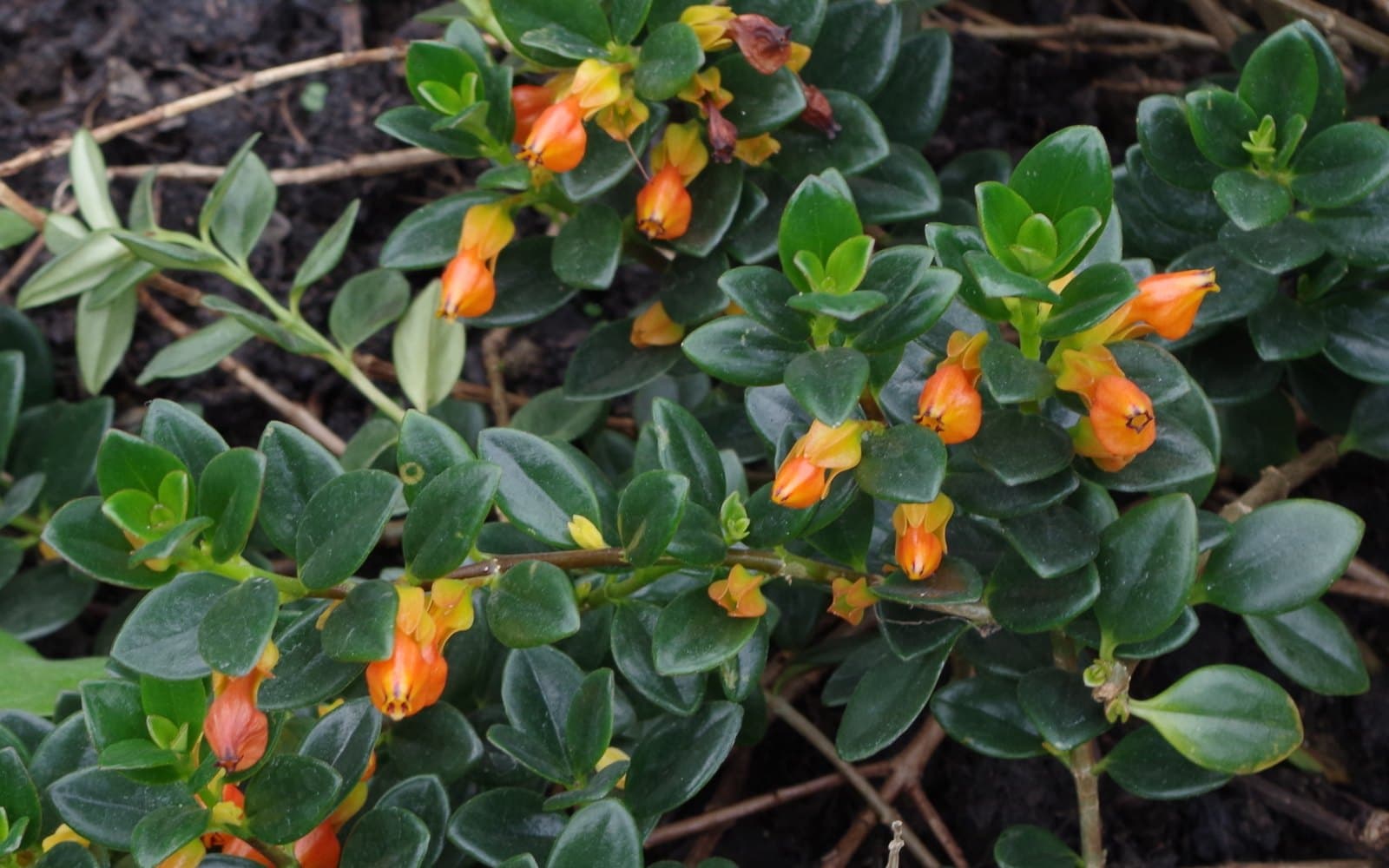
Goldfish plant in modern extension and RHS usage is Nematanthus gregarius. Family Gesneriaceae. Native to southeast Brazil. Trailing epiphyte with fleshy glossy leaves and bright orange pouch-like flowers that suggest a goldfish or clog. RHS common name: clog plant.
Labels may still say Hypocyrta. NCSU lists Hypocyrta as a common name and synonyms including Hypocyrta radicans, Columnea radicans, and Nematanthus radicans. Those the Nematanthus gregarius names belong here.
“Goldfish plant” is also used for other gesneriads. Missouri Botanical Garden Plant Finder applies the common name to Columnea microcalyx. A UF/IFAS pet-safety blog lists Hypocyrta nummularia as goldfish plant. Check the botanical name on the label. This guide follows NCSU and RHS on Nematanthus gregarius.
NCSU Recommended Propagation Strategy: stem cutting and root cutting. RHS: softwood (stem-tip) cuttings in spring. Neither gives cutting lengths, media recipes, or rooting times for this plant.
Indoor hanging-basket focus. For mix, see soil propagation.
Softwood stem-tip cuttings
RHS Nematanthus gregarius: propagate by softwood (stem-tip) cuttings in spring. Cultivation frame for the same profile: peat-free potting compost, bright filtered light, watering with soft water. RHS also notes removing shoot tips on young plants to encourage branching, which is pruning language rather than a numbered cutting protocol.
NCSU: Recommended Propagation Strategy includes stem cutting. Same page: peat-free potting compost, bright filtered light, soft water, trailing habit suited to a hanging basket, keep above 50°F. No cutting length or days-to-root on that page.
NCSU and RHS don’t give cutting lengths, water-jar steps, or rooting times for this plant. Iowa State’s general stem-tip article does not list Nematanthus among its example species.
Root cuttings
NCSU Recommended Propagation Strategy also lists root cutting. The species source does not describe how to take or stick a root cutting, so this guide names the strategy without adding steps.
Light while propagating
Neither NCSU nor RHS gives a separate light step for rooting softwood stem-tip cuttings or root cuttings. Both give light for the growing plant, and both use the same words for it: bright, filtered light.
NCSU: goldfish plant likes light shade. Indoors, site it near a south-facing window, but not in full sun for extended periods of time.
RHS: grow it under glass or as a houseplant in bright, filtered light. Its growing conditions list partial shade, a west- or east-facing aspect, and a sheltered exposure.
The two differ on direction. NCSU names a south-facing window and limits long full sun. RHS lists west- or east-facing. Neither page ranks one over the other, and neither adds hours, a lower-light phase, or a different spot while roots form.
Check a spot with the propagation light DLI calculator.
Common mistakes
- Expecting set cutting lengths, humidity-dome weeks, or water-rooting days. NCSU and RHS don’t give them.
- Writing a root-cutting how-to from the NCSU strategy tag alone.
- Collapsing Columnea microcalyx (Mobot “goldfish plant”) or Hypocyrta nummularia list entries into Nematanthus gregarius methods without checking the label.
- Ignoring the 50°F floor NCSU states for this tropical.
- Treating RHS spring softwood timing as year-round without saying RHS wrote spring.
People also ask
What is the botanical name for goldfish plant?
NCSU and RHS: Nematanthus gregarius. Older labels: Hypocyrta / Hypocyrta radicans. Other plants called goldfish plant exist (Mobot Columnea microcalyx; some lists Hypocyrta nummularia).
When do I take cuttings?
RHS: softwood stem-tip cuttings in spring.
Does NCSU agree on cuttings?
Yes. NCSU Recommended Propagation Strategy: stem cutting (and root cutting, without steps on that page).
Can I root goldfish plant in water?
NCSU and RHS don’t describe rooting Nematanthus in water. Skip a water method those sources do not give.